Crisp Bindaetteok Recipe: Korean Mung Bean Pancakes
This post contains affiliate links. As an Amazon Associate, we earn from qualifying purchases at no extra cost to you.
At a glance
- In shortLearn how to make authentic, crispy Korean mung bean pancakes at home using split peeled mung beans.
- Best forHome cooks wanting to make Korean mung bean pancakes
- DifficultyMedium
- HeatNot spicy
- Key pointsSoak and coarsely blend split mung beans for a light, crispy texture. · Squeeze excess liquid from kimchi and sprouts to keep the batter light. · Shallow-fry in sufficient oil to form a golden, crackly outer crust.
- Heads-upDo not over-blend the beans into a smooth puree; keep fine grit for crispiness.
Whenever dark rain clouds roll over Seoul, my grandmother would immediately reach for her heavy cast-iron skillet and a big bowl of soaked mung beans. The heavy patter of raindrops on the window screen sounds almost identical to the loud sizzle of batter hitting hot oil. In Korea, rainy days call for savory pancakes, and while pajeon (scallion pancake) gets plenty of international attention, bindaetteok (mung bean pancake) is the true star of Korean street food comfort.
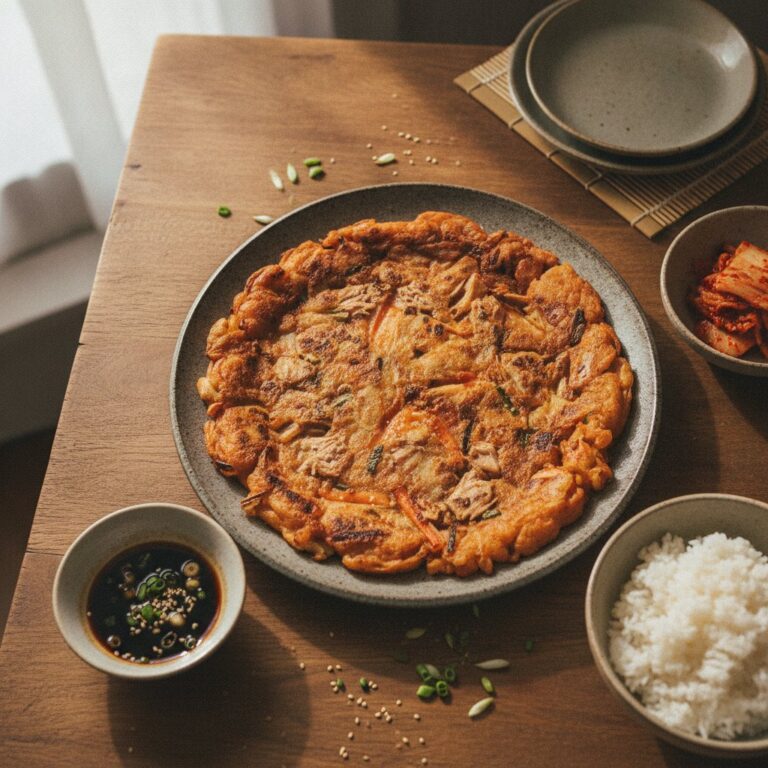
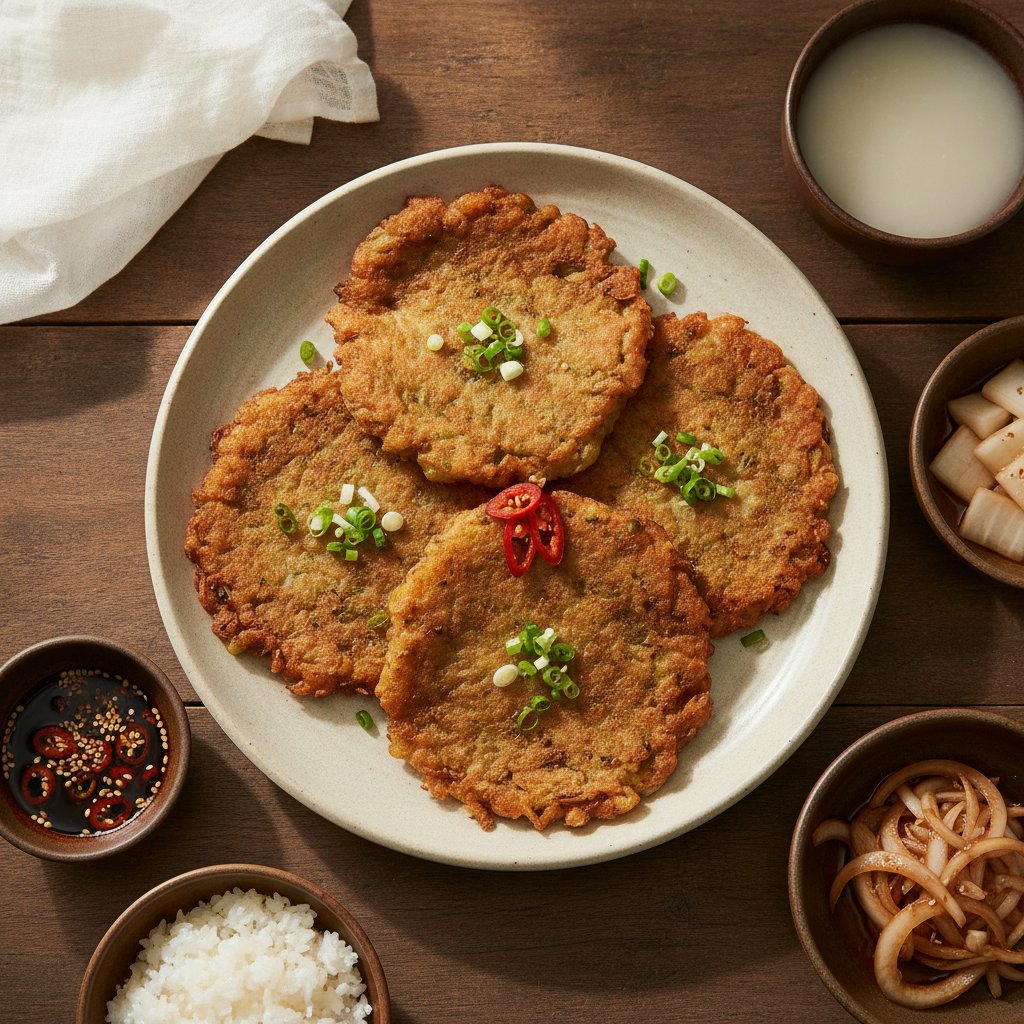
If you have ever visited Gwangjang Market in central Seoul, you already know the intoxicating aroma of bindaetteok frying in long rows. Massive granite millstones grind yellow mung beans into a creamy batter right before your eyes. That batter is quickly mixed with aged kimchi, seasoned pork, bean sprouts, and scallions, then ladled into generous pools of sizzling oil. The result is a thick, golden pancake with a crackly outer crust, a soft, rich interior, and a satisfying combination of savory, tangy flavors.
Making authentic bindaetteok at home can seem intimidating because traditional versions do not rely on wheat flour or eggs to hold together. Instead, the natural starches of soaked mung beans do all the structural heavy lifting. In my family, we have perfected a foolproof method that adapts traditional market techniques for a regular home kitchen. Using split peeled mung beans and a standard blender, you can achieve that iconic market-style crispiness without needing specialized equipment.
Why This Works
- Soaking split peeled mung beans: Grinding whole soaked beans creates a porous, airy batter that crisps up beautifully in oil, far outperforming dense, sticky batters made from pre-ground mung bean flour.
- Coarse blending with low moisture: Keeping a tiny bit of grit in the bean blend gives the pancake structural strength and creates micro-edges that turn shatteringly crisp when fried.
- Moisture control in vegetables: Squeezing excess liquid out of the blanched sprouts and fermented kimchi prevents the raw batter from diluting, keeping the interior light rather than gooey.
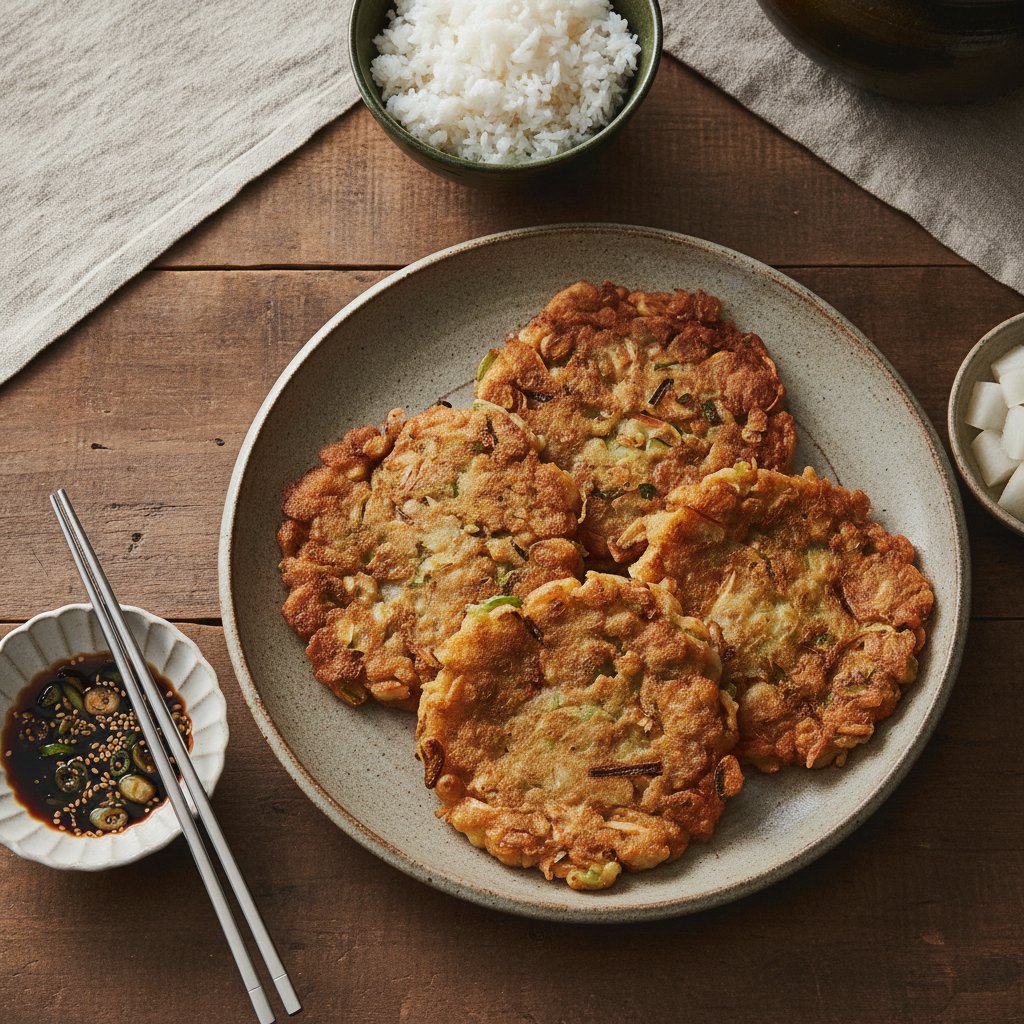
Ingredients
- Peeled split yellow mung beans (nokdu): 200 g (1 cup), soaked in water for at least 3 to 4 hours or overnight
- Cold water: 120 ml (1/2 cup), for blending the beans
- Pork shoulder or ground pork: 150 g (5.3 oz), coarsely minced or ground
- Aged kimchi: 150 g (1 cup), drained, squeezed dry, and chopped finely
- Mung bean sprouts (sukjunamul): 100 g (1.5 cups), blanched and chopped
- Garlic chives (buchu) or scallions: 40 g (1 cup), cut into 1-inch (2.5 cm) pieces
- Garlic: 2 cloves, finely minced
- Soy sauce: 15 ml (1 tbsp), divided for meat seasoning and dipping sauce
- Toasted sesame oil: 5 ml (1 tsp)
- Kosher salt: 3 g (1/2 tsp)
- Ground black pepper: 1 g (1/4 tsp)
- Neutral cooking oil (canola, vegetable, or grape seed): 80 ml (1/3 cup), for frying
- Rice vinegar (for dipping sauce): 15 ml (1 tbsp)
- Raw onion (for dipping sauce): 30 g (2 tbsp), diced small
Substitutions
If you cannot locate peeled split mung beans at your local Asian market, split yellow lentils (such as chana dal or yellow split peas) can work in a pinch, though mung beans yield a lighter texture. Ground pork can easily be substituted with minced chicken, lean ground beef, or diced king oyster mushrooms for a vegetarian variation. If garlic chives are unavailable, standard green onions work wonderfully. Always use well-fermented, sour kimchi rather than fresh kimchi; the acid cuts through the richness of the fried bean batter.
🛒 Crisp Bindaetteok Recipe
As an Amazon Associate we earn from qualifying purchases.
Shop Ingredients & Tools →How to Make It
- Soak and rinse the mung beans: Place the split peeled mung beans in a bowl, cover with cold water, and let soak for at least 4 hours. Soaking softens the starch cells, allowing them to grind smoothly while absorbing enough moisture to swell during cooking. Rinse thoroughly until the water runs clear, then drain completely in a mesh strainer.
- Season the pork filling: In a small bowl, combine the minced pork, garlic, 5 ml (1 tsp) of soy sauce, toasted sesame oil, and black pepper. Stir well and set aside for 10 minutes. Marinating the meat directly ensures every bite of pancake has deep, savory seasoning rather than relying solely on the dipping sauce.
- Blanch and prepare the vegetables: Bring a small pot of water to a boil. Drop in the mung bean sprouts for 60 seconds until slightly softened, then shock in cold water. Squeeze out as much moisture as possible using your hands or a clean kitchen towel, then chop coarsely. Do the same with the chopped kimchi, squeezing out extra juice to prevent wet vegetables from diluting the batter.
- Blend the mung beans coarsely: Transfer the drained mung beans to a blender or food processor with 120 ml (1/2 cup) of cold water. Pulse in short bursts until the mixture resembles a coarse paste with fine grit remaining, similar to the texture of wet sand. Avoid over-blending into a completely smooth puree, as a tiny bit of texture is what creates a light, crispy pancake rather than a heavy, gummy cake.
- Combine the batter and mix-ins: Scrape the blended mung bean batter into a large mixing bowl. Add the seasoned pork, chopped kimchi, blanched bean sprouts, garlic chives, and salt. Gently fold everything together with a spatula until evenly distributed. Stirring too aggressively can break down the bean structure, so mix just until blended.
- Heat the oil properly: Set a heavy cast-iron skillet or non-stick frying pan over medium-high heat. Add enough neutral cooking oil to coat the bottom completely, about 3 to 4 tablespoons. Heat until the oil shimmers gently. High heat and sufficient oil are crucial because mung bean batter absorbs oil rapidly; shallow-frying creates the signature golden shell while keeping the inside moist.
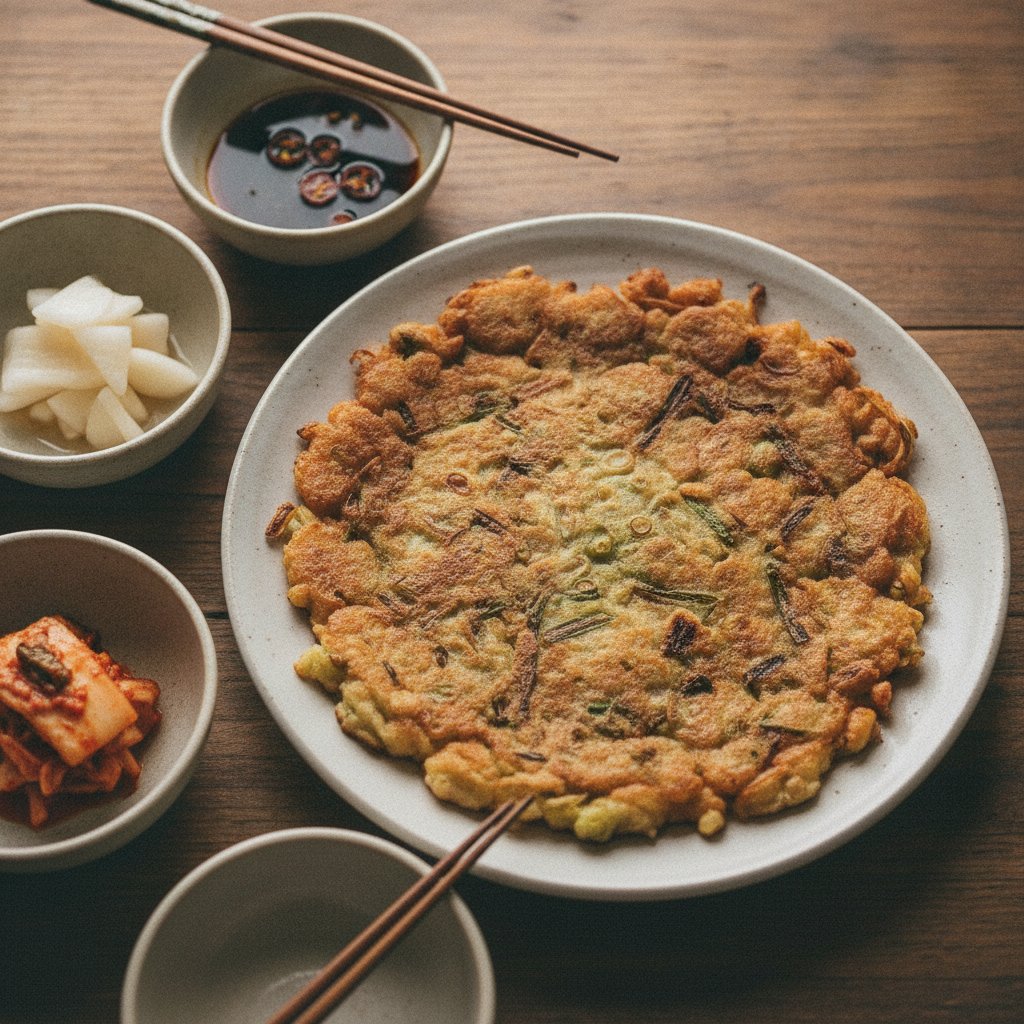
- Fry the pancakes: Ladle about 1 cup of batter into the center of the hot pan, pressing down gently with the back of a spatula to form a pancake about 1/2-inch (1.3 cm) thick and 6 inches across. Reduce heat to medium. Fry until the bottom edges turn deep golden brown and crisp, about 4 to 5 minutes. Flip carefully, add another tablespoon of oil around the edges if the pan looks dry, and cook the other side for another 4 minutes until fully cooked through and crispy.
- Serve with quick soy-vinegar sauce: Whisk together the remaining soy sauce, rice vinegar, and diced raw onions in a small bowl. Transfer cooked pancakes to a wire cooling rack for 1 minute to retain crispness, then cut into wedges and serve immediately with the dipping sauce.
Tips from a Korean Kitchen
The most common mistake beginners make with bindaetteok is using too little oil. Unlike thin French crepes or western breakfast pancakes, bindaetteok is traditionally shallow-fried. The edges of the batter should crackle as soon as they touch the pan. If your skillet is dry, the bean paste will absorb heat slowly and become dense instead of expanding into a crispy crust.
Another vital tip is temperature control. Start with a hot pan to set the outer shell, then drop the heat to medium so the interior pork cooks completely without burning the bean paste on the bottom. If you flip the pancake too early before the bottom crust forms, the batter may split apart. Wait until you see the top edges change color from opaque yellow to slightly translucent before flipping.
Lastly, keep your dipping sauce simple. The raw diced onions in the soy-vinegar dipping sauce are not just a garnish; taking a bite of crunchy, vinegary onion between pieces of rich pancake cleanses the palate and makes every bite feel fresh.
Storage
Leftover cooked bindaetteok can be stored in an airtight container in the refrigerator for up to 3 days. To freeze, stack cooked and cooled pancakes between sheets of parchment paper and store in a freezer-safe bag for up to 1 month. To reheat, avoid the microwave, which turns mung bean batter soggy. Reheat directly from frozen or chilled in a lightly oiled pan over medium heat for 3 to 4 minutes per side until the outer crust turns crisp again.
🛒 Crisp Bindaetteok Recipe
As an Amazon Associate we earn from qualifying purchases.
Shop Ingredients & Tools →FAQ
Can I use pre-ground mung bean flour instead of whole beans?
While mung bean flour is available at Asian markets, it yields a drastically different texture. Pre-ground flour tends to make the pancake dense, heavy, and sticky rather than crisp and airy. Soaking split yellow mung beans and blending them coarsely at home takes minimal extra effort and produces far better results.
Why is my bindaetteok falling apart in the pan?
Bindaetteok typically breaks apart if there is too much liquid in the batter or if the pancake is flipped too early. Make sure to drain the soaked beans thoroughly and squeeze out excess moisture from both the kimchi and bean sprouts. Allow the bottom crust to fully brown and set before gently flipping with a wide spatula.
Is bindaetteok naturally gluten-free?
Yes, traditional bindaetteok uses mung beans as its base without any wheat flour, making it naturally gluten-free. Just ensure that the soy sauce used in your pork marinade and dipping sauce is certified gluten-free or replace it with tamari.
More on Kimchi Pancakes & Snacks
- Crispy Kimchi Pancake (Kimchijeon)How to make crispy Korean kimchi pancakes from scratch using simple pantry staples.
- Crispy Kimchi Mandu RecipeLearn how to make authentic pan-fried Korean kimchi dumplings with a crispy base.
- Crispy Tuna Kimchi PancakesA guide to making ultra-crispy Korean tuna kimchi pancakes using basic pantry ingredients and proper fry technique.
See every Kimchi Pancakes & Snacks post in our Kimchi guide.
Handy toolsRecipe scaler · Measurement converter · Korean pantry guide · Recipe Finder
🛒 Crisp Bindaetteok Recipe
As an Amazon Associate we earn from qualifying purchases.
Shop Ingredients & Tools →More Korean Recipes
- Kimchi Juk: Cozy Korean Kimchi Porridge Recipe
- Sweet Crunchy Bossam Kimchi Recipe (Musaengchae)
- Kimchi Mandu Guk: Easy Kimchi Dumpling Soup
- 10-Minute Kimchi Ramen Hack (Upgraded Kimchi Ramyeon)
🛒 Crisp Bindaetteok Recipe
As an Amazon Associate we earn from qualifying purchases.
Shop Ingredients & Tools →