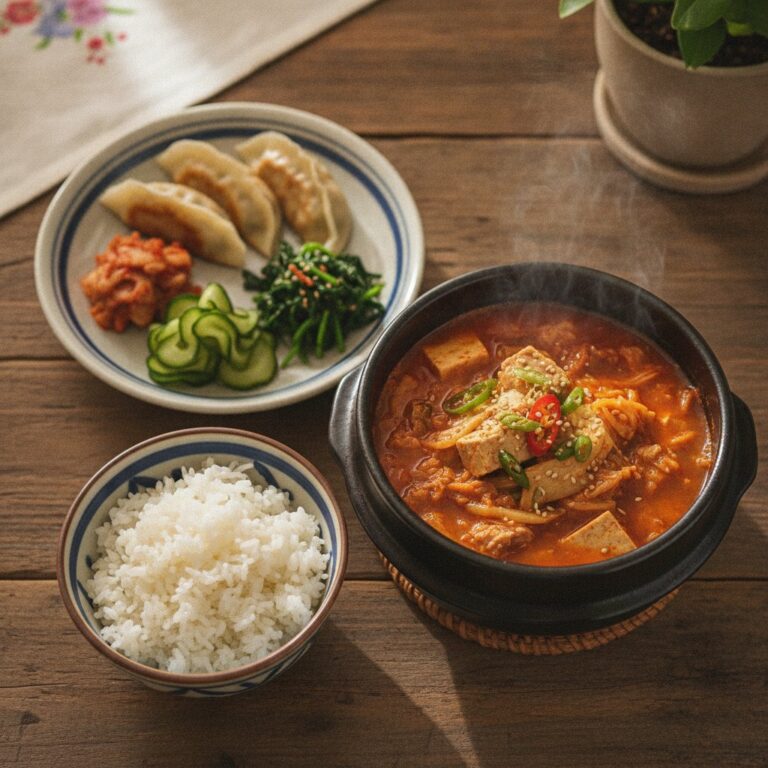
Seoul Street Tteokbokki (Spicy Rice Cakes) at Home
This post contains affiliate links. As an Amazon Associate, we earn from qualifying purchases at no extra cost to you.
At a glance
- In shortLearn how to make authentic Korean spicy rice cakes at home using dashi broth and a rich gochujang sauce.
- Best forHome cooks wanting to make classic Korean tteokbokki
- DifficultyEasy
- HeatHot
- Key pointsSoak stiff rice cakes in warm water beforehand to ensure a chewy texture. · Make dashi broth with dried kelp and anchovies for a rich umami base. · Control heat level by adjusting the amount of gochugaru chili powder.
- Heads-upAvoid overcooking rice cakes in the sauce to prevent them from becoming gummy.
Annyeonghaseyo, dear readers of Korean Recipe Lab! It’s your friend from Seoul, ready to share another beloved taste of Korea with you. Today, we’re diving into the vibrant, spicy, and utterly addictive world of tteokbokki (떡볶이), the quintessential Korean street food that has captured hearts around the globe. When I think of tteokbokki, I’m instantly transported back to bustling street markets, the sound of vendors calling out, and the comforting steam rising from giant simmering pots. It’s a dish that embodies warmth, community, and that uniquely Korean ‘spicy kick’ that we all love.
In Korea, tteokbokki isn’t just a snack; it’s an experience. We eat it with friends after school, as a late-night treat with a cold drink, or simply when we need a comforting, hearty meal that hits all the right notes. It’s truly a dish for all seasons and occasions. While there are countless variations, from cheesy tteokbokki to seafood tteokbokki, today I want to guide you through making the classic, red-hued, gloriously chewy version that tastes just like what you’d find from a favorite street cart right here in Seoul.
I know many of you live far from a dedicated Korean grocery store, and finding certain ingredients can sometimes be a challenge. That’s why I’ve developed this tteokbokki recipe to be as authentic as possible, while still being accessible. I’ll share tips for substitutions using ingredients you can find at most Western grocery stores, or easily order online. So, let’s gather our ingredients and bring the lively spirit of a Korean street food stall right into your kitchen!
Ingredients
- For the Dashi (Broth):
- 700 ml (about 3 cups) water
- 1-2 pieces (about 10g) dried kelp (dashima, 다시마)
- 5-6 large dried anchovies (myeolchi, 멸치), gutted and heads removed (optional, but recommended for depth)
- Main Ingredients:
- 500 g (about 1 lb) Korean rice cakes (tteok, 떡), cylindrical shape (garae-tteok)
- 150 g (about 5 oz) Korean fish cakes (eomuk, 어묵), flat sheets or various shapes, cut into bite-sized pieces
- 1/2 medium onion (about 100g), sliced thinly
- 1/4 small cabbage (about 150g), roughly chopped
- 2-3 scallions (green onions), cut into 5 cm (2-inch) pieces
- 2-3 hard-boiled eggs, peeled (optional, but a classic addition!)
- For the Sauce:
- 3 tablespoons Korean chili paste (gochujang, 고추장) – brands like CJ Haechandle or Sempio are common
- 1-2 tablespoons Korean chili powder (gochugaru, 고춧가루), depending on desired spice level
- 1 tablespoon soy sauce (Korean regular soy sauce is preferred, or use light soy sauce)
- 1 tablespoon sugar (white or brown sugar works)
- 1 teaspoon minced garlic
- 1/2 teaspoon black pepper
Substitutions
Don’t worry if you can’t find every single Korean ingredient. Here are some realistic swaps:
- Dried Kelp (Dashima) & Anchovies: While they add incredible depth, if you can’t find them, you can use regular vegetable or chicken broth instead of water for the base, or simply use plain water. The tteokbokki will still be delicious!
- Korean Fish Cakes (Eomuk): These are a signature component, but if impossible to find, you can omit them. Some people add sliced hot dogs or even crab sticks as an alternative, though it won’t be quite the same.
- Korean Rice Cakes (Tteok): Look for cylindrical rice cakes (garae-tteok). Fresh ones are best, but frozen are perfectly fine. If using frozen, make sure to soak them longer. If you absolutely can’t find these, some adventurous cooks have used gnocchi (for texture) or even very thick udon noodles, but be warned, the experience will be quite different from authentic tteokbokki.
- Gochujang & Gochugaru: These are non-negotiable for authentic tteokbokki! You can find them at most Asian markets, on Amazon, or even in the international aisle of larger supermarkets these days. There are no direct substitutions for their unique flavor and heat.

How to Make It
Let’s get cooking! The key to delicious tteokbokki is building layers of flavor and ensuring those rice cakes cook up perfectly chewy.
- Prepare Your Rice Cakes: If using fresh rice cakes, a quick rinse under cold water is enough. If using frozen or slightly stiff rice cakes, place them in a bowl of warm water for at least 15-20 minutes while you prepare other ingredients. This softens them up, preventing them from cracking and ensuring they cook evenly and become delightfully chewy, not hard or brittle.
- Make the Dashi Broth: In a medium pot, combine the water, dried kelp, and dried anchovies (if using). Bring it to a boil over medium-high heat, then reduce the heat to low and simmer for about 10-15 minutes. Simmering gently allows the kelp and anchovies to release their umami flavors, creating a rich, savory base that’s crucial for authentic Korean stews and soups. After simmering, remove and discard the kelp and anchovies.
- Whisk the Sauce: While the dashi simmers, in a small bowl, combine the gochujang, gochugaru, soy sauce, sugar, minced garlic, and black pepper. Whisk everything together until you have a smooth paste. Combining these ingredients beforehand ensures they dissolve evenly into the broth without clumping, creating a balanced and flavorful sauce.
- Sauté Aromatics (Optional, but Recommended): In a large pan or pot (a wok works great here), add a drizzle of cooking oil over medium heat. Add the sliced onions and sauté for 2-3 minutes until they start to soften and turn translucent. This step isn’t always done in street carts, but it adds a lovely sweetness and depth to the base of the dish, making it taste more like a home-cooked meal.
- Combine and Simmer: Pour the prepared dashi broth into the pan with the sautéed onions (or directly into the pot if skipping the sauté step). Add the whisked sauce paste and stir well to combine, making sure the paste fully dissolves. Bring the mixture to a gentle boil over medium-high heat.
- Add Rice Cakes and Fish Cakes: Once the sauce is bubbling, add the soaked rice cakes and the cut fish cakes. Stir gently to coat everything. Reduce the heat to medium-low and let it simmer for about 5-7 minutes, or until the rice cakes are soft and chewy but still have a pleasant bite. The sauce should also start to thicken slightly. Simmering allows the rice cakes to absorb the rich flavors of the sauce and become tender.
- Add Vegetables and Eggs: Now, add the chopped cabbage and scallions to the pot. If you’re using hard-boiled eggs, add them now too. Stir gently to incorporate the vegetables into the simmering sauce. Continue to cook for another 3-5 minutes, or until the cabbage is tender-crisp and the sauce has thickened to your desired consistency. You want the sauce to cling nicely to the rice cakes and other ingredients.
- Final Touches and Serve: Taste the tteokbokki and adjust seasoning if needed. If it’s not spicy enough, add a pinch more gochugaru. If too thick, a splash of water or broth. If too thin, let it simmer a little longer. Serve immediately, piping hot! Garnish with a sprinkle of toasted sesame seeds or chopped scallions if you like.

🛒 Seoul Street Tteokbokki at Home
As an Amazon Associate we earn from qualifying purchases.
Shop Ingredients & Tools →Tips from a Korean Kitchen
- Don’t Overcook Your Tteok! The perfect tteokbokki has rice cakes that are chewy and soft, but not mushy. Keep an eye on them in step 6. Once they’re tender to the bite, it’s time to add the final veggies and finish up. Overcooking will turn them into a gummy, unappetizing texture.
- Spice Level is Personal: This recipe provides a good base, but feel free to adjust the amount of gochugaru (Korean chili powder). For a milder version, use just 1 tablespoon. For fire-breathing spicy, go for 2-3 tablespoons! You can always add more at the end.
- Embrace the Toppings: Koreans love variety! Besides the classic hard-boiled eggs and fish cakes, popular additions include ramyeon (instant ramen noodles, creating rabokki), mandu (dumplings), cheese (especially melted mozzarella), and even sausages. Feel free to experiment and make it your own!
- A Touch of Sweetness Balances the Heat: Don’t skip the sugar in the sauce. It’s not just for sweetness; it plays a crucial role in balancing the intense heat and savory depth of the gochujang and gochugaru, creating a more harmonious and addictive flavor profile.
Storage
Tteokbokki is best enjoyed fresh, right off the stove, when the rice cakes are perfectly chewy and the sauce is bubbling. However, leftovers can be stored. Place any cooled tteokbokki in an airtight container in the refrigerator for up to 2-3 days. For reheating, gently warm it on the stovetop over low-medium heat, adding a splash of water or broth if the sauce has become too thick. Stir frequently to prevent sticking. While you can freeze tteokbokki, the texture of the rice cakes can become mealy or too soft upon thawing and reheating, so it’s generally not recommended.
FAQ
Can I make tteokbokki less spicy?
Absolutely! The spice level is quite flexible. To reduce the heat, simply decrease the amount of gochugaru (Korean chili powder) in the sauce. You can start with just 1 tablespoon or even skip it entirely if you’re very sensitive to spice, letting the gochujang provide the foundational flavor. Adding a little more sugar or a splash of milk/cream at the end can also mellow out the heat.
What kind of rice cakes should I use for tteokbokki?
For authentic tteokbokki, look for cylindrical rice cakes called garae-tteok (가래떡). These are typically sold in fresh or frozen forms at Asian grocery stores. Fresh rice cakes usually have the best texture, but frozen ones work wonderfully after a good soak in warm water. Avoid the thin, flat oval-shaped rice cakes used for tteokguk (rice cake soup), as their texture isn’t quite right for tteokbokki.
What are some popular side dishes or pairings for tteokbokki?
Tteokbokki is often enjoyed on its own as a hearty snack, but it also pairs wonderfully with other Korean street foods. Think of gimari (fried seaweed rolls), sundae (blood sausage), mandu (dumplings), or even a simple plate of fried tempura vegetables. Many Koreans also love to dip fried items into the leftover tteokbokki sauce! A refreshing drink like sikhye (sweet rice punch) or an iced tea can also be a great counterpoint to the spice.
🛒 Seoul Street Tteokbokki at Home
As an Amazon Associate we earn from qualifying purchases.
Shop Ingredients & Tools →More on Street Food & Snacks
- Roll Gimbap That Stays TogetherA step-by-step guide to preparing ingredients and rolling Korean gimbap so it stays intact.
- Ojingeo Bokkeum: Spicy Squid Stir-FryA quick 15-minute Korean home-cooking recipe for spicy squid stir-fry with vegetables and gochujang sauce.
- Kimchi Jeon (Kimchi Pancake) RecipeA recipe for making authentic, crispy Korean kimchi pancakes at home.
See every Street Food & Snacks post in our Main Dishes guide.
Handy toolsRecipe scaler · Measurement converter · Korean pantry guide · Recipe Finder
More Korean Recipes
- LA Galbi (Korean BBQ Short Ribs) Marinade Ratios
- Authentic Jeyuk Bokkeum (Spicy Pork Stir-Fry) in 20 Min
- Bibimbap at Home: Building the Perfect 비빔밥 Bowl
- Crispy Korean Fried Chicken (Yangnyeom-Chicken) with Sweet-Spicy Sauce
🛒 Seoul Street Tteokbokki at Home
As an Amazon Associate we earn from qualifying purchases.
Shop Ingredients & Tools →