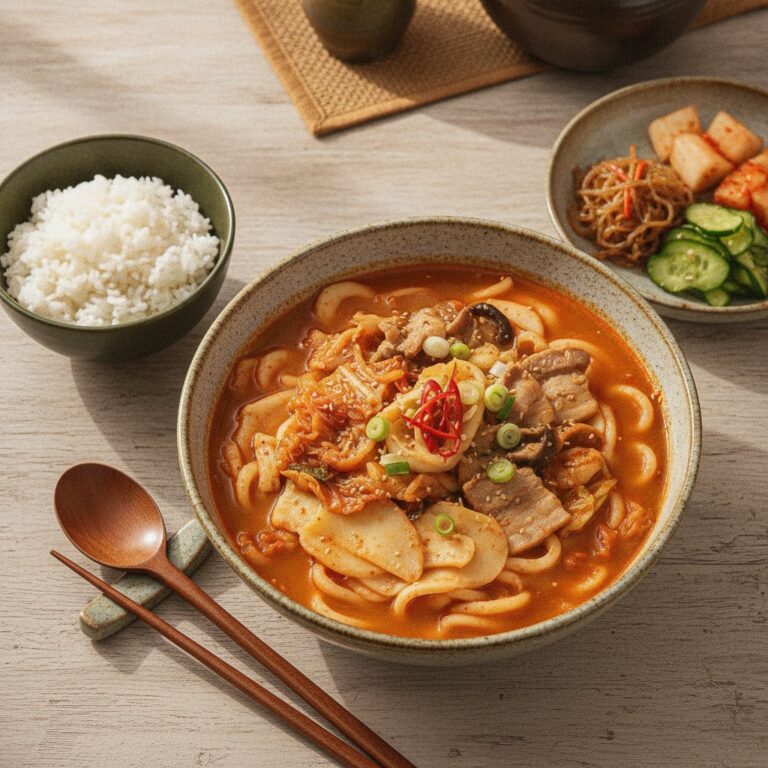
Rich Chadol Doenjang Jjigae (Beef Brisket Stew)
This post contains affiliate links. As an Amazon Associate, we earn from qualifying purchases at no extra cost to you.
At a glance
- In shortA guide to making Korean beef brisket soybean paste stew with simple techniques.
- Best forHome cooks wanting to prepare Korean beef brisket stew
- Time20 min
- DifficultyEasy
- HeatMild
- Key pointsSearing brisket renders fat to bloom soybean paste and tame harsh notes. · Using rice-washing water emulsifies rendered fat into a silky broth. · Stagger vegetable timing and add tofu last to keep it soft and creamy.
- Heads-upDo not freeze fresh tofu in the stew, as it turns tough and sponge-like.
When the crisp Autumn air sweeps down from Namsan mountain in late October, my mother always makes sure our freezer is stocked with paper-thin ribbons of beef brisket. In Seoul home kitchens, chadol doenjang jjigae (beef brisket soybean paste stew) is the quintessential cozy evening meal. You will also spot it steaming away at almost every Korean barbecue restaurant across the country, where diners order a boiling pot right toward the end of a grilled meat feast to settle their stomachs and finish their rice.
Standard doenjang jjigae (soybean paste stew) is a daily staple in Korea, often made with a simple anchovy broth, summer squash, and tofu. But adding chadolbagi (thinly sliced beef brisket) changes everything. The rich beef fat renders directly into the bubbling broth, softening the sharp fermented bite of the soybean paste and creating a luscious, savory depth that feels luxurious yet comes together in under twenty minutes.
If you live outside Korea, you do not need a specialist kitchen to pull this off. By understanding a few basic technique choices—like blooming your paste in rendered fat and using starch-rich water—you can recreate the exact depth of flavor found in the best Seoul neighborhood eateries using items from your regular supermarket.
Why This Works
- Fat-blooming the paste: Searing the beef brisket first renders pure beef fat, which is then used to bloom the doenjang (fermented soybean paste). Cooking the paste briefly in oil tames its harsh salty edge and releases deep aromatic compounds.
- Starch-emulsified broth: Using ssalddeumul (rice-washing water) introduces natural starches that bind the rendered beef fat to the water-based broth. This keeps the stew from separating into a greasy top layer and gives the soup a velvety body.
- Staggered vegetable timing: Adding sturdy vegetables like onions and squash early allows them to cook down and sweeten the broth, while delicate tofu and herbs are added at the very end to retain their structural integrity and fresh flavor.

Ingredients
- 200 g (about 7 oz) thinly sliced beef brisket (chadolbagi)
- 3 tbsp Korean fermented soybean paste (doenjang, such as CJ CheilJedang or Sempio brand)
- 1 tsp Korean chili paste (gochujang)
- 1 tsp Korean chili flakes (gochutgaru)
- 3 cups (720 ml) rice-washing water (ssalddeumul) or kelp-anchovy broth
- 1/2 medium zucchini (about 150 g / 5.3 oz), cut into bite-sized half-moons
- 1/2 medium yellow onion (about 100 g / 3.5 oz), cut into 1/2-inch dice
- 150 g (about 5.3 oz) medium-firm tofu, sliced into 1/2-inch thick cubes
- 2 shiitake mushrooms or button mushrooms (about 40 g / 1.4 oz), thinly sliced
- 2 cloves garlic, finely minced
- 1 green onion, chopped into 1/2-inch pieces
- 1 fresh green or red chili pepper (such as jalapeno or Korean cheongyang chili), thinly sliced
Substitutions
If you cannot source every item easily, these practical swaps will keep the spirit of the dish intact:
- Beef Brisket: Thinly shaved hot-pot beef, ribeye, or rolled beef belly works exceptionally well. If beef is unavailable, shaved pork belly or even unsmoked thick-cut bacon diced into small bits provides a similar rich fat base.
- Doenjang: Doenjang is earthier and saltier than Japanese miso. If you must use Japanese red miso (aka miso), mix 3 tablespoons of red miso with 1/2 teaspoon of soy sauce and a small pinch of salt to compensate for the milder flavor profile.
- Rice Water: If you are not cooking rice alongside your stew, mix 3 cups of tap water with 1/2 teaspoon of cornstarch or all-purpose flour to simulate rice starch.
- Korean Chilies: Jalapeno or serrano peppers replace Korean green chilies easily. For mild heat, stick to half a green bell pepper.
🛒 Rich Chadol Doenjang Jjigae
As an Amazon Associate we earn from qualifying purchases.
Shop Ingredients & Tools →How to Make It
- Render the beef fat: Place a small pot or traditional Korean earthenware pot (ttukbaegi) over medium heat. Add the thinly sliced beef brisket directly to the dry pot without adding extra cooking oil. Stir gently for 2 to 3 minutes until the beef turns light brown and releases its rendered fat into the bottom of the vessel. Why: Searing the beef directly draws out flavorful fat, which acts as the cooking medium for the seasoning pastes in the next step.
- Bloom the pastes and garlic: Lower the heat slightly to medium-low. Push the meat to one side of the pot and add the minced garlic, 3 tablespoons of doenjang, 1 teaspoon of gochujang, and 1 teaspoon of gochutgaru directly into the pool of rendered beef fat. Stir fry the pastes in the fat for roughly 1 minute until fragrant. Why: Frying raw fermented paste in hot fat neutralizes sour or over-funky notes, rounding out the flavor before liquid is introduced.
- Build the starch emulsion broth: Pour in the 3 cups of rice-washing water, using a wooden spoon to scrape up any browned savory bits stuck to the bottom of the pot. Turn the heat up to medium-high and bring the mixture to a rolling boil. Why: The starches dissolved in the rice water suspended in the hot broth emulsify the rendered beef fat, creating a silky broth that does not skim grease at the top.
- Simmer the sturdy vegetables: Add the diced yellow onion, zucchini, and sliced mushrooms to the boiling stew. Reduce heat to medium, cover partially, and let simmer for 5 to 7 minutes until the onions turn translucent and the zucchini becomes fork-tender. Why: Sturdy roots and squashes need time to absorb salt from the fermented paste while releasing their natural fructose into the broth to balance the salinity.
- Finish with delicate ingredients: Gently slide the cubed tofu into the pot, followed by the chopped green onions and sliced chili peppers. Let the stew simmer uncovered for an additional 2 to 3 minutes until the tofu is heated through and has absorbed the broth color. Why: Tofu breaks down and turns mushy if boiled too long; adding it last preserves its soft creaminess.
- Serve steaming hot: Remove the pot directly from heat. Serve immediately alongside a fresh bowl of hot steamed white rice and classic side dishes (banchan).

Tips from a Korean Kitchen
In Korean homes, stew making relies on instinct and subtle adjustments. Here are a few reliable guidelines to elevate your pot:
- Collect the right rice water: When washing white rice for dinner, discard the very first rinse (which washes away dust and excess surface dirt). Save the second and third rinses for your stew liquid. It should look milky white and slightly opaque.
- Adjust for paste age: Artisanal or long-aged homemade doenjang (often called jip-doenjang) is much saltier and pungent than commercial tub varieties like CJ or Sempio. If using artisanal paste, reduce the quantity by half a tablespoon and taste before salting.
- Don’t skim away all the oil: You might be tempted to skim off every bubble of fat floating on top of the stew. Skim excess foam, but leave the reddish beef oil intact—that carries the fat-soluble flavor compounds from the chili flakes and brisket.
- Earthenware advantage: If you own a ttukbaegi (Korean ceramic pot), use it here. It holds heat long after leaving the stove, keeping the broth boiling right up until you take your first bite at the table.
Storage
Chadol doenjang jjigae keeps exceptionally well in the refrigerator for up to 3 days when stored in an airtight container. The flavor often deepens by the second day as the beef and broth mellow together.
Reheating: Pour the desired portion into a small saucepan and heat over medium heat on the stove until bubbling. If the broth reduced too much in the fridge, splash in 2 to 3 tablespoons of water or fresh rice water to loosen it up.
Freezing: Freezing is generally not recommended with fresh tofu inside, as freezing transforms tofu’s silky moisture into a tough, sponge-like structure. If you wish to meal-prep, cook the broth base with beef and onions, freeze for up to 1 month, then add fresh zucchini, tofu, and green onions when reheating on the stove.
🛒 Rich Chadol Doenjang Jjigae
As an Amazon Associate we earn from qualifying purchases.
Shop Ingredients & Tools →FAQ
Can I use Japanese miso instead of Korean doenjang?
While both are fermented soybean products, they undergo different fermentation processes. Japanese miso is fermented with rice or barley starter culture (koji), making it sweeter, milder, and less heat-stable. Korean doenjang is made strictly from fermented soybean blocks (meju) and salt, giving it a deeper, saltier, and more complex pungency that stands up well to long boiling. If using miso, do not boil it heavily; stir it in near the end of cooking.
Why is my doenjang jjigae too salty?
Because fermented soybean brands vary widely in salinity, a stew can occasionally turn out too salty. The quickest home fix is adding more unsalted rice-washing water, extra cubed raw potatoes, or additional plain tofu. Potatoes act like sponges, absorbing salt while releasing starch to temper the liquid.
What is the best substitute for Korean brisket (chadolbagi)?
In Korean butcher shops, chadolbagi is paper-thin sliced beef brisket containing a distinct strip of firm fat. If you cannot find this at an Asian supermarket, buy rolled hot-pot beef or shaved ribeye from regular grocery stores (often labeled as shaved steak for cheesesteaks). Ensure the meat has good fat marbling, as lean cuts like flank or sirloin will turn tough and won’t render enough fat to build the broth emulsion.
More on Stews & Hot Pots
- Kimchi Mandu Jjigae (Dumpling Stew)A quick Korean home-cooking recipe for kimchi dumpling stew made with aged kimchi and frozen mandu.
- Korean Beef Mushroom Hot PotA guide to making authentic Korean beef mushroom hot pot with homemade kelp stock and sweet mustard sauce.
- Easy Dubu Jjigae RecipeHow to make classic Korean spicy block tofu stew with pork belly in under 30 minutes.
See every Stews & Hot Pots post in our Soups & Stews guide.
Handy toolsRecipe scaler · Measurement converter · Korean pantry guide · Recipe Finder
🛒 Rich Chadol Doenjang Jjigae
As an Amazon Associate we earn from qualifying purchases.
Shop Ingredients & Tools →More Korean Recipes
- Easy Seolleongtang Recipe (Korean Ox Bone Soup)
- Yachae Juk (Korean Vegetable Porridge): Your Soothing Rest Day Bowl
- Easy Ddukbaegi Bulgogi (Bulgogi Hot Pot with Broth)
- Comfort in a Bowl: Simple Dak Gomtang (Korean Chicken Soup) for Home Cooks
🛒 Rich Chadol Doenjang Jjigae
As an Amazon Associate we earn from qualifying purchases.
Shop Ingredients & Tools →