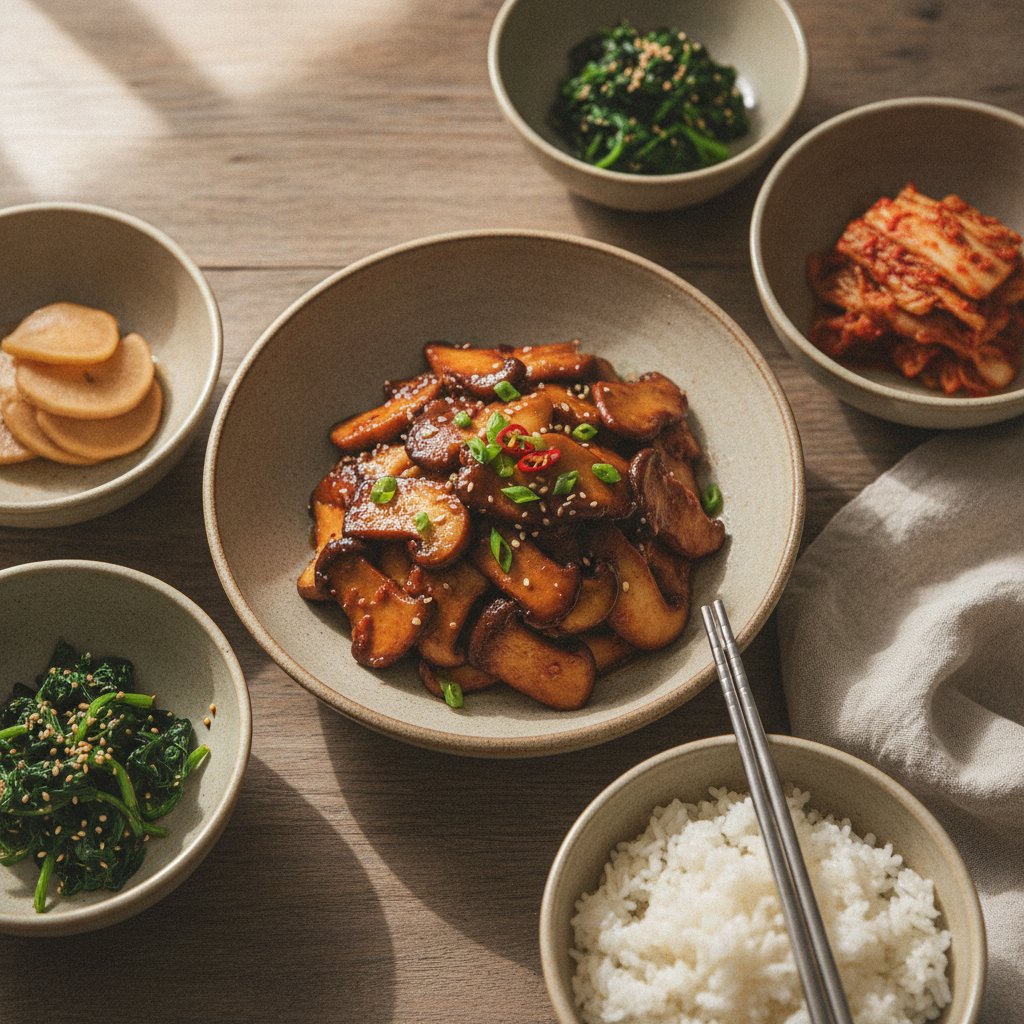
Braised King Oyster Mushrooms (Saesongi Beoseot Jorim)
This post contains affiliate links. As an Amazon Associate, we earn from qualifying purchases at no extra cost to you.
Prep: 10 min · Cook: 15 min · Total: 25 min · Serves 4
On cold autumn evenings in Seoul, my mother would pull a small glass container from the fridge filled with glossy, dark amber mushroom rounds that looked almost like seared sea scallops. They were tender, deeply savory, and possessed a rich, meaty bite that made us reach for another spoonful of hot white rice. That dish was saesongi beoseot jorim (braised king oyster mushrooms), a humble workhorse of the Korean side dish repertoire.
In Korea, home cooks rely heavily on banchan (side dishes) that can be prepared once and served throughout the week. Braising in soy sauce, a culinary technique known as jorim, is one of our favorite ways to preserve ingredients while infusing them with rich flavor. While beef and hard-boiled eggs are traditional choices for braising, king oyster mushrooms have become an absolute household staple across South Korea over the last few decades. They are inexpensive, nutritious, and have a unique cellular structure that absorbs liquid without collapsing into mush.
This particular braised king oyster mushroom recipe relies on a simple balance of soy sauce, sweet syrup, garlic, and toasted sesame oil. Whether you are looking for a satisfying plant-based main course or a classic Korean side dish to complete your table, this recipe brings authentic Seoul home cooking straight to your kitchen using standard pantry ingredients.
Why This Works
- Crosshatch Scoring: Lightly scoring the cut surfaces of the thick mushroom rounds creates tiny grooves that trap the soy reduction while allowing steam to escape, ensuring deep flavor penetration without sacrificing texture.
- Two-Stage Cooking: Dry-searing the mushroom slices in oil before adding any liquid creates a golden Maillard crust, building complex savory notes and preventing the mushrooms from becoming rubbery or boiled.
- Glaze Reduction Technique: Finishing the braise by reducing the garlic-soy liquid down to a thick, glossy syrup coats each piece in a shiny lacquer rather than leaving them sitting in a watery broth.
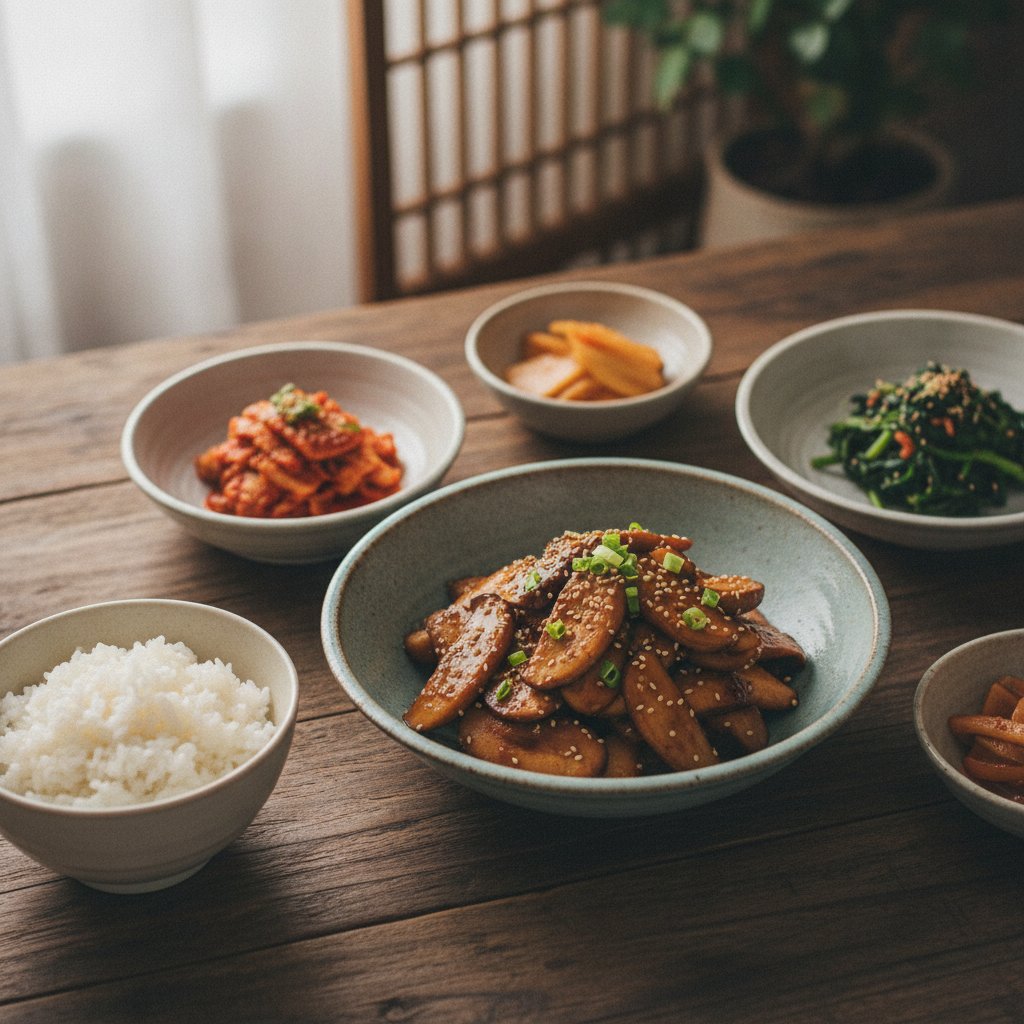
Ingredients
- 400 g (about 14 oz) king oyster mushrooms (approx. 3 to 4 large stems)
- 30 ml (2 tbsp) neutral cooking oil (such as canola, vegetable, or avocado oil)
- 30 ml (2 tbsp) regular soy sauce (or Korean jin-ganjang)
- 15 ml (1 tbsp) Korean soup soy sauce (guk-ganjang) or extra regular soy sauce
- 15 ml (1 tbsp) rice wine or mirin
- 15 g (1 tbsp) sugar or Korean rice syrup (ssal-jocheong)
- 15 ml (1 tbsp) honey or corn syrup (added at the end for shine)
- 180 ml (3/4 cup) water or mild kelp stock (dashima broth)
- 3 cloves garlic, thinly sliced
- 1 red or green chili pepper, thinly sliced (optional, for mild heat)
- 5 ml (1 tsp) toasted sesame oil
- 1 g (1/2 tsp) toasted sesame seeds, for garnish
Substitutions
If you cannot find king oyster mushrooms at your local market, large king trumpet mushrooms are identical. If neither is available, thick shiitake mushroom caps or halved cremini mushrooms make reasonable alternatives, though the cooking time will be slightly shorter. For Korean rice syrup, liquid honey or agave nectar works as a direct 1:1 substitute. If you do not have Korean soup soy sauce, simply replace it with regular Japanese soy sauce or light soy sauce; avoid using dark soy sauce, which will make the dish overly dark and heavy.
🛒 Braised King Oyster Mushrooms
As an Amazon Associate we earn from qualifying purchases.
Shop Ingredients & Tools →How to Make It
-
Clean and prep the mushrooms: Wipe the king oyster mushrooms clean with a damp paper towel to remove any stray growing medium. Avoid washing them under running water, as mushrooms act like sponges and will absorb excess water, preventing them from searing properly. Trim off the fibrous bottom tip of the stems. Slice the stems crosswise into round coins roughly 1.5 cm (about 1/2 inch) thick.
-
Score the surface: Using a sharp paring knife, score a gentle crosshatch or diamond pattern into both flat sides of each mushroom slice, cutting about 2 mm deep. Scoring breaks the tough outer skin of the mushroom stem, allowing heat and soy glaze to penetrate evenly into the center.
-
Sear for color and texture: Heat the neutral oil in a wide skillet over medium-high heat until it shimmers. Arrange the scored mushroom rounds in a single layer without crowding the pan. Sear until the bottoms turn deep golden brown, about 3 to 4 minutes. Flip each piece and sear the second side until browned, about 3 minutes. Searing locks in the natural moisture while caramelizing the exterior sugars.
-
Add aromatics and braising liquid: Turn the heat down to medium. Add the sliced garlic and chili pepper (if using) directly into the pan gaps between the mushrooms, letting them bloom in the hot oil until fragrant, about 30 seconds. Pour in the water (or kelp stock), soy sauce, soup soy sauce, rice wine, and sugar. Stir gently to dissolve the sugar.
-
Simmer and reduce: Bring the liquid to a steady simmer. Reduce heat to medium-low and let the mushrooms braise uncovered, flipping them occasionally, until the liquid reduces by about three-quarters and thickens into a rich amber glaze, about 7 to 9 minutes. The mushrooms will shrink slightly and turn plump and glossy.
-
Finish with glaze and sesame oil: Drizzle in the honey (or rice syrup) and toasted sesame oil during the final minute of cooking. Swirl the pan gently so every piece is coated in the glossy syrup. Remove from heat immediately to prevent the sugars from scorching. Garnish with toasted sesame seeds before serving.
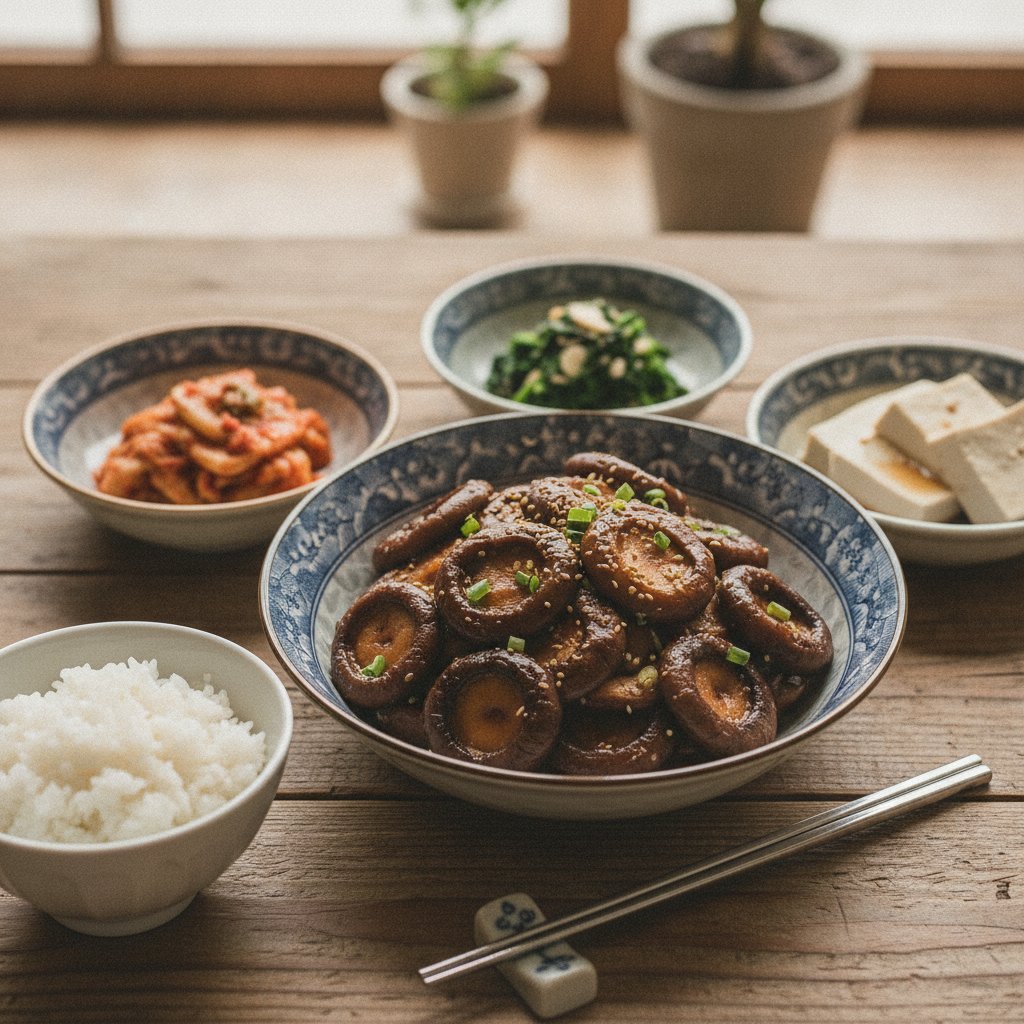
Tips from a Korean Kitchen
In Korean homes, achieving the right texture in a jorim dish comes down to moisture management. Here are a few practical rules we follow to get perfect results every time:
- Do not overcrowd the pan: If your skillet is too small to fit all the mushroom coins in a single layer, sear them in two separate batches. Crowding causes the mushrooms to steam in their own juices rather than caramelize, leading to a watery sauce later on.
- Control the final reduction carefully: Keep a close eye on the pan during the last two minutes of cooking. Because of the sugars in the rice wine and honey, the liquid transitions rapidly from a bubbling broth to a sticky glaze. Remove the pan from heat while there is still a small pool of thick liquid left.
- Use kelp stock for extra depth: While plain tap water works perfectly fine, steeping a 2-inch piece of dried kelp (dashima) in warm water for 10 minutes creates a subtle glutamic acid base that boosts the natural umami of the mushrooms without adding any fishy flavor.
- Adjust heat levels to your taste: Korean chili peppers (gwangju or cheongyang) add a crisp, bright heat that cuts through the rich soy glaze. If cooking for children or spice-sensitive diners, replace the chili with sliced green scallions added at the very end.
Storage
Braised king oyster mushrooms store exceptionally well, making them an ideal candidate for weekend meal preparation. Allow the cooked mushrooms to cool completely to room temperature before transferring them to an airtight glass container. Keep refrigerated for up to 5 days. As they sit in the fridge, the mushrooms will continue to absorb the sweet and savory soy sauce, tasting even better on day two.
Enjoy them chilled directly from the fridge alongside hot rice, or rewarm them gently in a small skillet over low heat for 2 to 3 minutes. A brief 20-second warm-up in the microwave also works well. Freezing is not recommended, as freezing breaks down the cellular structure of mushrooms, making them watery and mushy upon thawing.
🛒 Braised King Oyster Mushrooms
As an Amazon Associate we earn from qualifying purchases.
Shop Ingredients & Tools →FAQ
Can I use regular button or cremini mushrooms for this braised mushroom recipe?
Yes, cremini or button mushrooms can be braised using this exact glaze. However, because smaller mushrooms contain more water relative to their surface area, cut them in half rather than slicing them into thin coins, and reduce the braising time by 2 to 3 minutes to avoid overcooking.
Why are my king oyster mushrooms tough or chewy?
Toughened mushrooms usually result from undercooking or cutting the slices too thick. King oyster mushroom stems are dense and fibrous. Scoring the surfaces and simmer-braising for the full 7 to 9 minutes ensures the tough plant fibers break down properly while remaining tender to the bite.
Is this braised king oyster mushroom recipe naturally vegan?
Yes, this recipe is entirely plant-based provided you use rice syrup or maple syrup instead of honey for the final glaze step. Be sure to use plain water or kelp-based stock rather than fish-based anchovy broth for your liquid base.
More Korean Recipes
- Creamy Korean Corn Cheese (콘치즈)
- Gyeran Jjim (Korean Steamed Eggs): Always Fluffy
- Jangjorim Recipe: Authentic Korean Soy-Braised Beef and Eggs
- Eomuk Bokkeum (Stir-Fried Fish Cakes): Your New Favorite Lunchbox Side Dish
🛒 Braised King Oyster Mushrooms
As an Amazon Associate we earn from qualifying purchases.
Shop Ingredients & Tools →