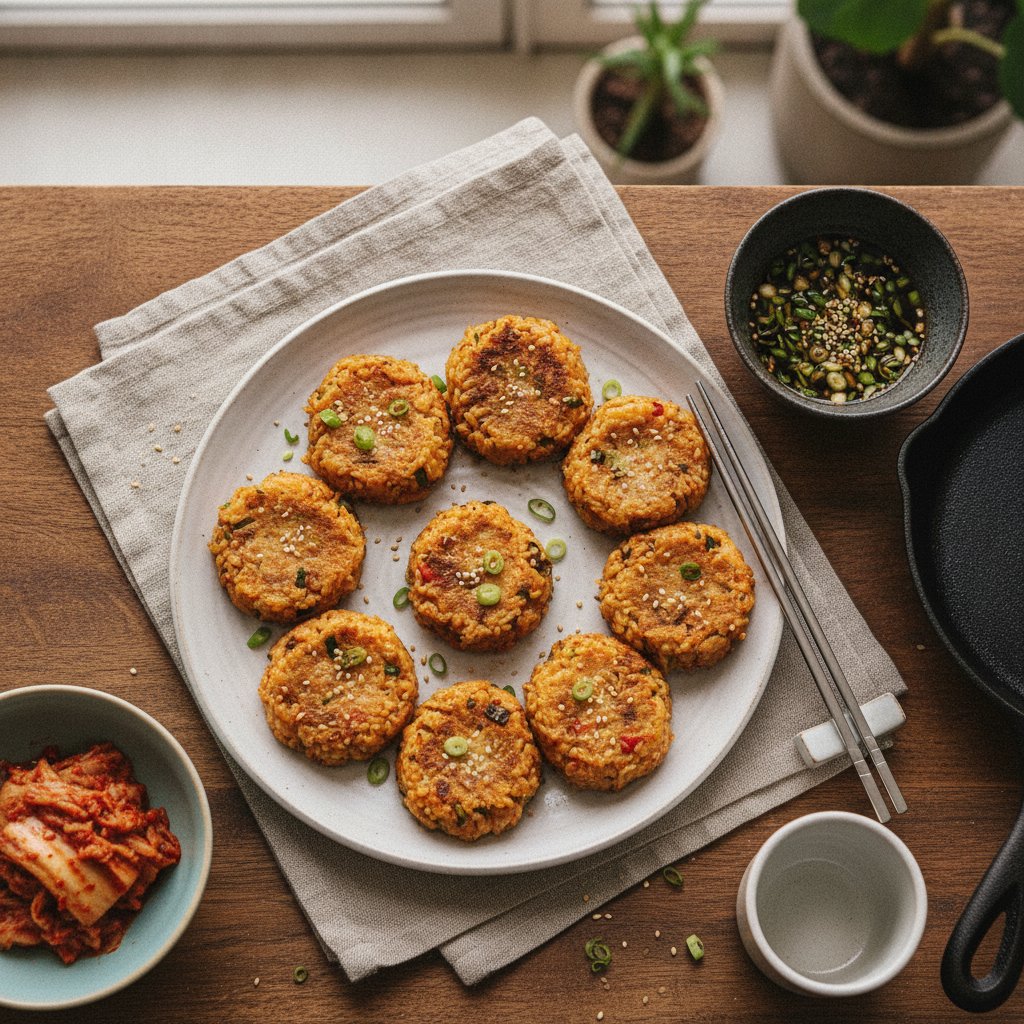
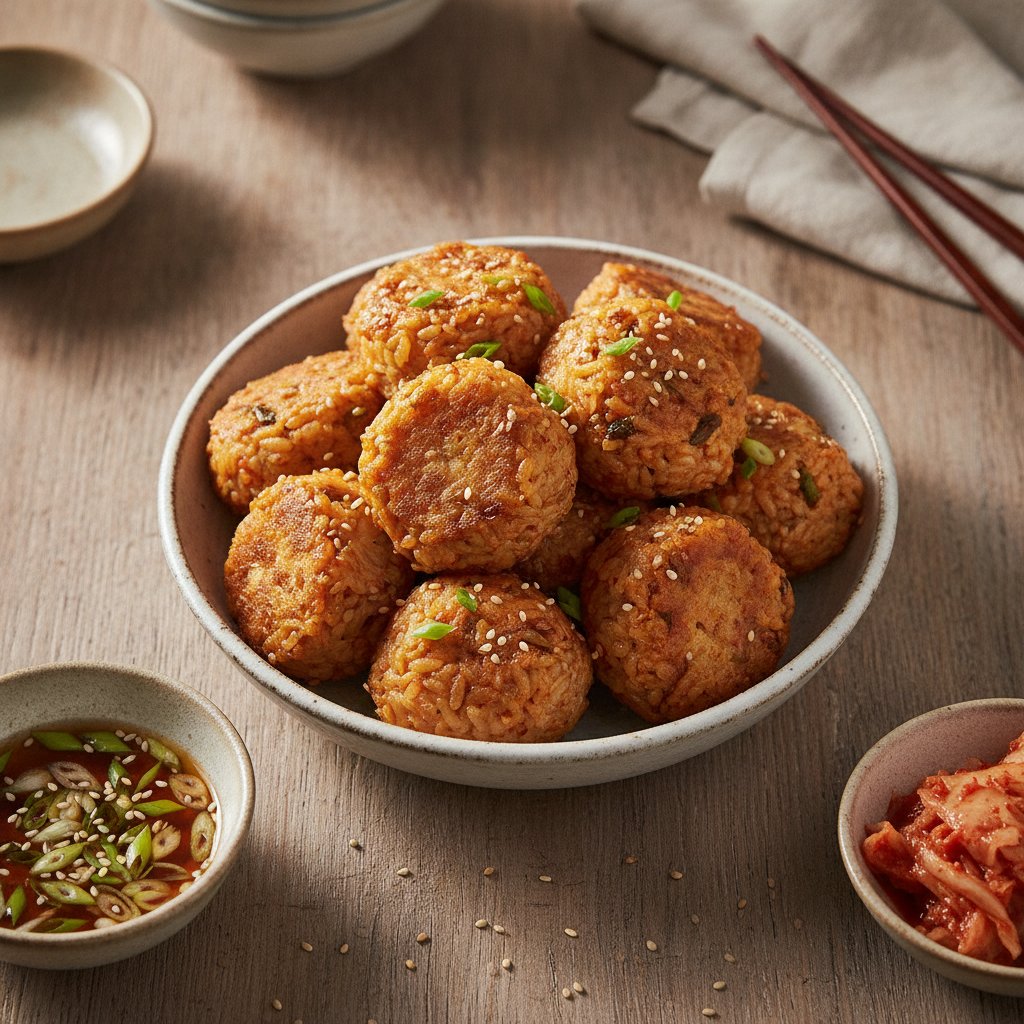
Pan-Fried Kimchi Rice Balls (Kimchi Jumokbap)
This post contains affiliate links. As an Amazon Associate, we earn from qualifying purchases at no extra cost to you.
At a glance
- In shortA guide to making crisp Korean pan-fried kimchi rice balls with a savory center.
- Best forHome cooks looking for a quick Korean comfort food dish
- Time30 min
- DifficultyEasy
- HeatMedium
- Key pointsSqueezing excess kimchi liquid prevents soggy rice and allows proper searing. · Short-grain rice provides necessary stickiness without egg or flour binders. · Pan-frying undisturbed creates a crunchy nurungji crust with a soft center.
- Heads-upDo not use freezing cold rice; microwave day-old rice until warm before mixing.
On rainy Tuesday evenings in Seoul, when the fridge looks nearly bare except for a tub of sour, over-ripened kimchi, my mother always reached for the rice cooker. In Korean home kitchens, we call this jumokbap (fist rice balls), a humble comfort dish born out of resourcefulness and pure love for carbohydrates. The word jumok literally means ‘fist’ and bap means ‘rice,’ referring to the classic way mothers would quickly squeeze seasoned rice into compact, portable shapes for quick school lunches or late-night snacks.
While traditional jumokbap can be as simple as warm rice tossed with toasted sesame oil and seasoned seaweed flakes, pan-frying them takes the dish to an entirely different level. Turning humble kimchi bokkeumbap (kimchi fried rice) into crisp, pan-seared rice balls creates a textural contrast that every Korean craves: a crunchy, golden exterior reminiscent of nurungji (scorched rice at the bottom of a hot stone pot) surrounding a soft, savory, and spicy center.
In Korea, you will frequently find these crispy morsels at local bunsikjib (snack bars) served alongside piping hot bowls of tteokbokki (spicy rice cakes) or sizzling plates of jeyuk bokkeum (spicy stir-fried pork). They are designed to soak up rich, spicy sauces while offering a delightful bite of their own. This home-cooked version requires no specialized tools, works with ingredients from any standard supermarket, and comes together in less than thirty minutes.
Why This Works
- Squeezing excess moisture: Pressing liquid out of the fermented cabbage prevents soggy rice balls and allows the sugar and gochujang (Korean red pepper paste) to properly caramelize in the hot pan.
- High-starch rice binding: Using short-grain white rice ensures the starches release enough stickiness so the shaped balls hold their form without needing eggs or flour binders.
- Dual-temperature searing: Frying the shaped rice balls in toasted sesame oil over medium heat creates an even, crunchy nurungji crust while keeping the stuffed center warm and gooey.
Ingredients
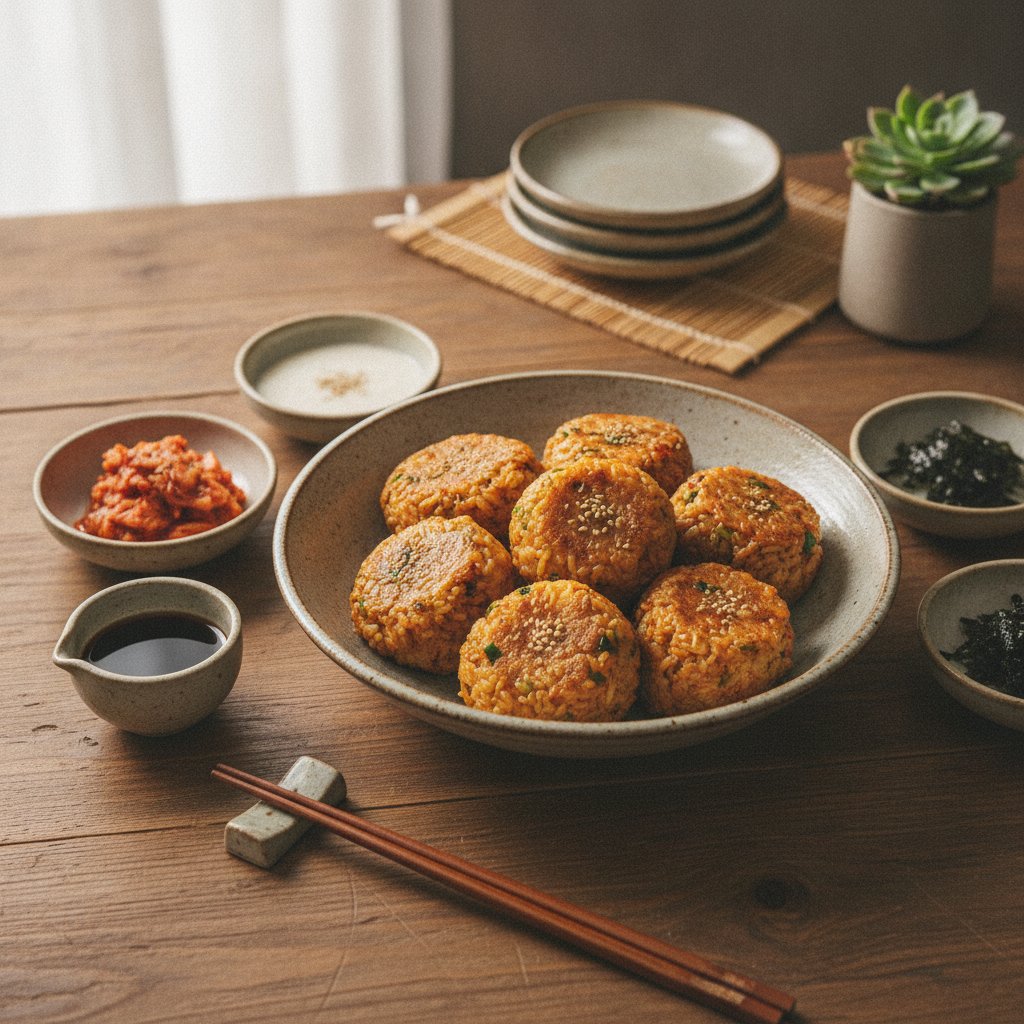
- 600 g (about 3 cups) cooked short-grain white rice, freshly cooked or slightly warm
- 200 g (about 1 cup) well-fermented napa cabbage kimchi, squeezed and finely chopped
- 30 ml (2 tbsp) kimchi juice (reserved after squeezing)
- 15 g (1 tbsp) gochujang (Korean red pepper paste, such as CJ Haandrepl or Sunchang)
- 5 g (1 tsp) granulated sugar
- 15 ml (1 tbsp) soy sauce
- 30 ml (2 tbsp) toasted sesame oil, divided
- 10 g (2 sheets or 1/2 cup shredded) gim (seasoned roasted seaweed/nori sheets, finely crushed)
- 10 g (1 tbsp) toasted sesame seeds
- 100 g (about 3.5 oz) canned tuna (drained) or cooked bacon/ground pork (optional flavor booster)
- 60 g (about 1/2 cup) low-moisture shredded mozzarella cheese (optional center filling)
Substitutions
If you cannot source every specific Korean staple at your local Western grocery store, these practical swaps maintain the heart of the dish without sacrificing quality:
- Short-Grain Rice: Japanese sushi rice or medium-grain Calrose rice works perfectly. Avoid long-grain varieties like Jasmine or Basmati because they lack the amylopectin starch required to hold the balls together without crumbling.
- Gochujang: If you do not have access to a red tub of Korean pepper paste, mix 1 tablespoon of Sriracha sauce with 1/2 teaspoon of miso paste and a pinch of brown sugar to mimic the sweet, savory, fermented heat.
- Gim (Seaweed): Standard Japanese nori sheets or commercially available seaweed snack packs (like those sold in Trader Joe’s or Costco) crumble easily and taste nearly identical.
How to Make It
-
Prep and squeeze the kimchi: Take your aged napa cabbage kimchi and wrap it in a clean kitchen towel or paper towels. Gently squeeze out excess liquid into a small bowl and set aside 30 ml (2 tbsp) of the juice. Finely chop the drained kimchi into tiny, bite-sized pieces about the size of small peas.
Why this step matters: Wet ingredients destroy structural integrity. If kimchi introduces too much free moisture into cooked rice, the rice grains expand, steam instead of sear, and collapse when flipped in the hot skillet.
-
Sauté the flavorful kimchi base: Place a non-stick skillet over medium heat and add 15 ml (1 tbsp) of toasted sesame oil. Add the chopped kimchi, granulated sugar, soy sauce, and gochujang. Cook, stirring constantly, until the kimchi turns translucent and the sharp harshness of the fermented acid transforms into a mellow, sweet aroma (about 3 to 4 minutes). If using canned tuna or cooked bacon, stir it in during the last minute.
Why this step matters: Raw kimchi contains sharp lactic acid. Cooking it in fat caramelizes its natural sugars, mellows the sour bite, and builds a rich umami foundation that seasons every grain of rice uniformly.
-
Mix the rice matrix: Transfer your warm cooked rice into a large mixing bowl. Pour the hot sautéed kimchi mixture over the rice, along with the reserved 30 ml of kimchi juice, toasted sesame seeds, and crushed gim (seasoned seaweed). Using a silicone spatula or a gloved hand, mix thoroughly until every single grain of rice is coated in a uniform red sheen.
Why this step matters: Warm rice absorbs fats and seasonings far better than cold rice. The surface starches remain pliable, creating a natural adhesive paste as you mix.
-
Form and stuff the rice balls: Lightly coat your hands with a drop of water or sesame oil to prevent sticking. Scoop roughly 80 g to 100 g (about 1/3 cup) of the rice mixture into your palm. Flatten it slightly, create a small indentation in the center, and place a small pinch of shredded mozzarella cheese (about 1 tablespoon) into the middle if desired. Fold the rice over the cheese, cup your hands firmly together, and squeeze gently to compress the rice into a tight, dense disk or traditional triangle shape. Repeat to yield 6 to 8 uniform balls.
Why this step matters: Air pockets inside a rice ball trap steam. Squeezing tightly expels air and forces the sticky outer starches to lock together, ensuring the rice ball remains sturdy during handling and pan-frying.
-
Pan-fry for a golden crust: Wipe your skillet clean, place it back over medium heat, and add the remaining 15 ml (1 tbsp) of toasted sesame oil. Once the oil shimmers, carefully lay the rice balls into the pan, leaving space between each. Cook undisturbed for 3 to 4 minutes until the bottom side forms a deep orange-golden crust. Carefully flip using a flat spatula and cook the other side for another 3 to 4 minutes.
Why this step matters: Moving the rice balls too early tears the delicate starch layer before it has a chance to crisp up. Allowing the starches to sear undisturbed creates a sturdy, caramelized nurungji barrier that seals in heat and melts any internal cheese.
Tips from a Korean Kitchen
- Embrace old, sour kimchi: Freshly made kimchi (*geotjeori*) lacks the intense depth and acidity required for cooking. In Korea, we always reserve the sour, heavily fermented bottles sitting at the back of the fridge specifically for rice balls, soups, and pancakes.
- Do not cook with freezing cold rice: Cold, leftover rice straight from the refrigerator has undergone starch retrogradation, making it hard and brittle. If using day-old rice, microwave it for 45 seconds until warm and pliable before mixing with your hot kimchi base.
- Keep pan heat at a steady medium: High heat will scorch the gochujang sugars before the interior warms through or the cheese melts. Low heat steams the rice instead of frying it, leaving you with soft, oily balls instead of a crunchy shell.
- Dampen your hands or use food-safe plastic gloves: Starchy short-grain rice sticks vigorously to dry skin. Keeping a small bowl of water near your workspace to lightly moisten your palms makes shaping effortless.
Storage
In the Fridge: Store fully cooked and cooled rice balls in an airtight glass container lined with paper towels for up to 3 days. The paper towel absorbs excess moisture condensation that could soften the crust.
In the Freezer: Wrap each un-fried or fried rice ball tightly in plastic wrap, then place them inside a freezer-safe zip-top bag. They freeze beautifully for up to 1 month. Thaw overnight in the refrigerator before reheating.
Reheating: To restore the irresistible crispiness, re-fry stored rice balls in a non-stick skillet over low-medium heat with a splash of sesame oil for 4 to 5 minutes per side. Alternatively, air-fry them at 180°C (350°F) for 6 to 8 minutes. Avoid relying solely on the microwave, as it makes the rice soft and chewy rather than crisp.
FAQ
Why are my kimchi rice balls falling apart in the pan?
Rice balls crumble primarily due to excess moisture or using long-grain rice varieties like Jasmine. Ensure you squeeze as much liquid out of the kimchi as possible before cooking, and squeeze the rice firmly between your palms when shaping to eliminate internal air pockets.
Can I make these kimchi rice balls in an air fryer?
Yes. Brush the shaped rice balls lightly with toasted sesame oil or cooking spray on all sides. Place them in your air fryer basket lined with parchment paper and cook at 190°C (375°F) for 10 to 12 minutes, flipping halfway through until the edges turn golden and crispy.
What kind of rice is best for Korean jumokbap?
Short-grain or medium-grain white rice (often labeled as sushi rice or Calrose rice) is ideal. These varieties contain higher amounts of amylopectin starch, which provides the natural stickiness needed to hold the rice ball together firmly without crumbling.
More on Kimchi Rice & Mains
- Kimchi Fried Rice with SpamA guide to making quick Korean kimchi fried rice with Spam, aged kimchi, and day-old rice.
- Sweet and Savory Stir-Fried KimchiLearn how to transform sour fermented kimchi into a tender, savory Korean side dish with sugar and sesame oil.
- Pork Belly Kimchi Stir FryA step-by-step guide to making traditional Korean pork belly and aged kimchi stir-fry.
See every Kimchi Rice & Mains post in our Kimchi guide.
Handy toolsRecipe scaler · Measurement converter · Korean pantry guide · Recipe Finder
More Korean Recipes
- Kimchi Dubu Jorim: Spicy Braised Tofu with Kimchi
- Kimchi Kalguksu Recipe: Korean Knife-Cut Noodle Soup
- Crispy Kimchi Grilled Cheese (Kimchi Chijeu Tosteu)
- Crispy Tuna Kimchi Pancakes (Chamchi Kimchi Jeon)