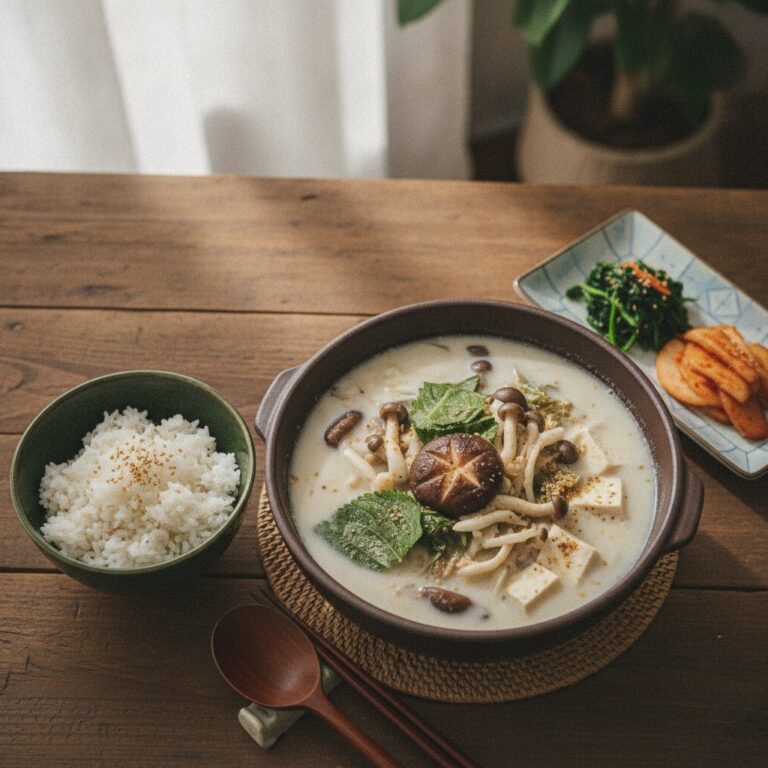
Heartwarming Mandu Guk (Korean Dumpling Soup) with Store-Bought Mandu
This post contains affiliate links. As an Amazon Associate, we earn from qualifying purchases at no extra cost to you.
At a glance
- In shortHow to make authentic Korean dumpling soup quickly using frozen store-bought mandu.
- Best forHome cooks looking for a quick Korean dumpling soup
- DifficultyEasy
- HeatNot spicy
- Key pointsStore-bought frozen mandu provides quick homemade flavor · Dried anchovies and kelp form the traditional savory broth base · Gently swirl beaten egg at the end to form delicate ribbons
- Heads-upRemove kelp after 10-15 minutes to keep the broth from getting bitter or slimy.
It’s easy to assume that a truly comforting bowl of Mandu Guk, or Korean Dumpling Soup, requires hours of work spent crafting dumplings by hand. Many home cooks overlook just how simple it is to achieve that deeply satisfying, soul-warming experience, especially when using quality store-bought mandu. This savory, warm soup is the perfect antidote to a long day, a liquid hug that hits just right when the weather gets chilly.
In Korea, Mandu Guk holds a special place, particularly during Seollal (Lunar New Year). It’s traditionally one of the first dishes we eat to welcome the new year, symbolizing good fortune with its dumpling-like shape resembling old Korean coins. But let’s be real, while it’s a holiday staple, we eat it all year round because it’s just that delicious and versatile!
Now, I know what you might be thinking: “Dumplings from scratch? That sounds like a lot of work!” And yes, making mandu from scratch is a labor of love, often a family activity that takes hours. But here’s the secret the way most busy Koreans (like myself!) actually make this at home on a regular Tuesday: we use store-bought mandu!
And let me tell you, there is absolutely no shame in it. Korean grocery stores, both here in Seoul and at Asian markets abroad, offer an incredible variety of delicious frozen mandu. They’ve come so far in quality, truly mimicking homemade taste. This version of Mandu Guk is designed for you, my dear readers outside Korea, who want authentic Korean flavors without a trip to a specialty market for every single item or spending an entire afternoon just folding dumplings. With just a few staple ingredients and your trusty frozen mandu, you’ll have a bowl of comforting Mandu Guk that tastes just like it came from a Seoul kitchen.
Ingredients
- 1.5 L (about 6 cups) water
- 8-10 large dried anchovies (myeolchi), heads and guts removed
- 1 (5×5 cm or 2×2 inch) piece of dried kelp (dashima)
- 1/2 medium onion, peeled
- 3-4 cloves garlic, smashed
- Optional: 100 g (about 3.5 oz) Korean radish (mu), sliced (or daikon)
- 500 g (about 1 lb) frozen store-bought mandu (any filling you like!)
- 100-150 g (about 3.5-5 oz) sliced rice cakes (tteokguk tteok), soaked in water for 10 minutes (optional, for Tteok Mandu Guk)
- 1-2 tbsp Korean soup soy sauce (guk ganjang) or regular soy sauce
- 1/2 tsp fine sea salt, or to taste
- Pinch of black pepper
- 1 large egg, beaten
- 2-3 green onions (pa), thinly sliced for garnish
- 2 sheets roasted seaweed (gim), shredded for garnish
Substitutions
- Dried Anchovies & Kelp: These are the base for a classic Korean seafood broth. If you can’t find them, you can use 1.5 L (6 cups) good quality unsalted chicken or vegetable broth. For a closer taste, you can try dashi powder or granules (about 1-2 tsp) dissolved in water, but the whole ingredients give a deeper flavor.
- Korean Radish (Mu): If fresh Korean radish or daikon is unavailable, you can simply omit it. It adds a subtle sweetness and depth, but the soup will still be delicious without it.
- Korean Soup Soy Sauce (Guk Ganjang): This special soy sauce is lighter in color but saltier and more aromatic, traditionally used for soups. If you don’t have it, regular all-purpose soy sauce (like Kikkoman or Sempio brand) works perfectly fine. Just start with 1 tablespoon and add more salt if needed, as regular soy sauce is less salty.
- Sliced Rice Cakes (Tteokguk Tteok): These thin, oval rice cakes make it Tteok Mandu Guk (떡만두국). If you can’t find them, no worries! Just make plain Mandu Guk. The soup is hearty enough with just dumplings.
- Roasted Seaweed (Gim): This adds a lovely savory, slightly salty crunch. If you can’t find full sheets, those small snack-sized nori packs work great – just crumble them over the top. Or, simply omit.

How to Make It
- Prepare the Broth Base: In a large pot, combine 1.5 L (6 cups) of water, the cleaned dried anchovies, dried kelp, half onion, smashed garlic cloves, and sliced radish (if using). This combination of ingredients is the secret to a clean, savory, and deeply flavorful Korean broth, known as yuksu. The anchovies and kelp provide the essential umami, while the onion, garlic, and radish add sweetness and aromatic depth. We’re building a strong flavor foundation!
- Simmer for Flavor Extraction: Bring the pot to a boil over medium-high heat. Once boiling, immediately reduce the heat to low, cover, and let it gently simmer for 15-20 minutes. It’s crucial to remove the kelp after about 10-15 minutes to prevent the broth from becoming slimy or bitter. Continue to simmer the remaining ingredients for the full 20 minutes. Gentle simmering allows the flavors to meld and extract slowly without harshness.
- Strain and Season the Broth: Carefully remove and discard the anchovies, onion, garlic, and radish from the pot. You want a clear, pristine broth. Use a fine-mesh sieve if you have one for an extra clean result. Now, season the broth with 1-2 tablespoons of Korean soup soy sauce (guk ganjang) or regular soy sauce, and 1/2 teaspoon of salt. Taste the broth. It should be pleasantly savory. Adjust the seasoning as needed – remember, you can always add more, but you can’t take it away!
- Add Mandu and Rice Cakes: Increase the heat to bring the broth back to a rolling boil. Add your frozen mandu and the soaked, drained rice cakes (tteok), if you’re using them. Adding them to boiling water ensures they cook quickly and evenly, preventing them from sticking to the bottom of the pot. Since frozen mandu and tteok need a good amount of heat to cook through, a strong boil is key.
- Cook Until Mandu Float: Let the soup boil for about 5-7 minutes, or until the mandu are cooked through. You’ll know they’re ready when they float to the surface and appear plump and soft. The tteok will also become soft and chewy. If you add the egg too early, before the mandu are cooked, it can overcook and become rubbery.
- Swirl in the Egg: Once the mandu are floating, turn the heat down slightly to a simmer. Slowly pour the beaten egg into the soup in a thin stream, swirling it gently with a spoon or chopsticks. Let it cook for about 30 seconds without stirring vigorously. This creates beautiful, delicate ribbons of egg throughout the soup, adding a lovely texture and richness without creating scrambled egg chunks.
- Final Touches and Serve: Do a final taste test and adjust any seasoning (salt or soy sauce) if necessary. Stir in a pinch of black pepper. Ladle the hot Mandu Guk into individual serving bowls. Garnish generously with thinly sliced green onions and shredded gim (roasted seaweed). These garnishes aren’t just for looks; the green onions add a fresh, pungent kick, and the gim provides a delightful savory crunch that contrasts wonderfully with the soft dumplings and soothing broth. Serve immediately and enjoy!

🛒 Heartwarming Mandu Guk with Store
As an Amazon Associate we earn from qualifying purchases.
Shop Ingredients & Tools →Tips from a Korean Kitchen
- Broth is King: While we’re using store-bought mandu, the quality of your broth is paramount to a delicious Mandu Guk. Don’t rush the broth-making process. If you’re short on time, using a good quality store-bought broth (like unsalted chicken or vegetable) is an acceptable shortcut, but I still recommend enhancing it with a bit of garlic and green onion whites for extra Korean flavor.
- Don’t Overcrowd the Pot: If you’re making a big batch or using a smaller pot, it’s better to cook the mandu in two separate batches rather than crowding them all at once. Overcrowding can lower the broth temperature too much, leading to unevenly cooked mandu and a murky broth.
- Customize Your Mandu: Feel free to experiment with different types of frozen mandu! Pork and vegetable is classic, but kimchi mandu adds a spicy, tangy kick that many Koreans adore. There are also beef, shrimp, or purely vegetable fillings available. Each offers a slightly different flavor profile to your soup.
- Serve piping hot: Mandu Guk is truly best enjoyed fresh and hot. The dumplings can start to get a little soggy if left sitting in the broth for too long, so gather your family and dig in as soon as it’s ready!
Storage
Mandu Guk is best enjoyed fresh. Leftovers can be stored in an airtight container in the refrigerator for up to 2-3 days. However, please note that the mandu themselves tend to get softer and a bit mushy after sitting in the broth overnight. For best results, if you anticipate having leftovers, you can store the broth and cooked mandu separately. The broth freezes beautifully for up to a month. If freezing, simply thaw the broth and cook fresh mandu in it when you’re ready to eat.
Reheating
To reheat, gently warm the soup on the stovetop over medium-low heat until simmering. If the dumplings have absorbed too much broth, you might need to add a splash of water or extra broth. Avoid boiling vigorously, as this can break apart the mandu.
FAQ
Can I make Mandu Guk vegetarian?
Absolutely! To make a vegetarian Mandu Guk, simply omit the dried anchovies and instead use a good quality vegetable broth or just water with extra dried kelp, onion, and garlic for a flavorful base. Ensure you select vegetarian frozen mandu, which are widely available in most Asian markets.
What’s the best type of mandu to use for this recipe?
The beauty of this recipe is its flexibility! Any frozen store-bought mandu will work wonderfully. Popular choices include pork and vegetable mandu for a classic taste, or kimchi mandu if you enjoy a bit of spice and tang. Don’t hesitate to try different brands and fillings to find your favorite!
What is the difference between Mandu Guk and Tteok Mandu Guk?
Mandu Guk (만두국) is a Korean dumpling soup. Tteok Mandu Guk (떡만두국) is essentially the same soup but with the addition of thinly sliced oval rice cakes (tteokguk tteok). The rice cakes add a delightful chewy texture and make the soup even more filling. Tteok Mandu Guk is especially popular during Lunar New Year.
🛒 Heartwarming Mandu Guk with Store
As an Amazon Associate we earn from qualifying purchases.
Shop Ingredients & Tools →More on Light & Everyday Soups
- Siraegi Doenjang Guk (Radish Greens Soup)Learn how to prepare traditional Korean dried radish greens soup with soybean paste.
- Kimchi Kongnamul GukHow to make spicy Korean bean sprout soup with aged kimchi and anchovy stock.
- Oi Naenguk: Chilled Korean Cucumber SoupLearn how to make Oi Naenguk, a refreshing chilled Korean cucumber soup pre-seasoned for maximum flavor.
See every Light & Everyday Soups post in our Soups & Stews guide.
Handy toolsRecipe scaler · Measurement converter · Korean pantry guide · Recipe Finder
More Korean Recipes
- Warm & Comforting Chamchi Kimchi Jjigae (Tuna Kimchi Stew) from Your Pantry
- Gyeran-guk (Korean Egg Drop Soup) in 10 Minutes
- Comforting Korean Cabbage Soup: Baechu Doenjang Guk (배추 된장국)
- Creamy Korean Oxtail Soup (Kkori Gomtang)
🛒 Heartwarming Mandu Guk with Store
As an Amazon Associate we earn from qualifying purchases.
Shop Ingredients & Tools →