Comforting Siraegi Doenjang Guk (Radish Greens Soup)
This post contains affiliate links. As an Amazon Associate, we earn from qualifying purchases at no extra cost to you.
At a glance
- In shortLearn how to prepare traditional Korean dried radish greens soup with soybean paste.
- Best forHome cooks wanting to cook traditional Korean comfort food
- DifficultyMedium
- HeatMild
- Key pointsPre-season greens by massaging them with doenjang and garlic before boiling. · Peel fibrous stem skins and steep boiled greens to ensure a tender texture. · Use starchy rice washing water to smooth out the strong fermented soybean paste.
- Heads-upPeel off the translucent outer skin of thick stalks to prevent stringiness.
Warmth in a Bowl: The Story of Siraegi Doenjang Guk
When late autumn rolls around in Seoul, you will see long strings of deep green radish leaves hanging under the eaves of brick houses and country barns, gently drying in the chilly mountain breeze. This is siraegi (dried radish greens), a traditional Korean ingredient born out of necessity to carry families through harsh winters when fresh vegetables were impossible to grow. Dried carefully, these greens keep their deep earthy flavor and turn wonderfully tender when stewed.
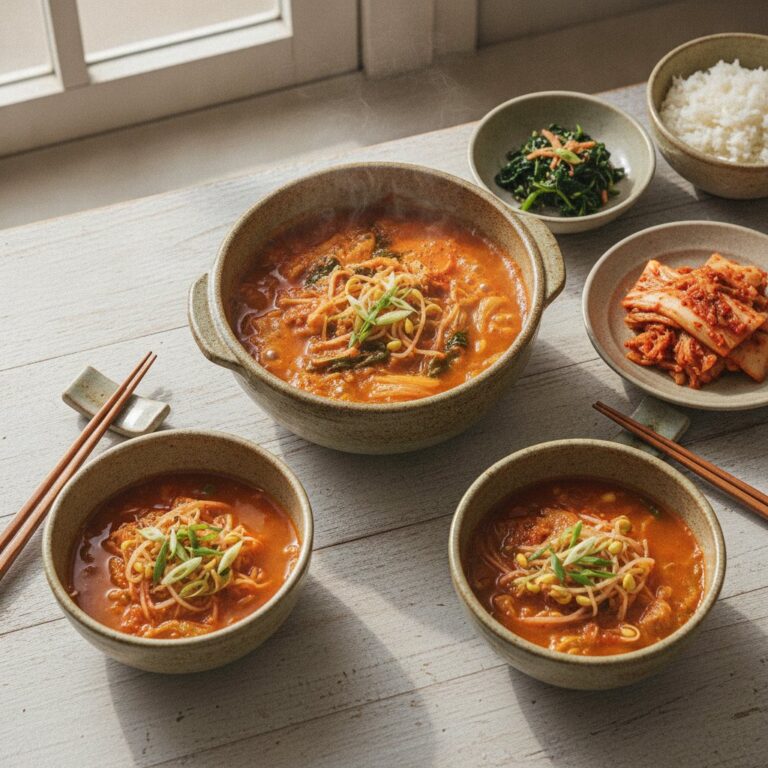
Among all the ways we cook these preserved leaves, siraegi doenjang guk (dried radish greens soup) is the undisputed classic. It is a hearty, deeply aromatic soup built around doenjang (fermented soybean paste), garlic, and a savory broth base. In Korean homes, this isn’t a flashy dish you order at high-end restaurants; it is the soul-warming bowl your grandmother simmers on a cold Tuesday night, served alongside a hot bowl of freshly steamed white rice and a side of crisp cabbage kimchi.
If you love Korean food but have felt intimidated by traditional preserved ingredients, this recipe bridges that gap. You will learn how to handle dried greens properly and build an authentic, deeply comforting broth using simple everyday techniques.

Why This Works
- Pre-seasoning the greens: Massaging the rehydrated radish leaves directly with soybean paste and garlic before boiling locks rich flavor into every fiber rather than letting the greens taste bland inside a seasoned broth.
- Starchy rice water base: Cooking with ssalddeumul (rice washing water) introduces gentle starches that round off the sharp fermented edges of soybean paste, yielding a smoother broth texture.
- A slow, covered simmer: Steeping the greens over low heat breaks down tough cellulose without destroying the rich, earthy structural integrity of the stems.
🛒 Comforting Siraegi Doenjang Guk
As an Amazon Associate we earn from qualifying purchases.
Shop Ingredients & Tools →Ingredients
- 100 g (3.5 oz) dried siraegi (dried radish greens), which yields roughly 350 g (12 oz) once fully rehydrated and squeezed
- 1.2 L (about 5 cups) ssalddeumul (rice washing water) or light anchovy-kelp stock
- 3 tbsp Korean doenjang (fermented soybean paste), such as CJ Haechandle or Sempio brands
- 1 tbsp gochugaru (Korean coarse chili flakes)
- 1.5 tbsp minced garlic (about 5–6 cloves)
- 1 medium green onion (about 40 g / 1.4 oz), diagonally sliced
- 1 fresh green chili pepper or serrano pepper (about 15 g / 0.5 oz), thinly sliced
- 1 tbsp deul-girem (toasted perilla oil) or toasted sesame oil
- 1 tsp guk-ganjang (Korean soup soy sauce), optional to adjust final salt level
Substitutions
If you cannot source traditional dried radish greens at your local Asian market or online, do not worry. You can achieve a very similar home-cooked flavor with accessible alternatives:
- Radish Greens Substitute: Fresh kale, collard greens, or mustard greens work exceptionally well. Blanch tough greens in boiling salted water for 5–7 minutes until tender, plunge into cold water, squeeze dry, and proceed with the marinade step. Dried sweet potato vines (gogumatjulgi) are another wonderful traditional alternative.
- Rice Water Alternative: If you are not making rice alongside your soup, simply whisk 1 teaspoon of rice flour or all-purpose flour into 1.2 liters (5 cups) of cold tap water until fully dissolved.
- Perilla Oil Substitute: Perilla oil offers an earthy, nutty aroma unique to Korean countryside cooking. Standard toasted sesame oil makes a delicious replacement if perilla oil is unavailable.
- Doenjang Substitute: While Japanese miso looks similar, it is milder and sweeter. If using miso, select a dark or red miso, but reduce any added sweetener in your meal and add a tiny pinch of extra salt to match doenjang‘s robust pungency.
How to Make It
- Rehydrate the dried greens: Place the dried radish greens in a large pot and cover generously with cold water. Bring to a boil over high heat, then lower to medium and boil for 30 minutes. Turn off the heat, cover the pot with a lid, and let the greens steep in the hot water for at least 3 hours (or overnight). Why: Dried greens feature dense cell walls; boiling hydrates them, while prolonged steeping gradually softens the tough inner fibers without tearing the delicate leaves.
- Peel tough skin fibers: Drain the rehydrated greens and rinse under cold water. Grab a stem and gently peel off the paper-thin, translucent outer skin running along the thickest parts of the stalks. Why: Removing this fibrous outer skin ensures your soup greens melt gently in your mouth rather than feeling stringy or chewy.
- Squeeze and chop: Firmly squeeze out excess moisture from the peeled greens using your hands. Lay them on a cutting board and cut them into 5 cm (2-inch) long bite-sized pieces.
- Marinate the greens (The Secret Step): Place the chopped greens into a mixing bowl. Add 2 tablespoons of the doenjang, all the minced garlic, 1 tablespoon of gochugaru, and 1 tablespoon of perilla oil. Use your hand to firmly massage the seasonings into the greens for 1 to 2 minutes until evenly coated. Why: Direct friction forces the umami-rich soybean paste deep into the plant tissue, guaranteeing that every bite of vegetable carries robust seasoning.
- Prepare the broth: Pour 1.2 liters of rice washing water into a soup pot. Whisk the remaining 1 tablespoon of doenjang through a fine-mesh strainer directly into the water. Why: Pressing soybean paste through a strainer dissolves the savory paste while catching coarse soybean hulls, giving you a smooth broth base.
- Combine and simmer: Add the marinated greens to the pot. Bring the soup to a rolling boil over medium-high heat. Once boiling, turn heat down to low, cover tightly with a lid, and let gently simmer for 25 to 30 minutes until the greens are buttery tender.
- Add final aromatics: Uncover the pot and toss in the sliced green onions and green chili peppers. Let the soup simmer uncovered for an additional 3 to 5 minutes so the aromatics soften and release fresh top notes into the steam. Taste the broth—if you prefer a saltier finish, stir in 1 teaspoon of soup soy sauce. Turn off heat and serve steaming hot.

🛒 Comforting Siraegi Doenjang Guk
As an Amazon Associate we earn from qualifying purchases.
Shop Ingredients & Tools →Tips from a Korean Kitchen
- Always save your rice water: When washing short-grain white rice for dinner, discard the murky first rinse (which cleans surface dust). Save the second and third rinses for your soup stock. The suspended rice starch thickens the broth slightly and binds oil droplets into a cohesive soup.
- Don’t rush the steep: The secret to silky greens isn’t longer boiling, which turns leaves mushy—it is the long steep after boiling. Preparing your dried greens the night before makes cooking dinner effortless the next day.
- Tame the pungency with chili: Traditional doenjang carries a strong, deeply fermented funk. A single sliced green chili pepper adds a clean, sharp heat that cuts through heavy soybean notes without making the soup uncomfortably spicy.
Storage
Siraegi doenjang guk keeps exceptionally well because stewed greens hold their shape without getting soggy. Store cooled leftovers in an airtight container in the refrigerator for up to 5 days. Reheat on the stovetop over medium heat until bubbling warm; you may need to add a splash of water if the broth reduced in the fridge.
To freeze, portion the cooled soup into freezer-safe containers or bags and freeze for up to 3 months. Thaw overnight in the refrigerator before reheating thoroughly on the stove.
FAQ
Is siraegi doenjang guk healthy?
Yes, this soup is considered a nutrient-dense superfood dish in Korea. Radish greens are packed with dietary fiber, calcium, iron, and vitamin C. Combined with the natural probiotics and protein found in fermented soybean paste, it offers a light, gut-friendly meal that is naturally low in fat.
Can I add protein like pork or beef to this soup?
Absolutely. While a plain vegetable broth is traditional for daily home meals, many Korean households cook this with sliced beef brisket (chadolbagi) or pork shoulder. Simply sear 100 g (3.5 oz) of thinly sliced meat at the bottom of your pot before adding the broth and seasoned greens.
Why are my radish greens still chewy after cooking?
Chewiness usually happens for two reasons: skipping the outer skin peeling process or rushing the rehydration steeping time. Make sure to let boiled dried greens sit covered in hot water for a few hours, and take a moment to peel off the clear outer stem skin before cooking.
🛒 Comforting Siraegi Doenjang Guk
As an Amazon Associate we earn from qualifying purchases.
Shop Ingredients & Tools →More on Light & Everyday Soups
- Kimchi Kongnamul GukHow to make spicy Korean bean sprout soup with aged kimchi and anchovy stock.
- Oi Naenguk: Chilled Korean Cucumber SoupLearn how to make Oi Naenguk, a refreshing chilled Korean cucumber soup pre-seasoned for maximum flavor.
- Ahuk Guk (Korean Mallow Soup) RecipeA guide to making Ahuk Guk, a comforting Korean soup made with mallow leaves, soybean paste, and dried shrimp.
See every Light & Everyday Soups post in our Soups & Stews guide.
Handy toolsRecipe scaler · Measurement converter · Korean pantry guide · Recipe Finder
More Korean Recipes
- Cozy Kimchi Mandu Jjigae (Korean Dumpling Stew)
- Honghap Tang Recipe (Clear Korean Mussel Soup)
- Comforting Hobak Juk (Korean Sweet Pumpkin Porridge)
- Rich Chadol Doenjang Jjigae (Beef Brisket Stew)
🛒 Comforting Siraegi Doenjang Guk
As an Amazon Associate we earn from qualifying purchases.
Shop Ingredients & Tools →