
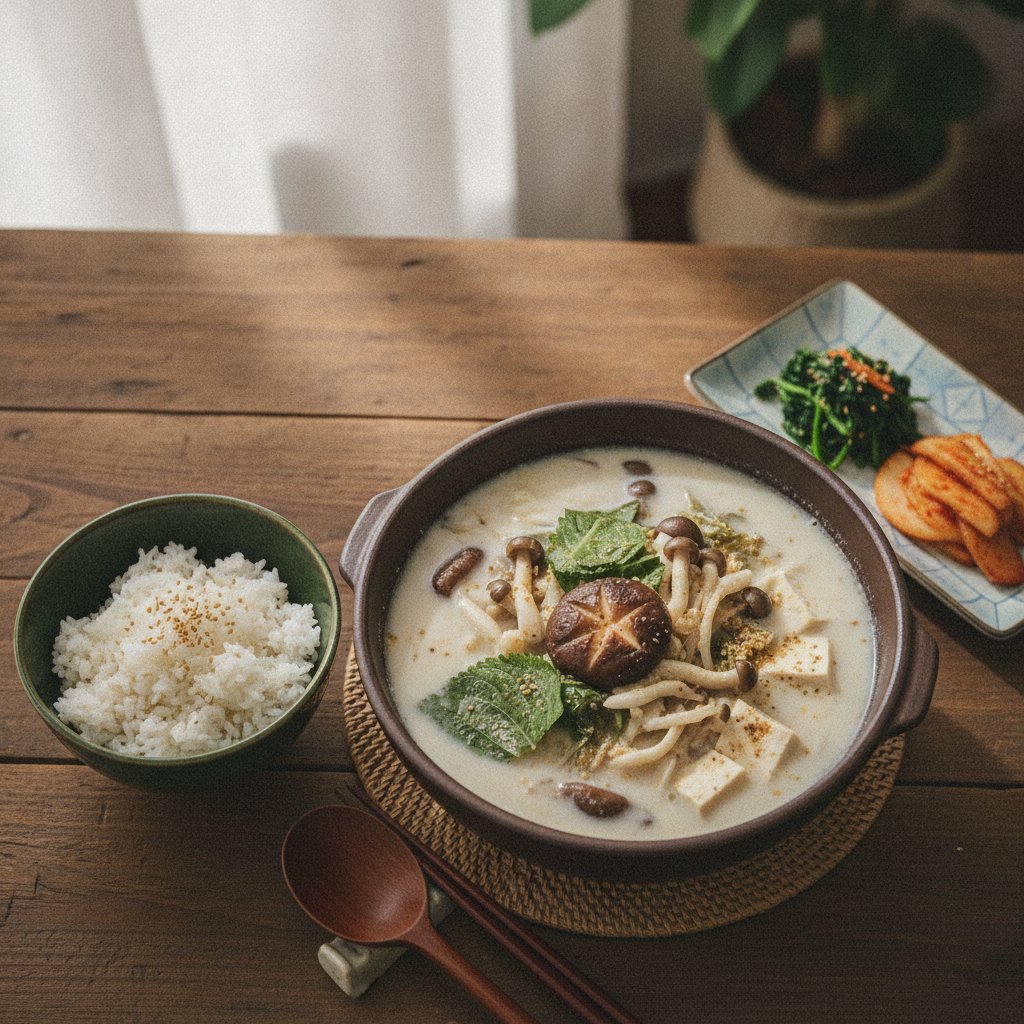
Korean Perilla Seed Soup (Deulkkae Beoseot Tang)
This post contains affiliate links. As an Amazon Associate, we earn from qualifying purchases at no extra cost to you.
At a glance
- In shortA guide to making creamy, dairy-free Korean mushroom perilla seed soup using kelp stock.
- Best forHome cooks seeking a soothing, dairy-free Korean soup
- DifficultyEasy
- HeatNot spicy
- Key pointsDry-sauté mushrooms first to deepen umami and improve texture. · Mix perilla seed powder in cold liquid to prevent clumping in hot soup. · Use hulled perilla powder to achieve a smooth texture and pale color.
- Heads-upKeep remaining perilla powder in the freezer to prevent it from turning rancid.
When late October rains turn the alleyways of Seoul damp and cool, my mother always reaches for her heavy earthenware pot and a glass jar of pale, finely ground perilla seeds. In Korean homes, autumn signals a shift from quick summer cold noodles to deeply soothing broths that warm you from the core. Among all our autumn soups, deulkkae beoseot tang (creamy Korean mushroom perilla seed soup) holds a truly special place.
If you have never tasted perilla seed soup, the first bowl is often a delightful surprise. It looks almost like a heavy cream soup, yet it contains zero dairy. The velvet texture and rich, nutty flavor come entirely from toasted, skinless perilla seed powder suspended in a clean, sea-scented dashima (dried kelp) broth. Pair that broth with a mix of tender, earthy wild mushrooms, and you have a dish that feels luxurious while remaining wonderfully healthy. It is a staple of Korean temple cuisine (sachal eumsik), loved for its restorative simplicity and earthy fragrance.
Many Western cooks worry that recreating traditional Korean broths without access to a full Asian supermarket is impossible. However, the true soul of this dish relies on technique rather than obscure equipment. Once you understand how perilla seed powder behaves when combined with liquid, you can produce a silky, restaurant-quality bowl right in your own kitchen using simple ingredients available online or at nearby markets.
Why This Works
- Sweating mushrooms dry first: Drawing moisture out of the mushrooms before introducing broth deepens their earthy umami and gives them a pleasantly toothsome texture that prevents them from turning soggy.
- Making a cold perilla slurry: Whisking perilla powder and glutinous rice flour into cold liquid before stirring it into hot soup prevents clumping and creates a velvety, stable emulsion without heavy cream.
- Layering sea kelp and soup soy sauce: Infusing dried kelp directly into the base broth delivers a clean layer of natural glutamates that elevates the nutty seeds without overwhelming their floral aroma.
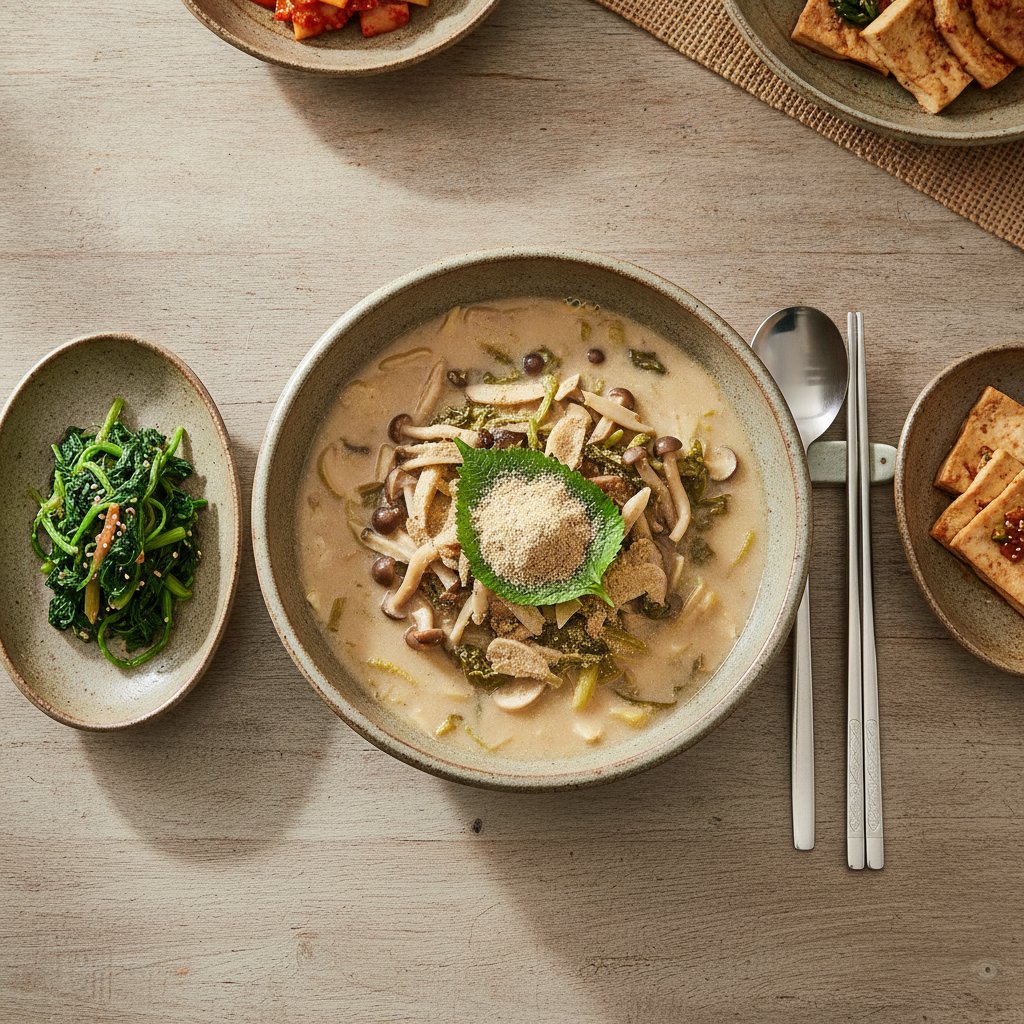
Ingredients
- Broth Base:
- 15 g (about 0.5 oz or two 4×4-inch pieces) dried kelp (dashima / kombu)
- 1000 ml (about 4.25 cups) cold water
- Mushroom Mix:
- 150 g (about 5.3 oz) king oyster mushrooms, sliced into bite-sized half-moons
- 150 g (about 5.3 oz) shiitake mushrooms, stems removed, caps sliced 1/4-inch thick
- 100 g (about 3.5 oz) oyster mushrooms, torn into cluster strands
- 100 g (about 3.5 oz) enoki mushrooms, trimmed and separated
- Perilla Thickening Mixture:
- 60 g (about 8 tbsp or 1/2 cup) hulled toasted perilla seed powder (deulkkaegaru)
- 10 g (about 1 tbsp) glutinous rice flour (chapssal-garu) or white rice flour
- 120 ml (about 1/2 cup) cold water or cooled kelp broth
- Seasonings & Aromatics:
- 3 cloves garlic, finely minced
- 22 ml (about 1.5 tbsp) Korean soup soy sauce (guk-ganjang)
- 3 g (about 1/2 tsp) Korean coarse sea salt (adjust to taste)
- 5 ml (about 1 tsp) toasted sesame oil
- 2 green onions, sliced diagonally into 1-inch pieces
- 4-5 fresh perilla leaves (kkaennip), washed and sliced into thin ribbons (optional garnish)
Substitutions
If you cannot source Korean soup soy sauce (guk-ganjang), do not replace it 1:1 with regular dark or sweet soy sauce, as regular soy sauce will darken your pale broth into an unappealing grey color. Instead, use a combination of 1 tablespoon light soy sauce and 1/2 teaspoon fish sauce or a pinch of salt. For the dried kelp (dashima), a mild vegetable broth works fine as a substitute base. Hulled perilla seed powder (deulkkaegaru) is the hero ingredient here; if you cannot find it locally, ordering it online is well worth the short wait. In an absolute pinch, finely ground toasted white sesame seeds offer a similar texture, though the signature herbal, minty-nutty fragrance of true perilla will be missing.
🛒 Korean Perilla Seed Soup
As an Amazon Associate we earn from qualifying purchases.
Shop Ingredients & Tools →How to Make It
- Extract the cold-brew kelp stock: Place the dried kelp pieces into 1000 ml of cold water in a medium pot over medium-low heat. Bring the water up to a gentle simmer slowly over 10 to 12 minutes. Just as small bubbles begin rising aggressively around the edges, remove and discard the kelp. Why: Boiling dried kelp rapidly at high heat releases bitter tannins and slimy mucilage, whereas a slow simmer extracts pure, sweet glutamate umami into the water.
- Dry-sauté the mushrooms with aromatics: Heat the toasted sesame oil in a heavy-bottomed pot or Dutch oven over medium heat. Add the minced garlic along with the sliced king oyster, shiitake, and oyster mushrooms (reserve the delicate enoki mushrooms for later). Cook, stirring occasionally, until the mushrooms release their moisture, shrink slightly, and turn glossy, about 4 to 5 minutes. Why: Sautéing the mushrooms before adding liquid concentrates their juices and cooks out raw excess moisture, ensuring they absorb the fragrant broth later without diluting it.
- Prepare the perilla slurry: In a small bowl, combine the hulled perilla seed powder, glutinous rice flour, and 120 ml of cold water (or cooled kelp stock). Whisk thoroughly with a fork until smooth and lump-free. Why: Adding dry perilla powder or starch directly into hot soup causes the proteins and starches to instantly coagulate into dry, unappealing chalky lumps. Pre-hydrating in cold liquid guarantees a silky emulsion.
- Simmer stock and season: Pour the hot kelp stock into the pot with the sautéed mushrooms. Add the Korean soup soy sauce and sea salt. Bring the pot to a steady boil over medium-high heat, then lower the flame to maintain a gentle simmer for 3 minutes. Why: Establishing a seasoned base first ensures the mushrooms absorb the floral saltiness of the soup soy sauce right into their cell walls.
- Thicken with the perilla mixture: Give your perilla slurry a quick stir to re-suspend any settled starch, then slowly pour it into the simmering soup while stirring the pot continuously. Reduce heat to low and simmer gently for 3 to 4 minutes until the broth thickens into a velvet-like consistency. Why: Low heat allows the rice starch to gelatinize smoothly while preventing the healthy fats in the perilla powder from breaking or separating into an oily surface layer.
- Finish with delicate greens: Fold in the enoki mushrooms and sliced green onions during the final minute of cooking. Taste the broth and add a small pinch of additional sea salt if desired. Ladle into warm bowls and top with fresh ribbons of sliced perilla leaves just before serving. Why: Delicate greens like enoki and perilla leaves lose their vibrant aroma and snappy texture if overcooked in hot liquid.
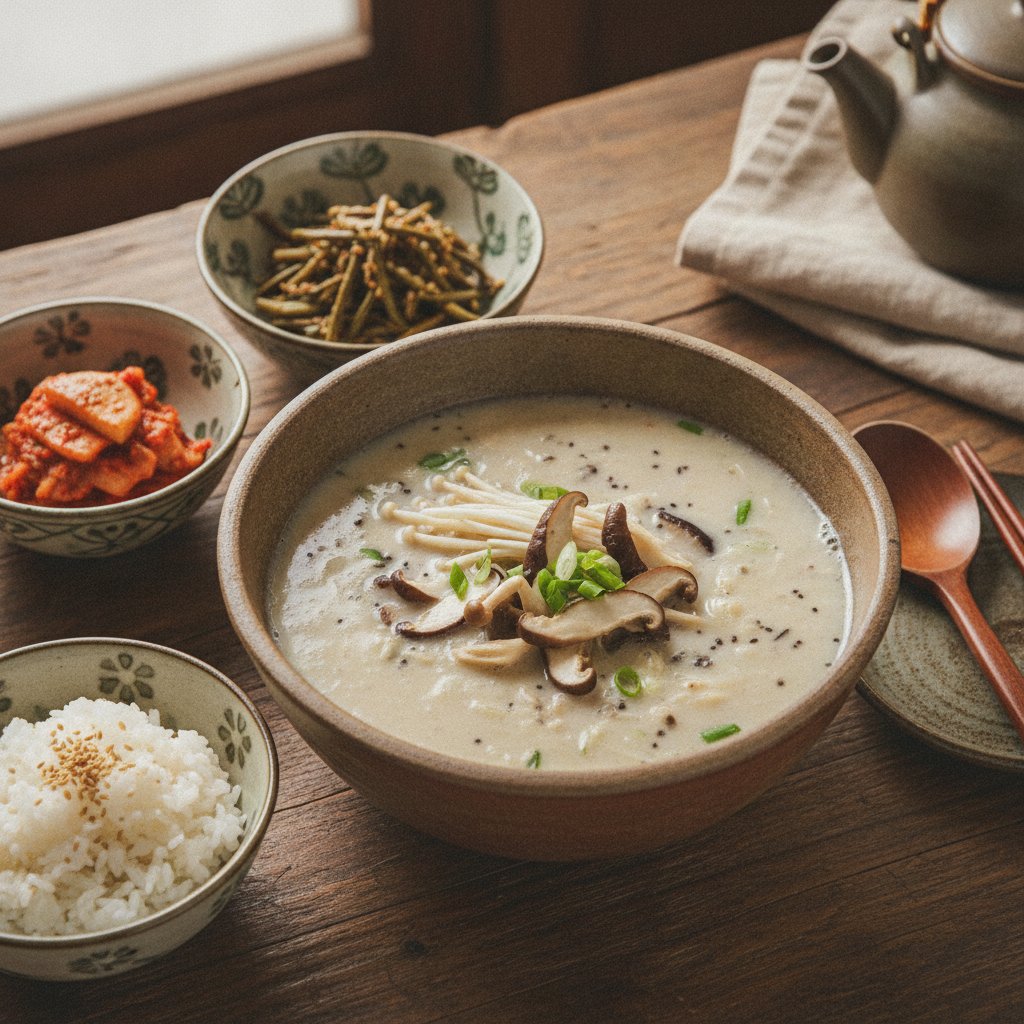
Tips from a Korean Kitchen
Always double-check your package of perilla seed powder at the market. You want skinless/hulled perilla seed powder (geopi-deulkkaegaru). Unhulled perilla powder still contains the tough dark hulls; while fine for spicy pork stews like kamjatang, unhulled powder leaves gritty sediment in delicate mushroom soups and turns the broth an off-putting dark brown rather than a pale ivory cream.
Store your remaining perilla seed powder in the freezer immediately after opening. Because perilla seeds are packed with healthy omega-3 fatty acids, the powder turns rancid quickly if left in a warm pantry. Stored in an airtight jar in the freezer, it keeps its fresh, nutty fragrance for up to six months.
Resist the urge to turn up the heat after adding the perilla mixture. High boiling temperatures will cause the emulsion to separate, making your broth look watery with oil floating on top rather than uniformly rich and creamy. Keep the flame on a gentle, low bubble once the slurry is introduced.
Storage
Leftover Korean perilla seed soup can be stored in an airtight container in the refrigerator for up to 3 days. As the soup sits, the rice starch will continue to absorb liquid, causing the broth to thicken significantly. When reheating, place the soup in a small pot over medium-low heat and stir in 3 to 4 tablespoons of water or fresh stock to restore its creamy consistency. Freezing this soup is not recommended, as freezing breaks the delicate starch-and-seed emulsion and ruins the crisp texture of the cooked mushrooms upon thawing.
🛒 Korean Perilla Seed Soup
As an Amazon Associate we earn from qualifying purchases.
Shop Ingredients & Tools →FAQ
Is Korean perilla seed soup vegetarian?
Yes, this version made with dried kelp (dashima) stock is completely vegetarian and vegan. While some traditional Korean restaurants use an anchovy-based broth for extra savory depth, home cooks frequently use pure kelp stock to keep the soup clean, light, and temple-cuisine friendly.
Can I substitute perilla leaves for perilla seed powder?
No, perilla leaves (kkaennip) and perilla seed powder (deulkkaegaru) come from the same plant, but they serve completely different roles in Korean cooking. The leaves are used as an aromatic fresh herb or wrap with a minty, anise-like flavor. The toasted seed powder is ground and used to create a thick, nutty, creamy broth body. Fresh leaves cannot thicken a soup broth.
What should I serve alongside this soup?
Because deulkkae beoseot tang is rich and mild, it pairs exceptionally well with bright, acidic, and spicy Korean side dishes. Serve it hot alongside warm steamed white rice, crisp aged cabbage kimchi (baechu-kimchi), or cubed radish kimchi (kkakdugi) to balance the rich, nutty notes of the broth.
More on Light & Everyday Soups
- Oi Naenguk: Chilled Korean Cucumber SoupLearn how to make Oi Naenguk, a refreshing chilled Korean cucumber soup pre-seasoned for maximum flavor.
- Ahuk Guk (Korean Mallow Soup) RecipeA guide to making Ahuk Guk, a comforting Korean soup made with mallow leaves, soybean paste, and dried shrimp.
- Jeonju Style Kongnamul GukbapA recipe and guide for making authentic Jeonju-style soybean sprout rice soup at home.
See every Light & Everyday Soups post in our Soups & Stews guide.
Handy toolsRecipe scaler · Measurement converter · Korean pantry guide · Recipe Finder
🛒 Korean Perilla Seed Soup
As an Amazon Associate we earn from qualifying purchases.
Shop Ingredients & Tools →More Korean Recipes
- Gopchang Jeongol Recipe: Spicy Beef Intestine Hot Pot
- Jeonju Style Kongnamul Gukbap Rice Soup
- Gul Miyeokguk: Easy Korean Oyster Seaweed Soup
- Sogogi Beosot Juk: Korean Beef and Mushroom Porridge
🛒 Korean Perilla Seed Soup
As an Amazon Associate we earn from qualifying purchases.
Shop Ingredients & Tools →


