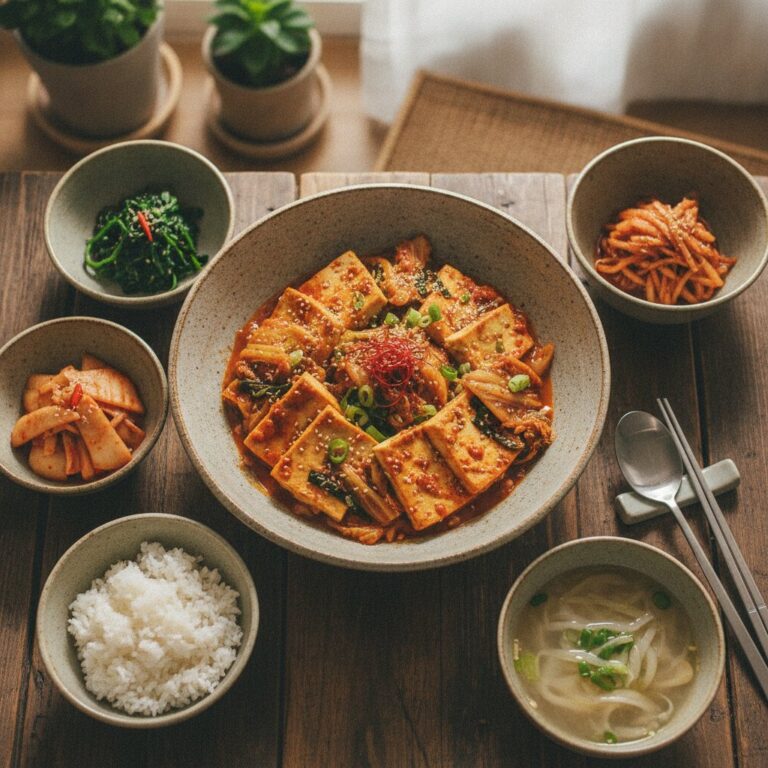
Ahuk Guk Recipe: Comforting Korean Mallow Soup
This post contains affiliate links. As an Amazon Associate, we earn from qualifying purchases at no extra cost to you.
At a glance
- In shortA guide to making Ahuk Guk, a comforting Korean soup made with mallow leaves, soybean paste, and dried shrimp.
- Best forHome cooks interested in preparing traditional Korean soups
- DifficultyEasy
- HeatMild
- Key pointsRubbing mallow with salt removes tough fibers, mucilage, and bitterness. · Rice wash water creates a cohesive base that stops paste separation. · Dried shrimp and fermented soybean paste deliver a deeply savory broth.
- Heads-upDo not skip massaging mallow with salt, or the greens will stay tough and slimy.
On chilly autumn mornings in Seoul, my grandmother always kept a pot of ahuk guk (mallow soybean paste soup) simmering quietly on the back burner. In Korea, we have an old proverb that mallow greens are so nutritious and delicious that a mother wouldn’t lock the front door when her daughter-in-law came over to visit—a funny little piece of folklore that highlights just how cherished this humble green soup is in Korean home cooking. While dishes like kimchi jjigae (spicy kimchi stew) and bulgogi (marinated grilled beef) get all the international spotlight, ahuk guk is the true everyday soul food that nourishes Korean families through the changing seasons.
Ahuk (Chinese mallow or marshmallow green) is a broad, dark green leafy vegetable with tough stems and slightly ruffled edges. On its own, raw mallow can be tough, stringy, and covered in a faintly slippery texture. But when handled with a traditional Korean prep technique and simmered in an aromatic broth seasoned with fermented soybean paste and tiny dried shrimp, it transforms into one of the softest, most comforting greens you will ever taste. The soup is light yet deeply savory, nutty, and subtly ocean-sweet.
If you live outside Korea and want to recreate this classic home-style soup, this ahuk guk recipe will guide you through the exact steps Korean home cooks use to turn raw mallow into a soothing, deeply flavorful bowl of goodness using accessible techniques and realistic ingredient swaps.
Why This Works
- Massaging raw mallow leaves with coarse salt breaks down tough cell walls and removes slimy plant mucilage, yielding tender, sweet greens without any grassy bitterness.
- Using ssalttwoom (rice wash water) as the soup base provides gentle starches that bind with the fermented soybean paste, preventing it from separating and giving the broth a smooth body.
- Simmering geoni-saeu (tiny dried shrimp) alongside earthy doenjang (fermented soybean paste) creates an instant layer of natural umami that elevates humble greens into a deeply satisfying meal.

Ingredients
- 200 g (7 oz) fresh ahuk (mallow leaves)
- 1 tbsp (15 g) coarse sea salt or Kosher salt (for scrubbing the greens)
- 1.2 liters (about 5 cups) ssalttwoom (rice wash water) or anchovy-kelp stock
- 3 tbsp (45 g) Korean doenjang (fermented soybean paste, such as CJ or Sunchang)
- 1 tbsp (15 g) gochujang (Korean red pepper paste, optional for mild warmth)
- 1/2 cup (15 g) geoni-saeu (small dried soup shrimp)
- 1/2 medium yellow onion (about 100 g / 3.5 oz), thinly sliced
- 3 cloves garlic (about 15 g), finely minced
- 2 green onions (about 40 g), sliced diagonally
- 1 fresh red or green chili pepper (optional), sliced diagonally
- 1 tsp (5 ml) soup soy sauce or regular soy sauce (optional, to adjust final salinity)
Substitutions
Finding fresh ahuk outside of Asian grocers can sometimes be tricky. If your local market does not carry mallow, you can easily adapt this dish with greens found at standard Western supermarkets:
- Mallow Leaf Substitutes: Mature spinach, Swiss chard, or lacinato (Tuscan) kale with the thick center ribs removed. Mature spinach can go directly into the soup after a brief rinse. If using Swiss chard or kale, give the leaves the same salt-rubbing treatment described below to soften their fibrous structure.
- Rice Wash Water Substitute: If you are not cooking rice alongside your soup, use 1.2 liters of water mixed with 1 level teaspoon of cornstarch or rice flour. Alternatively, use basic Korean anchovy-kelp stock or a light vegetable stock.
- Dried Shrimp Substitute: Small dried anchovies (gukmul-yong myeongtae/myeolchi) work wonderfully. If you want a completely vegetarian or vegan soup, omit the dried seafood entirely and add 3-4 rehydrated shiitake mushrooms along with a piece of dashima (dried kelp) during the stock simmer.
- Doenjang Substitute: Authentic Korean doenjang is essential for its robust, salty, and sharp fermented profile. If you only have Japanese miso available, choose a dark or medium miso (like red miso), but add it near the end of cooking rather than early on, as Japanese miso loses aroma if boiled for too long.
🛒 Ahuk Guk Recipe
As an Amazon Associate we earn from qualifying purchases.
Shop Ingredients & Tools →How to Make It
-
Prepare the mallow leaves (The crucial Chidae-gi step): Snap off the tough, stringy lower stems of the mallow leaves, keeping only the tender leaves and soft upper stems. Place the mallow in a large mixing bowl and sprinkle with 1 tablespoon of coarse salt. Using both hands, rub, crush, and knead the leaves forcefully against each other for 2 to 3 minutes, almost like washing laundry by hand. You will see dark green, foamy liquid squeeze out as the leaves shrink drastically and turn dark green. Why: Raw mallow contains slippery mucilage and mild bitter compounds. Rubbing with salt ruptures the tough plant fibers, extracts excess mucilage, and makes the greens incredibly tender when cooked.
-
Rinse and drain the greens: Fill the bowl with cold tap water and submerge the kneaded leaves. Swirl them around, then squeeze out the green water firmly. Repeat this washing and squeezing process 2 to 3 times until the rinsing water runs mostly clear. Squeeze out excess water one final time, chop the compressed leaves into bite-sized 2-inch pieces, and set aside. Why: Rinsing thoroughly removes the extracted bitterness and excess salt so your soup does not become overly salty or murky.
-
Collect the starch base: When washing white rice for your meal, drain off the first quick rinse water (which removes dust). Collect the water from the second and third rinses in a pot until you have 1.2 liters (about 5 cups) of cloudy rice water (ssalttwoom). Why: Starch particles in rice wash water suspend the fermented soybean paste particles evenly throughout the broth, keeping the soup cohesive rather than watery.
-
Dissolve the soybean paste: Place the pot of rice wash water over medium-high heat. Place a fine-mesh strainer directly over or into the water and add 3 tablespoons of doenjang (and 1 tablespoon of gochujang, if using). Use the back of a spoon to press and rub the paste through the strainer into the liquid, discarding any coarse whole soybean husks remaining in the mesh. Why: Straining creates a velvety, smooth soup base without gritty soybean fragments, resulting in a refined mouthfeel.
-
Add dried seafood and aromatics: Stir in 1/2 cup of small dried shrimp, the sliced yellow onion, and minced garlic. Bring the mixture to a rolling boil over medium-high heat, which should take about 5 to 7 minutes. Why: Cooking dried shrimp in the simmering stock early extracts their rich natural glutamate into the broth, creating a savory foundation before the greens are added.
-
Simmer the mallow greens: Once the broth is boiling vigorously, drop in the prepared mallow leaves. Stir well to submerge them completely. Reduce the heat to medium-low, partially cover the pot with a lid, and let it cook at a gentle simmer for 12 to 15 minutes, until the greens change to an olive-green color and become very soft when tested with a fork. Why: Unlike delicate spinach, mallow greens benefit from a longer simmer in fermented soup bases to absorb flavor and achieve their signature meltingly tender texture.
-
Finish and serve: Stir in the sliced green onions and sliced red chili pepper. Taste the soup carefully. If you prefer a slightly deeper salt level, add 1 teaspoon of soup soy sauce or a pinch of salt. Simmer uncovered for another 2 minutes until the green onions turn fragrant. Turn off the heat and ladled the soup hot into individual bowls, accompanied by a fresh bowl of warm steamed white rice.

Tips from a Korean Kitchen
- Never skip the salt-rubbing step: Squeezing and scrubbing mallow leaves might feel aggressive if you are accustomed to handling Western salad greens gently, but it is the single most important secret to a good ahuk guk. Unrubbed mallow stays tough, slippery, and grassy.
- Adjust for doenjang saltiness: Commercial Korean doenjang brands vary noticeably in salinity and pungency. Sunchang brand tends to be slightly sweeter and milder, while artisan or traditional home-style doenjang (jip-doenjang) is significantly saltier and funkier. Start with 2.5 tablespoons of paste first, taste after simmering for 10 minutes, and add the remaining half tablespoon if needed.
- Toast your dried shrimp if older: If your dried shrimp have been sitting in the freezer for a few months, briefly toss them in a warm, dry skillet without oil for 60 seconds until fragrant before throwing them into the soup pot. This drives off any stale freezer aroma and intensifies their sweet shrimp scent.
- Serve with warm white rice: In Korea, the traditional way to enjoy ahuk guk is to spoon a portion of cooked white rice directly into the hot bowl of soup (bap-mal-ae-geo), letting the grains soak up the savory doenjang broth.
Storage
Ahuk guk stores exceptionally well because greens simmered in doenjang actually improve as the flavors harmonize overnight in the refrigerator.
- Refrigerator: Allow the leftover soup to cool completely to room temperature. Transfer to a airtight food storage container and store in the fridge for up to 4 days. Reheat on the stove over medium heat until steaming hot, adding a splash of water if the liquid has reduced.
- Freezer: You can freeze cooked ahuk guk in freezer-safe containers or silicone soup cubes for up to 1 month. Thaw overnight in the refrigerator before reheating gently on the stovetop. The greens may soften a bit more upon thawing, but the comforting taste remains wonderful.
🛒 Ahuk Guk Recipe
As an Amazon Associate we earn from qualifying purchases.
Shop Ingredients & Tools →FAQ
What does ahuk guk taste like?
Ahuk guk has a warm, deeply savory, and slightly nutty flavor profile derived from fermented doenjang. The addition of dried shrimp adds a subtle sea sweetness without being overly fishy. The mallow leaves themselves are tender, earthy, and mild, similar to slow-cooked collard greens or creamed spinach, but without any heavy dairy content.
Can I make ahuk guk without dried shrimp?
Yes! While dried shrimp are classic because they add fast umami, you can make a delicious variation using a standard Korean dried anchovy and dried kelp broth (myeolchi-dashima yuksu). Alternatively, you can make a beef-based version by sautéing thinly sliced beef brisket or flank steak with a little sesame oil before adding the liquid and soybean paste.
Where can I buy fresh mallow leaves?
Fresh ahuk is usually available at Korean supermarkets (such as H Mart or Zion Market) and Chinese markets, particularly during late spring, summer, and early autumn. Look for bright green, firm leaves without yellowing edges. If you cannot find fresh mallow, thick-leaved greens like Swiss chard or lacinato kale are the best year-round substitutes available at regular Western grocery stores.
More on Light & Everyday Soups
- Jeonju Style Kongnamul GukbapA recipe and guide for making authentic Jeonju-style soybean sprout rice soup at home.
- Easy Korean Spinach SoupHow to make sigeumchi doenjang guk, a quick and comforting Korean spinach soybean paste soup.
- Korean Anchovy-Kelp Broth (Myeolchi Yuksu)How to make authentic Korean anchovy-kelp broth (myeolchi yuksu) from scratch.
See every Light & Everyday Soups post in our Soups & Stews guide.
Handy toolsRecipe scaler · Measurement converter · Korean pantry guide · Recipe Finder
🛒 Ahuk Guk Recipe
As an Amazon Associate we earn from qualifying purchases.
Shop Ingredients & Tools →More Korean Recipes
- Spicy Beef Hangover Soup (Sogogi Haejangguk)
- Easy Dubu Jjigae Recipe (Korean Spicy Tofu Stew)
- Korean Sweet Red Bean Porridge (Patjuk Recipe)
- Sogogi Baechu Guk: Korean Beef and Napa Cabbage Soup
🛒 Ahuk Guk Recipe
As an Amazon Associate we earn from qualifying purchases.
Shop Ingredients & Tools →