
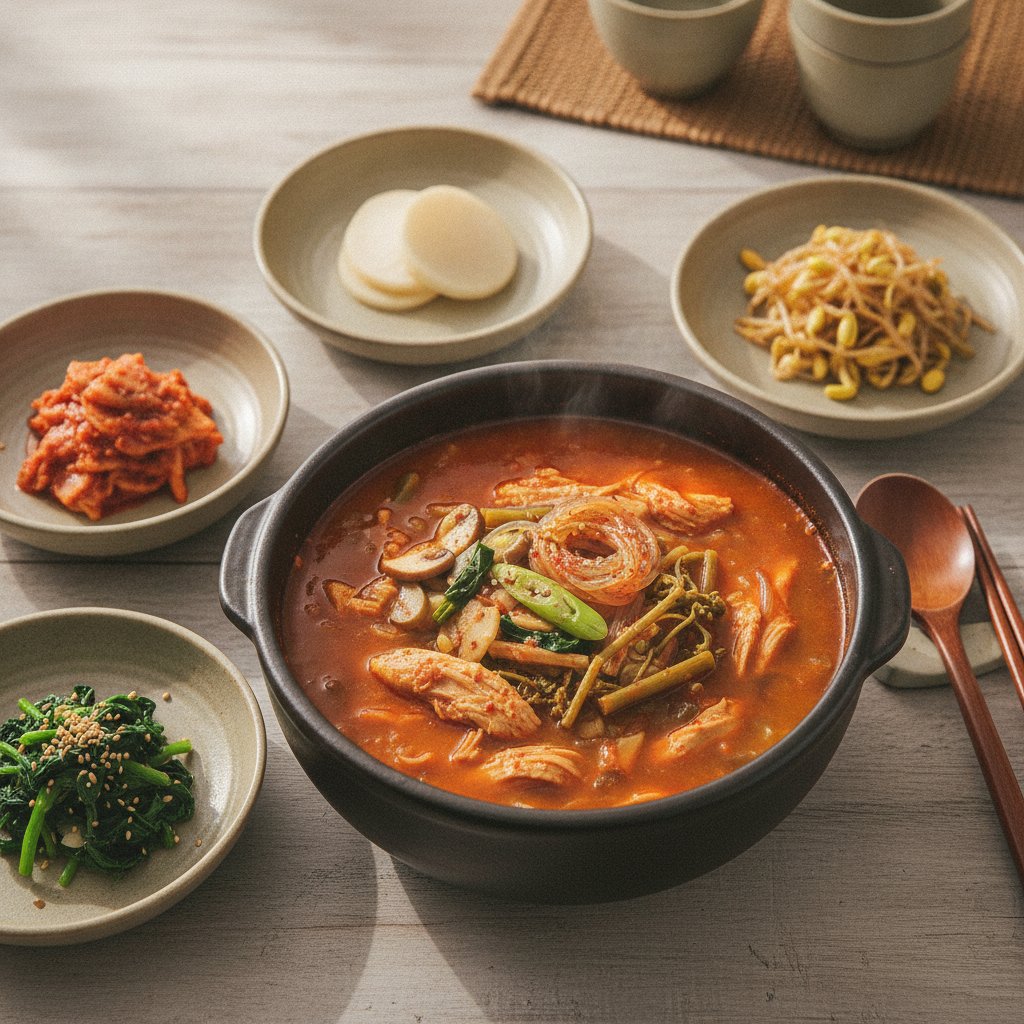
Easy Dakgaejang Recipe: Spicy Korean Chicken Soup
This post contains affiliate links. As an Amazon Associate, we earn from qualifying purchases at no extra cost to you.
At a glance
- In shortA step-by-step recipe for making comforting spicy Korean chicken soup with scallions and gochugaru.
- Best forHome cooks looking for an easy, comforting Korean chicken soup
- DifficultyEasy
- HeatMedium
- Key pointsBloom gochugaru in warm sesame oil on low heat for a rich chili oil base. · Massage chicken and vegetables with spice paste to infuse deep flavor. · Cut scallions into long strips to add a sweet, silky, noodle-like texture.
- Heads-upKeep heat low when blooming chili flakes to avoid burning them and causing bitterness.
When cold autumn rain sweeps through Seoul, home kitchens across the city start smelling of rich toasted sesame oil, sweet simmering scallions, and pungent garlic. In my family, whenever someone came home tired, caught a chill, or simply needed a soul-warming bowl on a busy Tuesday evening, my mother would whip up a bubbling pot of dakgaejang (spicy shredded chicken soup). It is the ultimate Korean comfort food—bold, aromatic, and deep red, yet surprisingly light on the stomach.
Many people outside Korea are familiar with yukgaejang (spicy shredded beef soup), a famous feast soup served at traditional gatherings. However, beef brisket can be expensive and requires hours of gentle simmering to break down, alongside specialized dried wild roots like bracken fern. In contrast, the way Koreans actually make this dish at home relies on chicken. Dakgaejang delivers that exact same fiery, deeply savory broth in less than half the time. It is an accessible everyday dish that converts simple pantry staples into a restorative broth brimming with tender shredded chicken and soft, sweet scallions.
Why This Works
- Direct chili-oil blooming: Instead of buying store-bought chili oil or boiling raw chili powder in water, we gently bloom gochugaru (Korean chili flakes) in warm sesame oil right inside the soup pot. This creates a bright ruby oil that infuses every drop of broth with rich fragrance without burning the spice.
- Direct vegetable marinade: Massaging the cooked, shredded chicken and scallions with the concentrated spice paste before adding the stock forces deep garlic and chili flavors directly into the meat fibers so the chicken never tastes plain or boiled.
- Smart supermarket swaps: By replacing hard-to-find traditional mountain ferns with widely available oyster mushrooms and double the amount of fresh green onions, you achieve the exact velvety, earthy texture of traditional Seoul soup without a special shopping trip.
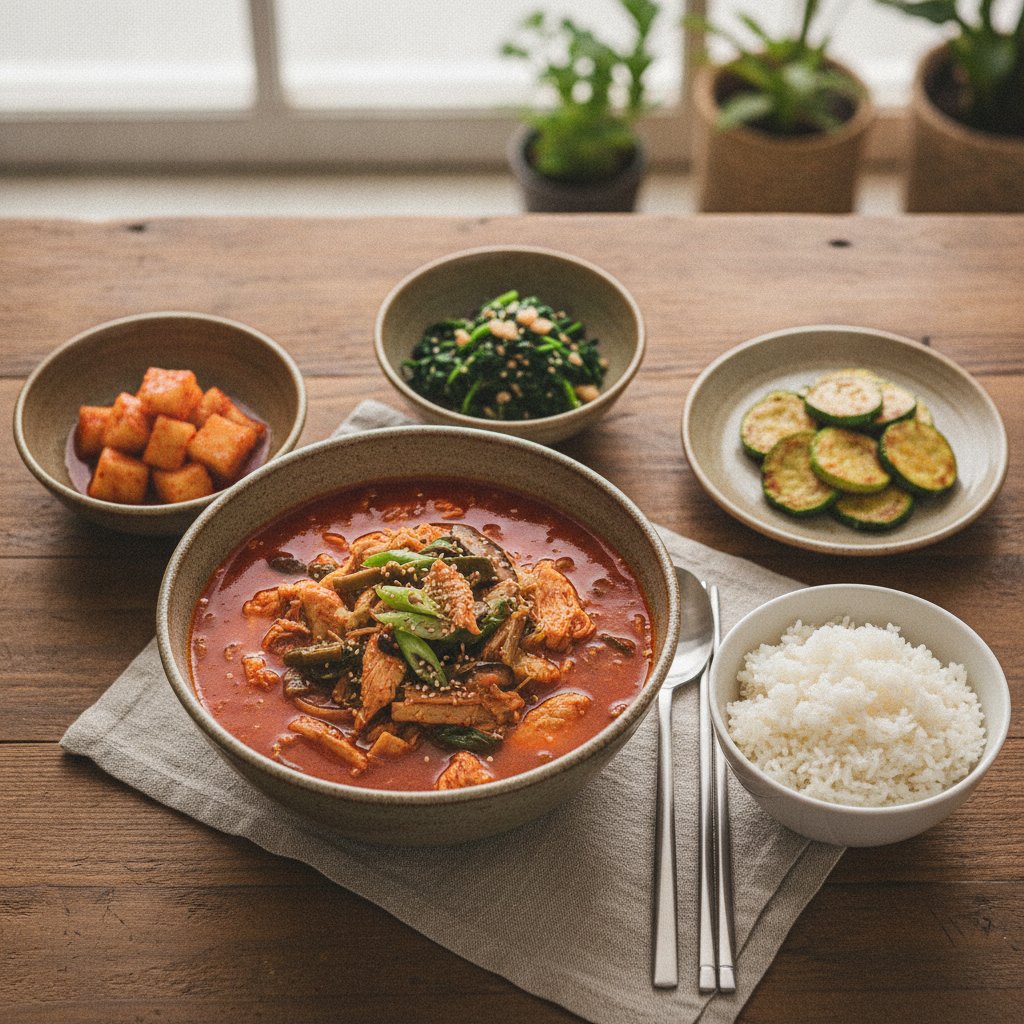
Ingredients
- 600 g (about 1.3 lbs) boneless, skinless chicken thighs or chicken breasts
- 1.5 liters (about 6 cups) low-sodium chicken broth or water
- 4 large scallions (green onions), washed and sliced into 7 cm (3-inch) long pieces
- 1 medium yellow onion, thinly sliced
- 150 g (about 5 oz) mung bean sprouts, rinsed
- 150 g (about 5 oz) oyster mushrooms or king oyster mushrooms, shredded into thin strips
- 2 tbsp gochugaru (Korean chili flakes)
- 2 tbsp toasted sesame oil
- 2 tbsp guk-ganjang (Korean soup soy sauce) or regular light soy sauce
- 1 tbsp gochujang (Korean chili paste, such as CJ or Ottogi brand)
- 5 cloves fresh garlic, finely minced
- 1 tsp freshly grated ginger
- 1/2 tsp ground black pepper
- 1 tbsp neutral cooking oil (vegetable or canola oil)
- 1 large egg, lightly beaten (optional)
- 100 g (about 3.5 oz) dangmyeon (sweet potato starch glass noodles), soaked in warm water for 20 minutes (optional)
Substitutions
If you cannot find specific items at your neighborhood market, don’t worry—Korean home cooking is flexible by design:
- Guk-ganjang (Korean soup soy sauce): Traditional soup soy sauce is salty and light in color so it seasons without darkening the broth. If you only have regular soy sauce, use 1.5 tablespoons of regular soy sauce plus 1/2 teaspoon of fine sea salt or fish sauce to match the savory punch.
- Gochugaru (Korean chili flakes): Do not swap gochugaru for Western chili powder or crushed red pepper flakes; standard chili powder contains cumin and garlic powder, while pepper flakes are far too spicy and dry. If you lack gochugaru, a mixture of sweet paprika powder and a small dash of cayenne pepper works as a visual and mild flavor substitute.
- Mushrooms: Fresh shiitake mushrooms or cremini mushrooms cut into thin slices make a wonderful substitute for oyster mushrooms, adding a rich, earthy umami flavor.
🛒 Easy Dakgaejang Recipe
As an Amazon Associate we earn from qualifying purchases.
Shop Ingredients & Tools →How to Make It
-
Poach the chicken gently: Bring the 1.5 liters (6 cups) of low-sodium chicken stock or water to a gentle simmer in a medium pot over medium heat. Add the chicken thighs along with half of the ginger. Simmer uncovered for 15 to 18 minutes until cooked through. Poaching gentle meat instead of boiling it hard keeps the chicken tender and juicy for shredding. Remove the chicken to a plate to cool slightly, reserving the broth in the pot.
-
Shred the chicken and prep the scallions: Once cool enough to handle, shred the chicken by hand along the natural grain into thin strips. Hand-shredding leaves rough surfaces that catch and hold spicy broth much better than neat knife cuts. Set the shredded chicken in a large mixing bowl along with the sliced long scallion pieces, sliced yellow onion, and shredded mushrooms.
-
Bloom the aromatic spice paste: Place a large heavy-bottomed soup pot or Dutch oven over low heat. Add 1 tablespoon of neutral oil, 2 tablespoons of toasted sesame oil, and 2 tablespoons of gochugaru. Stir constantly over low heat for 1 to 2 minutes until the oil turns a deep red hue and smells toasted. Keeping the heat low is critical because dry chili flakes burn quickly, turning bitter and ruining the broth base.
-
Build the flavor base: Add the minced garlic, remaining ginger, 1 tablespoon of gochujang, 2 tablespoons of soup soy sauce, and ground black pepper to the warm red oil. Stir well for 30 seconds until a thick, fragrant paste forms in the pot.
-
Marinate the chicken and veggies directly: Scrape the spice paste out into the bowl containing your shredded chicken, scallions, onions, and mushrooms. Wear disposable kitchen gloves or use tongs to thoroughly mix and massage the spice paste into the ingredients. Massaging seasons the vegetables deeply and ensures every strip of chicken absorbs the red pepper and garlic before hitting the broth.
-
Combine and simmer: Transfer the entire seasoned chicken and vegetable mixture back into your large soup pot. Pour in the reserved hot chicken poaching broth. Turn the heat up to high and bring the soup to a rolling boil. Once boiling, reduce heat to medium-low, cover with a lid, and let it simmer for 15 minutes. This gentle simmer softens the tough scallion fibers and allows the sweet onion flavor to meld into the chili oil base.
-
Add sprouts, noodles, and final touches: Uncover the pot and drop in the rinsed mung bean sprouts (and pre-soaked glass noodles, if using). Simmer uncovered for another 3 to 4 minutes until the bean sprouts are tender yet crisp. Cooking sprouts uncovered prevents raw bean smells from trapping inside the pot steam.
-
Ribbon the egg (optional): Turn off the heat completely. Slowly drizzle the beaten egg in a steady circle over the surface of the hot broth. Let it sit untouched for 30 seconds so the hot soup sets delicate white and yellow ribbons without turning the clear broth cloudy. Stir gently once and serve hot.
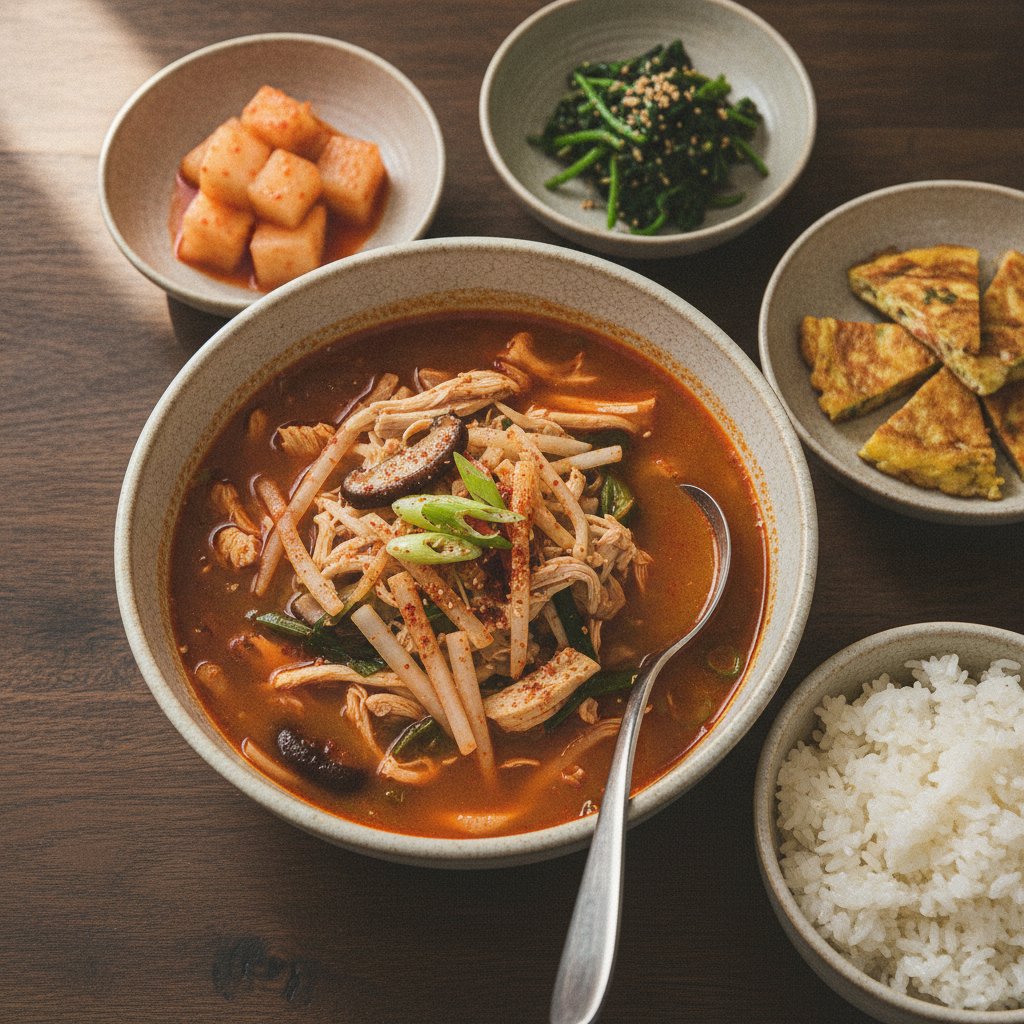
Tips from a Korean Kitchen
In my family, small habits turn a good bowl of soup into an extraordinary one. Keep these practical tips in mind:
- Cut the scallions long: Western recipes often call for chopped green onions, but dakgaejang requires long strips (about finger length). Long scallions become sweet, silky, and noodle-like as they simmer, providing a wonderful textural contrast to shredded chicken.
- Use chicken thighs for maximum moisture: While chicken breast works well if you want a leaner meal, boneless chicken thighs contain just enough natural fat to withstand simmering without turning chalky or dry.
- Adjust heat with gochugaru, not gochujang: If you want your soup spicier, add an extra teaspoon of gochugaru. Do not add extra gochujang paste; adding too much chili paste makes the broth overly thick, sweet, and heavy rather than clean and fiery.
- Fix flat broth instantly: If your soup tastes a bit light or plain at the end (which can happen depending on the brand of stock used), add 1/2 teaspoon of fish sauce or a tiny pinch of Korean dashida (anchovy or beef stock powder). It provides an instant layer of savory depth.
Storage
Dakgaejang tastes even better the next day after the chicken sits in the spiced broth overnight!
- Refrigerator: Allow the soup to cool completely to room temperature. Transfer to an airtight glass container and store in the fridge for up to 4 days.
- Freezer: Freeze the soup (without eggs or glass noodles, which soften when thawed) in freezer-safe containers for up to 2 months. Thaw overnight in the refrigerator before reheating.
- Reheating: Reheat the soup on the stovetop over medium heat until gently bubbling. If the broth reduced during storage, splash in 2 to 3 tablespoons of fresh water or chicken stock to restore the liquid level.
🛒 Easy Dakgaejang Recipe
As an Amazon Associate we earn from qualifying purchases.
Shop Ingredients & Tools →FAQ
Is dakgaejang very spicy?
Dakgaejang has a medium, warming kick rather than an overwhelming burn. The heat comes primarily from gochugaru (Korean chili flakes), which offers a smoky, complex spice rather than sharp heat. You can easily moderate the spice level by reducing the chili flakes from 2 tablespoons to 1 tablespoon without changing the technique.
Can I use leftover rotisserie chicken for this recipe?
Yes, cooked rotisserie chicken is a wonderful shortcut! Simply shred about 3 cups of cooked rotisserie meat (a mixture of white and dark meat works great). Skip Step 1 and use 1.5 liters of warm store-bought broth directly when building the soup base in Step 6.
What is the difference between dakgaejang and yukgaejang?
The primary difference is the protein base and cooking time. Yukgaejang uses beef (usually brisket or flank steak) and traditional dried mountain vegetables like bracken fern (gosari) and taro stems, taking several hours to prepare. Dakgaejang uses chicken (dak means chicken in Korean) and lighter, fresh vegetables like mushrooms and bean sprouts, making it faster, lighter, and more economical for weeknight cooking.
More on Meat & Poultry Soups
- Sogogi Baechu Guk (Beef Napa Cabbage Soup)A recipe guide for making Sogogi Baechu Guk, a simple and restorative Korean beef and napa cabbage soup.
- Spicy Beef Hangover SoupA guide to making quick, authentic Korean spicy beef hangover soup at home in under an hour.
- Soondae Gukbap (Korean Sausage Soup)A quick home-cooking recipe for Korean blood sausage soup using store-bought broth and perilla seed powder.
See every Meat & Poultry Soups post in our Soups & Stews guide.
Handy toolsRecipe scaler · Measurement converter · Korean pantry guide · Recipe Finder
🛒 Easy Dakgaejang Recipe
As an Amazon Associate we earn from qualifying purchases.
Shop Ingredients & Tools →More Korean Recipes
- Gopchang Jeongol Recipe: Spicy Beef Intestine Hot Pot
- Jeonju Style Kongnamul Gukbap Rice Soup
- Gul Miyeokguk: Easy Korean Oyster Seaweed Soup
- Sogogi Beosot Juk: Korean Beef and Mushroom Porridge
🛒 Easy Dakgaejang Recipe
As an Amazon Associate we earn from qualifying purchases.
Shop Ingredients & Tools →


