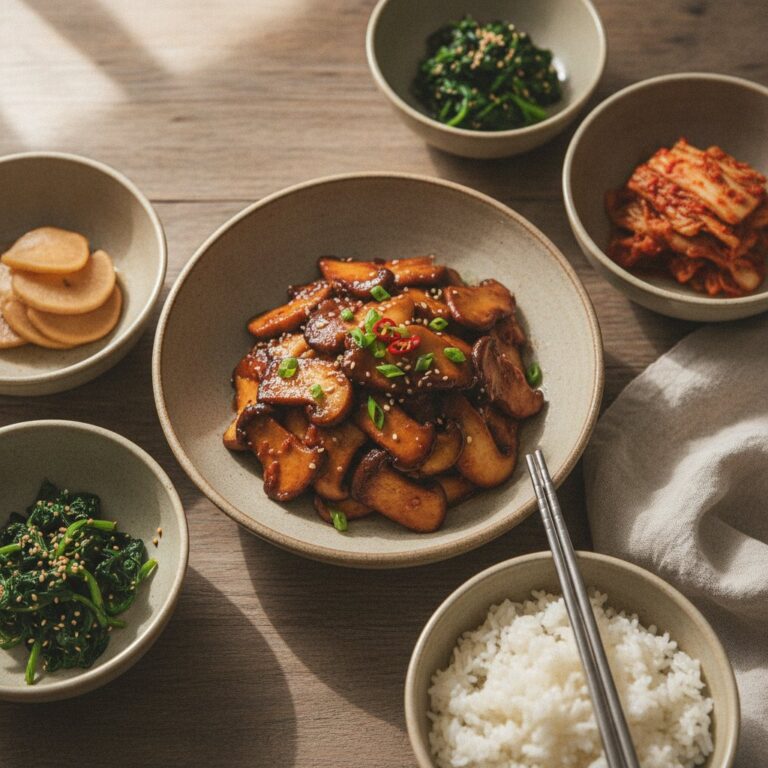
Sogogi Beosot Juk: Korean Beef and Mushroom Porridge
This post contains affiliate links. As an Amazon Associate, we earn from qualifying purchases at no extra cost to you.
At a glance
- In shortA guide to making comforting, savory Korean beef and shiitake mushroom rice porridge at home.
- Best forHome cooks looking for a comforting Korean porridge recipe
- DifficultyEasy
- HeatNot spicy
- Key pointsToast soaked rice in dark sesame oil for a silky, non-sticky texture. · Marinate minced beef in garlic and soy sauce before cooking to build flavor. · Use shiitake mushroom soaking liquid to create a rich, savory broth base.
- Heads-upDo not salt the main pot if saving leftovers, as salt breaks down cooked rice starch.
When winter winds blow past the Han River in Seoul and the temperature drops below freezing, my grandmother always kept a heavy stainless steel pot sitting on the back burner. In our home, whenever someone caught a cold, felt exhausted after long university exams, or simply needed a soothing warm meal after holiday feasts, the immediate response was always the same: let’s make sogogi beosot juk (beef and mushroom porridge).
In Korea, juk (rice porridge) occupies a special place in our food culture. While Western cultures often think of chicken noodle soup as the universal restorative meal, for Koreans, it is a bowl of slow-simmered rice porridge. Specialty shops across Seoul like Bonjuk serve dozens of varieties, but nothing compares to the version made in a home kitchen. This particular recipe combines tender ground beef, savory shiitake mushrooms, and short-grain rice toasted in fragrant dark sesame oil. It produces a glossy, velvety bowl that is rich in umami without feeling heavy on your stomach.
Why This Works
- Toasting soaked rice in dark sesame oil coats each grain’s surface starch, allowing the rice to swell gradually and release amylose slowly, creating a naturally silky sheen rather than a sticky paste.
- Marinating minced beef before cooking infuses the meat with garlic and soy sauce down to the cellular level, ensuring every bite carries deep savory flavor rather than tasting like boiled meat.
- Using shiitake soaking liquid as the soup base captures soluble glutamate compounds from dried mushrooms, instantly building a rich background broth without needing hours of simmer time.

Ingredients
- 200 g (about 1 cup) short-grain white rice (sushi rice works wonderfully)
- 150 g (about 5.3 oz) lean ground beef or finely minced beef chuck
- 100 g (about 3.5 oz) fresh shiitake mushrooms (or 4-5 dried shiitake mushrooms)
- 30 ml (2 tbsp) toasted sesame oil, divided
- 15 ml (1 tbsp) guk-ganjang (Korean soup soy sauce) or regular light soy sauce
- 10 g (about 2 cloves) minced garlic
- 1.2 liters (about 5 cups) water or mild dried kelp broth (dashima broth)
- 1 medium carrot, finely diced, about 50 g (1.8 oz)
- 5 g (about 1 tsp) fine sea salt, adjusted to taste
- 1 large egg yolk (optional, for serving garnish)
- 1 pinch toasted sesame seeds and crushed roasted seaweed (gim) for topping
Substitutions
If you cannot find specific Korean pantry items at your local supermarket, these easy swaps will keep your sogogi beosot juk (beef and mushroom porridge) tasting remarkably authentic:
- Short-grain rice: Medium-grain rice or Japanese sushi rice is the best replacement. Avoid long-grain varieties like Jasmine or Basmati, as they lack the sticky starch required to achieve the signature creamy porridge texture.
- Korean soup soy sauce (Guk-ganjang): Regular soy sauce works, but because standard soy sauce is sweeter and darker, start with 2 teaspoons of regular soy sauce plus a small pinch of salt to avoid turning your porridge dark gray.
- Shiitake mushrooms: Fresh cremini (baby bella) mushrooms offer a great earthy flavor and firm bite if fresh or dried shiitake mushrooms are unavailable at your grocery store.
🛒 Sogogi Beosot Juk
As an Amazon Associate we earn from qualifying purchases.
Shop Ingredients & Tools →How to Make It
- Soak the rice thoroughly for starch control. Place 200 g of short-grain rice in a bowl, rinse it three times until the water runs mostly clear, then submerge it in clean cold water for at least 30 minutes. Why: Soaking allows the grains to hydrate to their core, ensuring they break down evenly into soft, digestible pearls without requiring harsh boiling that ruins texture.
- Prep and marinate the beef and mushrooms. If using dried shiitake mushrooms, rehydrate them in warm water for 20 minutes (save the soaking liquid!). Chop the mushrooms and lean ground beef into small, uniform bite-sized pieces. In a small bowl, combine the beef, minced garlic, and 15 ml (1 tbsp) of soy sauce. Mix gently and set aside for 10 minutes. Why: Pre-seasoning the meat seals in moisture and builds an underlying layer of savory flavor before the liquid hits the pot.
- Sauté aromatics in toasted sesame oil. Heat a thick-bottomed pot or Dutch oven over medium heat. Add 15 ml (1 tbsp) of toasted sesame oil, followed by the marinated beef and chopped mushrooms. Sauté for 3 to 4 minutes until the beef loses its pink color and the mushrooms release their aroma. Why: Sautéing raw ground beef in sesame oil browns the surface protein slightly through the Maillard reaction, locking savory notes into the broth base.
- Toast the soaked rice with the aromatics. Drain the soaked rice completely and pour it into the pot with the beef and mushrooms. Add the remaining 15 ml (1 tbsp) of sesame oil. Stir constantly over medium heat for 2 to 3 minutes until the rice grains turn translucent around their edges. Why: Coating hydrated rice in hot fat toasts the exterior starches, preventing the grains from collapsing into gummy baby food later.
- Add broth and simmer low and slow. Pour in 1.2 liters of water (or mushroom rehydration liquid combined with water/kelp broth). Stir carefully, bring the liquid to a rolling boil over medium-high heat, then immediately reduce heat to low. Cover the pot loosely with a lid, leaving a slight crack for steam to escape. Simmer for 20 to 25 minutes, stirring occasionally with a wooden spoon to keep rice from sticking to the bottom. Why: Gentle heat lets the rice absorb liquid slowly, swelling without scorching or breaking down unevenly.
- Fold in carrots and finish cooking. Add the finely diced carrot during the last 8 minutes of simmering. Stir until the porridge reaches your desired thickness—it should look like a rich, glossy stew where rice grains are clearly visible yet tender. Turn off the heat and season with salt to taste. Why: Diced carrots added near the end preserve vibrant orange color and a pleasant tender-crisp bite that contrasts nicely with soft rice.
- Garnish and serve piping hot. Ladle the porridge into warm ceramic bowls. Top each serving with a raw egg yolk in the center (if using), toasted sesame seeds, and crushed seaweed strips. Stir the toppings gently into the porridge right before eating.

Tips from a Korean Kitchen
In Korean homes, making a good pot of sogogi beosot juk is considered an essential skill. Here are four practical techniques passed down through generations to make sure your pot turns out perfect every time:
- Stir gently in one direction: When checking on your simmering porridge, use a flat wooden spoon to gently sweep the bottom of the pot in a single direction. Vigorous, multi-directional stirring tears hydrated rice grains apart and turns your delicate broth into a gluey starch paste.
- Never boil on high heat once rice expands: Boiling porridge furiously on high heat cooks off water too quickly before rice starches soften properly, leaving you with raw rice centers floating in thin liquid. Low simmer is key.
- Adjust water ratios based on setting: Traditional Korean home cooks follow a 1:5 or 1:6 ratio (1 part dry rice to 5 or 6 parts water by volume) for a classic thick dinner porridge. If cooking for someone recovering from an illness, increase liquid to a 1:7 or 1:8 ratio for an easier-to-digest texture.
- Hold off on adding salt until serving: Salt draws moisture out of cooked grains and breaks down starch networks over time. If you plan to store leftovers, refrain from salting the entire pot during cooking; let each person salt their own bowl individually.
Storage
Sogogi beosot juk stores remarkably well, though rice will continue absorbing broth as it sits in your refrigerator. Store cooled porridge in an airtight glass container for up to 3 days in the fridge.
When reheating, transfer desired portions to a small saucepan, add 3 to 4 tablespoons of fresh water or broth per cup of porridge, and warm over medium-low heat while stirring gently until steaming hot. You can also freeze portions in freezer-safe containers for up to 1 month. Thaw overnight in the refrigerator before reheating on the stove with extra liquid.
🛒 Sogogi Beosot Juk
As an Amazon Associate we earn from qualifying purchases.
Shop Ingredients & Tools →FAQ
Is beef mushroom porridge healthy?
Yes, sogogi beosot juk is a balanced, highly digestible meal that provides lean protein from beef, dietary fiber and minerals from shiitake mushrooms, and easily accessible carbohydrates from cooked rice. It is gentle on sensitive stomachs while offering sustained energy.
Can I use leftover cooked rice to make Sogogi Beosot Juk?
Absolutely! If you are short on time, use about 2 cups of cooked white short-grain rice. Skip the soaking step, sauté your meat and mushrooms in sesame oil, stir in cooked rice for 1 minute, add 3 cups of water or broth, and simmer on low for 10 to 15 minutes until velvety.
What should I serve alongside Korean beef porridge?
Because porridge is warm and rich, it pairs best with refreshing, crunchy Korean side dishes (banchan). Diced radish kimchi (kkakdugi), seasoned water kimchi (dongchimi), or soy-braised beef strips (jang-jo-rim) are classic traditional pairings served across home dining tables in Seoul.
More on Porridges & Noodle Soups
- Home-Style Sujebi RecipeLearn how to make rustic Korean hand-torn noodle soup from scratch with a savory anchovy broth.
- Jjamppong (Spicy Seafood Noodle Soup)A step-by-step home recipe for Korean spicy seafood noodle soup with pork, seafood, and vegetables.
- Easy Kalguksu Noodle SoupA quick Korean home-cooking recipe for soothing knife-cut noodle soup using store-bought noodles.
See every Porridges & Noodle Soups post in our Soups & Stews guide.
Handy toolsRecipe scaler · Measurement converter · Korean pantry guide · Recipe Finder
🛒 Sogogi Beosot Juk
As an Amazon Associate we earn from qualifying purchases.
Shop Ingredients & Tools →More Korean Recipes
- Shrimp Doenjang Jjigae (Korean Seafood Stew)
- Soondae Gukbap Recipe: Comforting Korean Sausage Soup
- Korean Yeonpotang Recipe (Clear Octopus Soup)
- Ahuk Guk Recipe: Comforting Korean Mallow Soup
🛒 Sogogi Beosot Juk
As an Amazon Associate we earn from qualifying purchases.
Shop Ingredients & Tools →