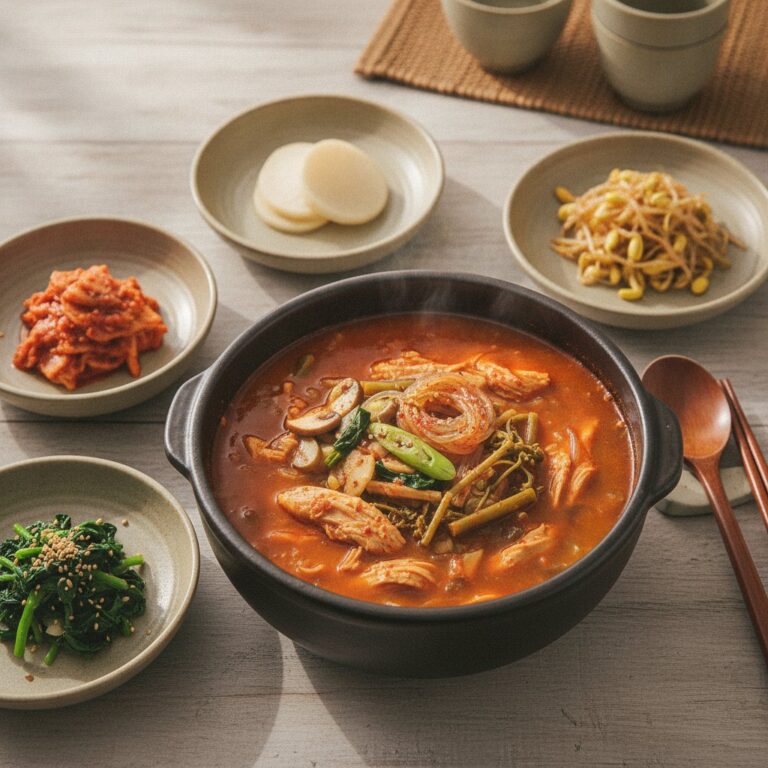
Seoul Home Cook’s Yukgaejang (Spicy Shredded Beef Soup)
This post contains affiliate links. As an Amazon Associate, we earn from qualifying purchases at no extra cost to you.
At a glance
- In shortA step-by-step guide to making traditional Korean spicy shredded beef soup at home.
- Best forHome cooks seeking an authentic Korean Yukgaejang recipe
- DifficultyMedium
- HeatHot
- Key pointsSimmer beef with aromatics for at least 1.5 to 2 hours to create rich broth. · Massage seasoning into shredded beef and veggies before cooking for full flavor. · Use spinach, oyster mushrooms, or cabbage if gosari or taro stems are missing.
- Heads-upWear gloves when mixing the seasoning paste, as gochugaru can stain your hands.
Annyeonghaseyo, everyone! It’s your Korean home cook here from Seoul, excited to share one of my family’s most cherished recipes: Yukgaejang (Spicy Shredded Beef Soup). This isn’t just any soup; it’s a bowl of comforting warmth, a fiery embrace on a cold day, and a revitalizing pick-me-up when you’re feeling a little under the weather. In Korea, we often turn to Yukgaejang when we need something hearty and nourishing, especially during the colder months or after a long day. Its deep, savory broth, tender shredded beef, and an array of vegetables make it a complete meal that truly hits the spot.
Many of you might think making a traditional Korean soup like Yukgaejang from scratch sounds daunting, especially if you don’t have an Asian market just around the corner. But trust me, it’s much simpler than you imagine! My goal with Korean Recipe Lab is always to bring authentic Korean flavors to your kitchen, using ingredients that are mostly accessible in Western grocery stores, with a few Asian market gems you can easily find online or during an occasional trip. This version of Yukgaejang focuses on building incredible depth of flavor layer by layer, just like we do it in my family, ensuring you get that true taste of Korea without needing to search for obscure items. It’s a labor of love, but every spoonful is worth it!
Ingredients
- For the Beef and Broth:
- 600-700 g (about 1.3-1.5 lb) beef brisket, shank, or short ribs (bone-in or boneless for richness)
- 2.5-3 liters (about 10-12 cups) water or unsalted beef broth
- 1 medium onion, halved
- 4-5 cloves garlic, smashed
- 1-inch piece (about 20 g) fresh ginger, sliced
- 1/2 teaspoon whole black peppercorns
- For the Vegetables:
- 100 g (about 3.5 oz) dried gosari (fernbrake), soaked and blanched (see Substitutions)
- 50 g (about 1.7 oz) dried torandae (taro stems), soaked and blanched (see Substitutions)
- 100 g (about 3.5 oz) fresh shiitake mushrooms, sliced, or 30g dried shiitake, soaked and sliced
- 200 g (about 7 oz) mung bean sprouts, blanched
- 150 g (about 5 oz) napa cabbage (baechu), outer leaves, chopped into 2-inch pieces, blanched and squeezed dry
- 4-5 green onions, cut into 2-inch lengths
- For the Seasoning Paste (Yangnyeom):
- 5-6 tablespoons gochugaru (Korean chili flakes), adjust to your spice preference
- 3 tablespoons guk ganjang (Korean soup soy sauce) or regular soy sauce
- 2 tablespoons gochujang (Korean chili paste) (optional, for deeper color and slight sweetness)
- 1 tablespoon minced garlic
- 1 teaspoon minced ginger
- 2 tablespoons sesame oil
- 1/2 teaspoon black pepper
- Additional Seasoning:
- Salt to taste
- Extra green onions for garnish
Substitutions
While I always encourage you to try to find the authentic ingredients for the best taste, I understand it’s not always possible. Here are some realistic swaps:
- Gosari (fernbrake) and Torandae (taro stems): These vegetables provide a unique earthy flavor and slightly chewy texture that is characteristic of Yukgaejang. If you can’t find them at an Asian market or online, you can substitute with other hearty vegetables. Try using 200g (about 7 oz) fresh spinach (blanch and squeeze dry), thick-stemmed mushrooms like oyster or king oyster mushrooms (sliced and sautéed), or even par-boiled bok choy stems. The flavor profile will be different, but you’ll still get a wonderful, hearty soup.
- Guk Ganjang (Korean soup soy sauce): This soy sauce is lighter in color but saltier than regular soy sauce, designed to season soups without darkening the broth too much. If you don’t have it, regular all-purpose soy sauce works perfectly fine. Just be mindful and adjust the amount to taste, as it might be less salty than guk ganjang, and you might need a little extra salt at the end.
- Mung Bean Sprouts: These are widely available, but if you can’t find them, you can simply omit them or use regular thicker bean sprouts.
- Napa Cabbage: If napa cabbage (baechu) is hard to find, regular green cabbage can be used. Just make sure to blanch and squeeze it well to remove excess water.
- Gochujang (Korean chili paste): While gochugaru (chili flakes) provides the main spice, gochujang adds a deeper red color, a subtle fermented sweetness, and an extra layer of umami. If you prefer less sweetness or want to stick to pure chili spice, you can omit it entirely and increase the gochugaru slightly to maintain the heat.

How to Make It
-
Prepare the Beef Broth and Shred the Beef:
Place the beef (brisket, shank, or short ribs) in a large pot with 2.5-3 liters of water or beef broth, the halved onion, smashed garlic, sliced ginger, and black peppercorns. Bring it to a rolling boil, then reduce the heat to low, cover, and simmer for at least 1.5 to 2 hours, or until the beef is fork-tender. The why: Simmering slowly ensures the beef becomes incredibly tender and flavorful, making it easy to shred later. More importantly, this long simmer creates the rich, foundational beef broth that is the heart and soul of our Yukgaejang. A good broth is crucial for a truly authentic taste.
Once the beef is tender, carefully remove it from the pot and set it aside to cool. Strain the broth through a fine-mesh sieve into another clean pot, discarding the aromatics. This step ensures you have a clear, flavorful broth without any unwanted bits. When the beef is cool enough to handle, shred it into bite-sized strips, against the grain, using your fingers or two forks. The why: Shredding against the grain helps the meat stay tender and prevents it from becoming stringy in the soup.
-
Prepare the Vegetables:
While the beef is simmering, prepare your vegetables. If using dried gosari and torandae, soak them overnight or for at least 4-6 hours until pliable. Then, blanch them in boiling water for 10-15 minutes, drain, rinse in cold water, and squeeze out any excess liquid. Cut them into 2-inch lengths. The why: Soaking rehydrates them, and blanching removes any bitterness and softens their texture, making them pleasant to eat in the soup. Squeezing out water prevents diluting the soup’s flavor.
For the fresh shiitake mushrooms, simply slice them thinly. If using dried shiitake, soak them in warm water until soft (about 20-30 minutes), then slice and reserve the soaking water. Blanch the mung bean sprouts in boiling water for 1-2 minutes until slightly tender, then drain and rinse with cold water to stop cooking and maintain their crispness. Chop the napa cabbage into 2-inch pieces, blanch it for 2-3 minutes until softened, then drain and squeeze out all excess water. Cut the green onions into 2-inch lengths. The why: Pre-cooking these vegetables ensures they integrate well into the soup without overcooking or turning mushy later. Squeezing water from cabbage is important to concentrate its natural sweetness and prevent watery soup.
-
Make the Seasoning Paste (Yangnyeom):
In a large bowl, combine the shredded beef, gosari, torandae, shiitake mushrooms, blanched mung bean sprouts, and blanched napa cabbage. Add the gochugaru, guk ganjang (or regular soy sauce), gochujang (if using), minced garlic, minced ginger, sesame oil, and black pepper. Use your hands (wearing gloves is recommended as gochugaru can stain!) to thoroughly massage the seasoning paste into all the ingredients. The why: This is a key step in Korean cooking! By mixing the vegetables and beef with the seasoning paste before adding them to the broth, each ingredient gets coated with flavor. This allows the spices and aromatics to penetrate deeply, preventing bland vegetables and creating a much more harmonious and robustly flavored soup. It’s like marinating your soup ingredients!
-
Combine and Simmer to Perfection:
Heat a large, heavy-bottomed pot or Dutch oven over medium heat. Add a tablespoon of cooking oil (like vegetable or canola oil). Add the seasoned beef and vegetable mixture to the pot and sauté for 5-7 minutes, stirring frequently. The why: Sautéing before adding the broth helps to deepen the flavors of the seasoning paste, toasts the spices slightly, and develops more umami through the Maillard reaction. It really builds the base flavor profile.
Pour the strained beef broth into the pot with the sautéed mixture. If you used dried shiitake mushrooms, you can also add their strained soaking water for extra umami. Bring the soup to a boil, then reduce the heat to medium-low, cover, and let it simmer for at least 30-40 minutes. The why: This simmering period is crucial for all the individual flavors to meld and deepen into a cohesive, rich Yukgaejang. It allows the vegetables to absorb the broth and the spicy, savory notes to fully develop. You’re giving the soup time to truly become one delicious entity.
-
Final Seasoning and Garnish:
After simmering, taste the Yukgaejang and adjust the seasoning as needed. You might need to add more salt or a splash more soy sauce to your preference. If you like it spicier, a little more gochugaru can be stirred in. Add the 2-inch pieces of green onion and simmer for another 5 minutes. The why: Adding green onions at the end preserves their fresh flavor and slight bite, adding a lovely aromatic finish without making them mushy. It’s about balance and adding layers of freshness.
Serve your steaming hot Yukgaejang in individual bowls, ideally with a side of freshly steamed rice. Garnish with a sprinkle of fresh chopped green onions, and if you like, a drizzle of extra sesame oil. Enjoy the rich, spicy, and deeply satisfying flavors of this beloved Korean classic!

🛒 Seoul Home Cook’s Yukgaejang
As an Amazon Associate we earn from qualifying purchases.
Shop Ingredients & Tools →Tips from a Korean Kitchen
Here are a few secrets passed down in my family for making the best Yukgaejang:
- Don’t Rush the Broth: The quality of your beef broth is paramount. Using a good cut of beef for simmering (like brisket or shank) and allowing it sufficient time to release its flavors into the water is non-negotiable. This isn’t a shortcut recipe; the deep umami of the broth comes from patience. A rich broth means a rich Yukgaejang. If you’re short on time, you can pressure cook the beef for about 45-60 minutes, but simmering still yields the most nuanced flavor.
- Massage the Yangnyeom Thoroughly: I mentioned this in the steps, but it bears repeating! Don’t just stir the seasoning paste into the ingredients. Truly get in there with your hands and massage it. This technique, common in Korean cooking (especially for dishes like Jeyuk Bokkeum (spicy pork stir-fry) or Kimchi Jjigae (kimchi stew)), ensures every piece of beef and every strand of vegetable is coated, allowing them to absorb the spices and flavors beautifully before hitting the hot pot.
- The Importance of Pre-Blanching/Squeezing: It might seem like an extra step, but blanching and then squeezing out excess water from vegetables like napa cabbage, gosari, and torandae is crucial. It removes any unwanted bitterness, softens tough textures, and most importantly, prevents the vegetables from releasing too much water into your soup, which could dilute its rich flavor. It’s about concentrating the natural taste and texture.
- Taste, Adjust, and Let it Rest: Korean cooking is all about balance. Always taste your soup before serving and don’t be afraid to adjust the salt, spice, or even add a touch more soy sauce or sesame oil. Yukgaejang, like many stews, often tastes even better the next day as the flavors continue to meld and deepen. So, if you have the patience, make it ahead!
Storage
Yukgaejang is wonderful for meal prepping! It can be stored in an airtight container in the refrigerator for 3-4 days. For longer storage, you can freeze it in individual portions for up to 3 months. When reheating from the fridge, simply warm it on the stovetop or in the microwave. If reheating from frozen, thaw it first in the refrigerator, then warm it gently, adding a splash of water or broth if it seems too thick.
FAQ
Can I make Yukgaejang less spicy?
Absolutely! The spice level is entirely customizable. The gochugaru (Korean chili flakes) is the main source of heat. You can start with 2-3 tablespoons and add more gradually to taste. If you’re very sensitive to spice, you can also omit the gochujang entirely, as it contributes a mild heat along with sweetness and color.
What should I serve with Yukgaejang?
Yukgaejang is typically served with a bowl of warm, fluffy steamed rice, which helps to soak up the delicious broth and balance the spiciness. Simple banchan (Korean side dishes) like kimchi (fermented cabbage), kkakdugi (radish kimchi), or a simple seasoned namul (vegetable dish) are perfect accompaniments.
Can I use different types of meat or make it vegetarian?
While beef is traditional for Yukgaejang, you could certainly experiment. Some variations use chicken (Dakgaejang) or even pork. However, be aware that the flavor profile will change significantly as the broth base is fundamental. For a vegetarian version, you would need to create a rich vegetable broth as a base and focus on hearty mushrooms and other robust vegetables to provide umami, though it wouldn’t be a traditional Yukgaejang.
🛒 Seoul Home Cook’s Yukgaejang
As an Amazon Associate we earn from qualifying purchases.
Shop Ingredients & Tools →More on Meat & Poultry Soups
- Gamjatang (Pork Bone & Potato Stew)Learn how to make authentic Korean pork bone and potato stew at home with accessible cuts.
- Creamy Korean Oxtail Soup (Kkori Gomtang)A detailed recipe for making traditional Korean milky oxtail soup (Kkori Gomtang) at home.
- Mu Guk: Korean Beef and Radish SoupLearn how to prepare classic Korean Mu Guk, a clean and comforting beef and radish soup.
See every Meat & Poultry Soups post in our Soups & Stews guide.
Handy toolsRecipe scaler · Measurement converter · Korean pantry guide · Recipe Finder
More Korean Recipes
- Korean Anchovy-Kelp Broth (Myeolchi Yuksu): The Heart of Korean Cooking
- Eomuk Guk (Korean Fish Cake Soup): Street Stall Warmth in a Pot
- Kimchi Jjigae (김치찌개) with Pork, Home-Style
- Authentic Tteokguk (Korean Rice Cake Soup) for a Blessed New Year
🛒 Seoul Home Cook’s Yukgaejang
As an Amazon Associate we earn from qualifying purchases.
Shop Ingredients & Tools →