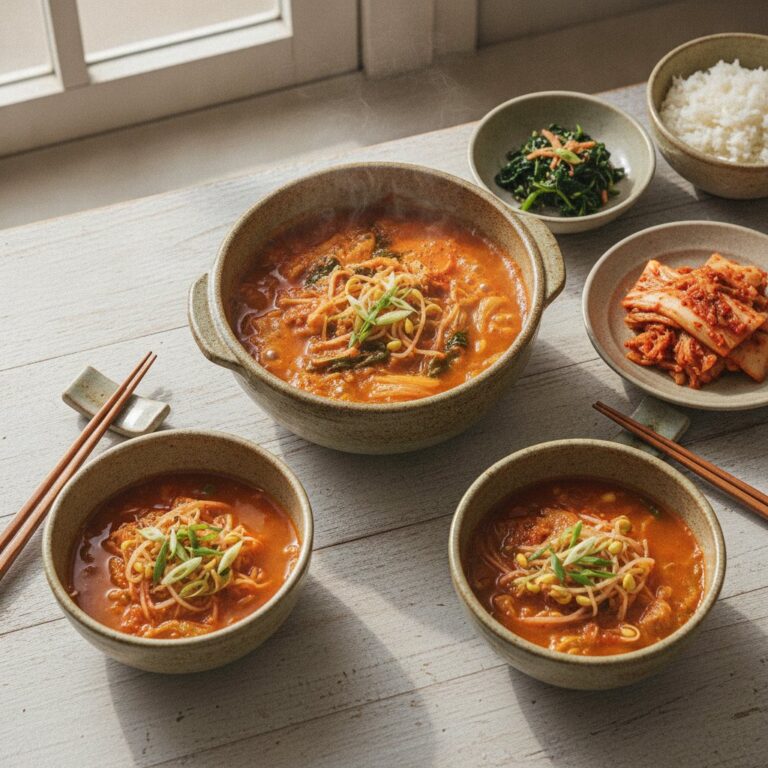
Kongnamul Guk (Bean Sprout Soup): Korea’s Soothing Hangover Helper
This post contains affiliate links. As an Amazon Associate, we earn from qualifying purchases at no extra cost to you.
At a glance
- In shortA guide to making classic Korean bean sprout soup with clean broth and simple substitutions.
- Best forHome cooks seeking a simple Korean bean sprout soup recipe
- DifficultyEasy
- HeatMild
- Key pointsKongnamul Guk is a traditional Korean bean sprout soup used for hangover relief. · The base broth is made from simmered dried anchovies and dried kelp. · Bean sprouts should be cooked uncovered for 5 to 7 minutes to stay crisp.
- Heads-upDo not overcook bean sprouts and cook uncovered to avoid a 'beany' smell.
Annyeonghaseyo, everyone! It’s your Korean home cook from Seoul, back in the kitchen at Korean Recipe Lab. Today, we’re diving into a dish that’s a true staple in every Korean household, especially after a night out: Kongnamul Guk (콩나물국), or Bean Sprout Soup. You know, in Korea, we have a whole category of soups called haejang-guk (해장국), specifically designed to cure hangovers. And while there are many contenders, for me, and for countless Koreans, Kongnamul Guk is the ultimate gentle healer.
This isn’t some fancy restaurant dish. This is the soup my eomma (엄마, mom) would whip up for my appa (아빠, dad) or my older brother after a late night with friends. It’s light, clean, incredibly refreshing, and surprisingly flavorful for how simple it is. The crisp texture of the bean sprouts, the savory depth of the anchovy broth, and that subtle kick of chili if you choose – it all comes together to soothe your stomach and clear your head. But don’t relegate it just to hangover mornings! Kongnamul Guk is also a fantastic everyday soup, perfect for a light lunch, a quick weeknight dinner, or a comforting meal when you’re feeling under the weather.
The best part? This version of Kongnamul Guk is incredibly accessible, even if you don’t live next door to a Korean market. Most ingredients can be found at your regular Western grocery store, and for the few unique items, I’ll give you some excellent substitutions. So, let’s get cooking and bring a taste of Korean home comfort to your kitchen!
Ingredients
Here’s what you’ll need to make this comforting bowl of Kongnamul Guk. Don’t worry if some items seem unfamiliar – I’ve got you covered with substitutions below!
- 500 g (about 1.1 lb) fresh Korean bean sprouts (kongnamul 콩나물)
- 1.8 L (about 7.5 cups) water for broth
- 10-12 large dried anchovies (멸치, myeolchi), heads and guts removed
- 1 large (about 10×10 cm or 4×4 inch) piece of dried kelp (다시마, dashima)
- 3-4 cloves garlic, minced
- 1-2 green onions (scallions), chopped, plus more for garnish
- 1-2 fresh green chili peppers (e.g., Korean cheongyang gochu 청양고추 or serrano), thinly sliced (optional, for a spicy kick)
- 1 tablespoon Korean soup soy sauce (국간장, guk ganjang)
- ½ – 1 teaspoon fine sea salt (or to taste)
- ¼ – ½ teaspoon gochugaru (고춧가루, Korean chili flakes), optional, for a slight red tint and mild spice
Substitutions
Living outside Korea means sometimes certain ingredients are a little harder to find. No problem! Here are some common-sense swaps:
- Korean Bean Sprouts (Kongnamul): Regular bean sprouts found in Western grocery stores will work just fine! Korean ones are a bit thicker and crunchier, but the flavor profile is similar. Just make sure they are fresh and firm.
- Dried Anchovies & Dried Kelp: If you can’t find these at an Asian market or online, you can use 1.8 L (7.5 cups) of good quality vegetable broth or even light chicken broth. The flavor won’t be exactly the same (you’ll miss that unique anchovy umami), but it will still be a delicious and comforting soup.
- Korean Soup Soy Sauce (Guk Ganjang): This special soy sauce is lighter in color but saltier than regular soy sauce, and it’s specifically for soups to not darken the broth. If you don’t have it, use regular light soy sauce (간장, ganjang) or tamari, but start with a smaller amount (e.g., 2 teaspoons) and add more salt to taste, as regular soy sauce is less salty than guk ganjang.
- Korean Cheongyang Gochu (Chili Peppers): A serrano pepper is a good substitute if you want the fresh heat. For less heat, use a jalapeño. If you don’t like spice, simply omit them.
- Gochugaru (Korean Chili Flakes): If you want a mild chili flavor and a touch of color but can’t find gochugaru, a tiny pinch of cayenne pepper will give you heat, but be careful as it’s much spicier. You can also skip it entirely for a completely clear, mild soup.

How to Make It
Making Kongnamul Guk is quite simple, but as with all Korean home cooking, attention to detail and understanding the ‘why’ behind each step makes all the difference. Let’s create some magic!
- Prepare the Bean Sprouts: First, gently wash your bean sprouts under cold running water. Why? This removes any lingering dirt, husks, or small impurities. While you wash, pick through them and discard any sprouts that are brown, slimy, or look off. Freshness is key for that satisfying crunch!
- Make the Anchovy-Kelp Broth (Myeolchi Yuksu): In a large pot, combine 1.8 L (7.5 cups) of water, the dried anchovies (heads and guts removed – why? This prevents a bitter taste in your broth!), and the piece of dried kelp. Bring the water to a boil over medium-high heat, then immediately reduce the heat to medium-low. Simmer for about 15-20 minutes. Why simmer and not boil vigorously? Gentle simmering allows the flavors from the anchovies and kelp to slowly infuse into the water, creating a clean, umami-rich broth without becoming cloudy or over-extracted.
- Strain the Broth: After simmering, carefully remove and discard the anchovies and kelp from the pot. Why discard? Their flavor has been fully extracted, and they’ve done their job! You’re left with a beautifully clear, golden broth that forms the heart of our soup.
- Add Aromatics and Seasoning: Return the pot of broth to medium heat. Add the minced garlic, Korean soup soy sauce (guk ganjang), and a starting amount of salt (say, ½ teaspoon). Stir well. Why add seasonings now? This allows them to meld with the broth as the soup continues to cook, ensuring a balanced flavor from the start. We’ll adjust at the end.
- Cook the Bean Sprouts: Once the broth is gently simmering again, add the prepared bean sprouts to the pot. Why add them to simmering broth? Adding them to hot liquid ensures they cook quickly and evenly, preventing them from becoming waterlogged or mushy.
- Simmer and Don’t Overcook: Bring the soup back to a gentle simmer. Cook for just 5-7 minutes, uncovered, until the bean sprouts are tender-crisp. Why “tender-crisp” and why uncover? Overcooked bean sprouts become soft and lose their delightful crunch, which is a signature texture of Kongnamul Guk. Cooking uncovered helps to prevent the bean sprouts from having a “beany” smell, allowing some of the gases to escape. You’ll know they’re ready when they’ve lost their raw stiffness but still have a pleasant bite.
- Add Green Onions and Chili (Optional): Stir in the chopped green onions and thinly sliced green chili peppers (if using). If you’re using gochugaru for a hint of color and mild spice, add it now. Cook for another minute. Why add these at the end? Green onions retain their vibrant color and fresh flavor, and the chili peppers add their brightness without becoming fully cooked out.
- Taste and Adjust: Ladle a small amount of soup into a spoon and taste. This is the crucial step! Adjust with more salt or Korean soup soy sauce as needed. Why taste at the end? Everyone’s palate is different, and the saltiness of your ingredients can vary. Tasting and adjusting ensures the soup is perfectly seasoned for your preference.
- Serve Immediately: Ladle the hot Kongnamul Guk into bowls. Garnish with additional chopped green onions or a sprinkle of gochugaru, if desired. Serve plain or with a side of freshly cooked rice and your favorite banchan (반찬, side dishes). Enjoy the warmth and comfort!

Tips from a Korean Kitchen
Even for a simple soup like Kongnamul Guk, there are little tricks we Koreans use to make it just right. Here are some of my family’s secrets and common pitfalls to avoid:
- Choose Your Bean Sprouts Wisely: The star of the show is the bean sprout, so pick good ones! Look for bean sprouts that are firm, crisp, and have a vibrant white stem with small yellow heads. Avoid any that look slimy, discolored, or have a strong ‘beany’ smell even before cooking. Freshness equals crunch and better flavor.
- Don’t Overcook Them – Seriously! This is the most common mistake. Overcooked bean sprouts become soft, limp, and lose all their appeal. They also release too much water, diluting your beautiful broth. Aim for that perfect ‘al dente’ texture – still a little crisp, but no raw taste. Keep an eye on them, as they cook very quickly!
- The Broth is EVERYTHING: While bean sprouts are important, the depth of flavor in Kongnamul Guk comes from the broth. Don’t skip the anchovy and kelp if you can help it. If you’re using store-bought broth, opt for a low-sodium vegetable broth so you can control the seasoning yourself. A good broth base makes a world of difference.
- Control the Spice: This soup can be made completely mild or with a pleasant kick. If you’re new to Korean flavors or sensitive to spice, omit the fresh chili peppers and gochugaru entirely. If you love heat, feel free to add more fresh chili or a bit extra gochugaru. You can even serve extra gochugaru at the table for individual adjustment, the way we do for certain stews!
- Balance the Seasoning: Kongnamul Guk is meant to be clean and refreshing, not overly salty or intensely flavored. Season gradually, tasting as you go. The combination of Korean soup soy sauce and salt gives it a complex savory profile that regular soy sauce alone can’t quite replicate.
Storage
While Kongnamul Guk is best enjoyed fresh, you can definitely save leftovers:
- Refrigerator: Store any leftover soup in an airtight container in the refrigerator for up to 3-4 days. The bean sprouts might lose some of their crispness over time, but the flavor will still be delicious.
- Freezer: Freezing is generally not recommended for Kongnamul Guk. The bean sprouts tend to become very mushy and lose their texture entirely once thawed. If you really want to freeze something, you could freeze the plain anchovy-kelp broth base, then thaw and add fresh bean sprouts when you’re ready to make the soup.
- Reheating: Gently reheat the soup on the stovetop over medium-low heat until warmed through. Avoid boiling vigorously, as this can further overcook the bean sprouts.
FAQ
Is Kongnamul Guk vegetarian or vegan?
Traditionally, Kongnamul Guk is made with an anchovy-kelp broth, meaning it is not vegetarian or vegan. However, it is very easy to make it suitable for a plant-based diet! Simply omit the dried anchovies and only use dried kelp, or substitute with a good quality vegetable broth. The main flavors still shine through beautifully.
What makes Kongnamul Guk different from other Korean soups?
Kongnamul Guk stands out due to its simplicity and its focus on the refreshing, crisp texture of bean sprouts. Many other Korean soups (like kimchi jjigae or doenjang jjigae) are stew-like, rich, and often spicy. Kongnamul Guk, on the other hand, is usually a clear, light broth soup, highlighting the natural sweetness of the sprouts and a clean umami base. It’s perfect when you need something light and hydrating.
Can I add other ingredients to Kongnamul Guk?
Absolutely! While the classic version is simple, many home cooks customize it. You can add thin slices of radish (무, mu) for extra sweetness and crunch, a few slices of firm tofu (두부, dubu) for protein, or even some thinly sliced mushrooms (버섯, beoseot). Some people add a tiny bit of gochujang (고추장, Korean chili paste) for a richer, spicier soup, but then it leans closer to a different type of soup. Keep it simple to truly appreciate the Kongnamul Guk experience, or experiment with small additions.
More on Light & Everyday Soups
- Korean Cabbage Soup (Baechu Doenjang Guk)Learn how to make traditional Korean cabbage and soybean paste soup with simple home ingredients.
- Gyeran-guk (Korean Egg Drop Soup)A quick 10-minute recipe for making comforting Korean egg drop soup using simple kitchen ingredients.
- Mandu Guk with Store-Bought DumplingsHow to make authentic Korean dumpling soup quickly using frozen store-bought mandu.
See every Light & Everyday Soups post in our Soups & Stews guide.
Handy toolsRecipe scaler · Measurement converter · Korean pantry guide · Recipe Finder
More Korean Recipes
- Seoul Home Cook’s Yukgaejang (Spicy Shredded Beef Soup)
- Korean Anchovy-Kelp Broth (Myeolchi Yuksu): The Heart of Korean Cooking
- Eomuk Guk (Korean Fish Cake Soup): Street Stall Warmth in a Pot
- Kimchi Jjigae (김치찌개) with Pork, Home-Style