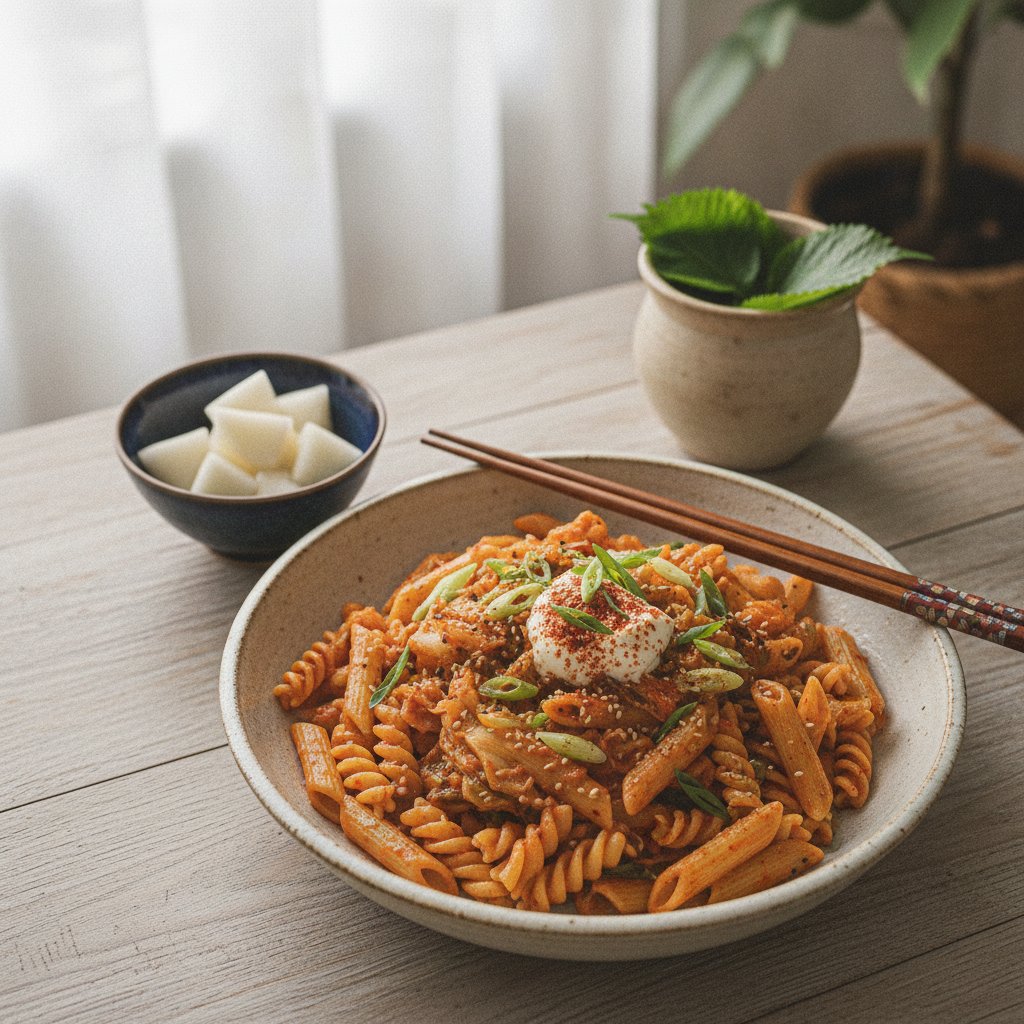
Creamy Kimchi Pasta (Kimchi Keurim Pasta)
This post contains affiliate links. As an Amazon Associate, we earn from qualifying purchases at no extra cost to you.
At a glance
- In shortHow to make creamy kimchi pasta using well-aged kimchi, heavy cream, bacon, and gochujang.
- Best forHome cooks seeking a fast, indulgent Korean fusion meal
- Time20 min
- DifficultyEasy
- HeatMedium
- Key pointsSautéing well-aged kimchi mellows raw acidity and builds rich flavor. · Starchy pasta water binds the cream sauce and prevents it from splitting. · Use sour, well-aged kimchi instead of fresh kimchi for best results.
- Heads-upKeep heavy cream at room temperature before adding to prevent curdling.
On rainy Tuesday evenings in Seoul, when my legs feel heavy after squeezed riding the Line 2 subway, I rarely reach for a jar of tomato sauce. Instead, I open the bottom drawer of my kimchi refrigerator where my mother’s *singimchi* (well-aged sour kimchi) sits in dark glass containers. Frying aged kimchi in a little fat and swirling in fresh heavy cream takes less than twenty minutes, but it delivers the kind of comfort that makes a long workday fade away.
This dish, known locally as *kimchi keurim pasta* (creamy kimchi pasta), is a fixture in Seoul’s casual neighborhood bistros and university cafes around Sinchon and Hongdae. In Korea, we love taking traditional pantry staples and marrying them with Western formats. While purists once scoffed at putting dairy and kimchi together, the combination makes total culinary sense. The sharp lactic acid of fermented cabbage cuts cleanly through the fat of heavy cream, while the cream coats your tongue and tempers the fiery heat of red pepper flakes.
In my family, we make this when we want something fast that feels a little indulgence. You do not need an Asian grocery run if you already have a jar of fermented kimchi, garlic, pasta, and cream in your fridge. Here is how we make it at home so you get a velvety, perfectly emulsified sauce every single time.
Why This Works
- Sautéing the kimchi first transforms its flavor profile: Frying well-aged kimchi in fat cooks off harsh, raw acidity and creates deep, caramelized umami notes before any dairy touches the pan.
- Pasta water creates a silky emulsion: Stirring starchy pasta water into the gochujang and cream prevents the sauce from splitting and helps it cling tightly to every noodle.
- Bacon fat adds a savory base: Rendering pork fat provides a smoky, rich background that balances the high heat of red pepper and sour vegetable notes.
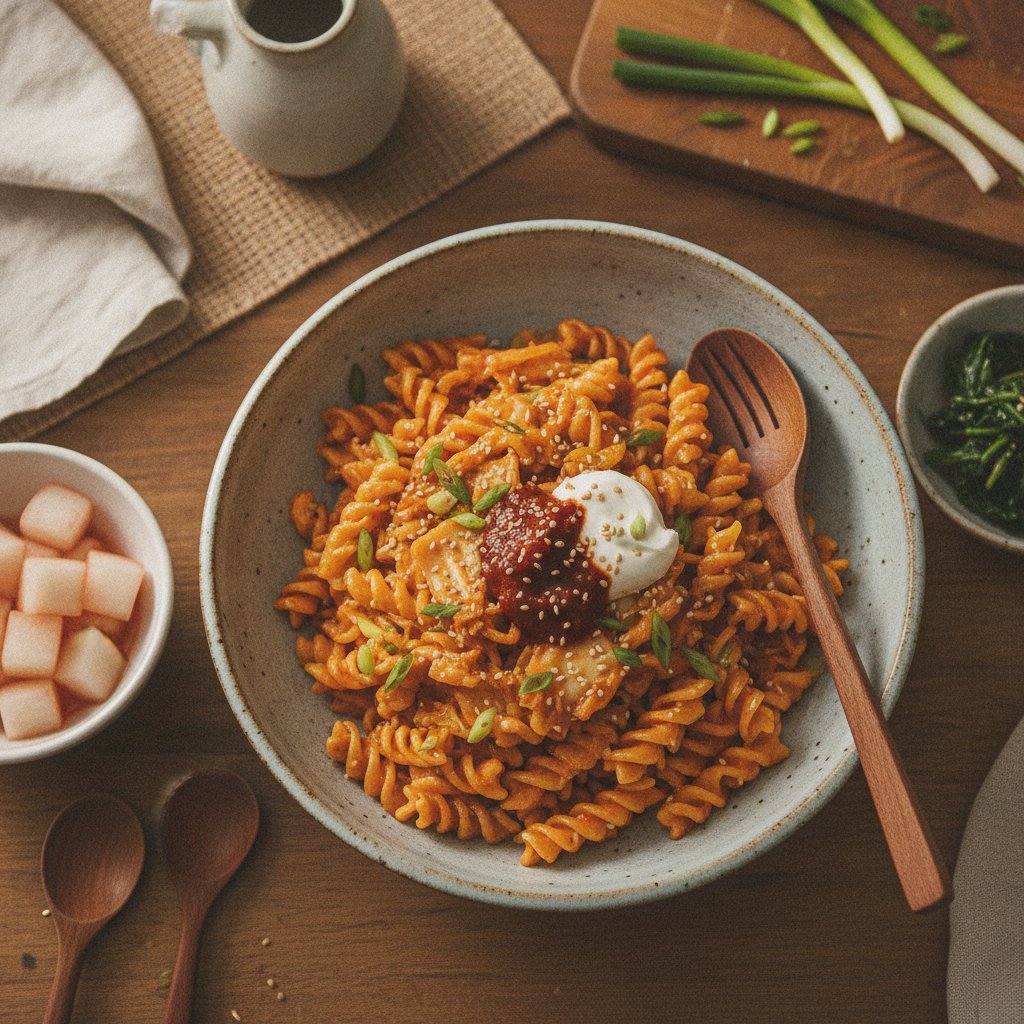
Ingredients
- 225 g (8 oz) dry pasta: Spaghetti, bucatini, or rigatoni work best for holding rich sauces.
- 150 g (about 1 cup) well-aged kimchi: Coarsely chopped, with juices reserved (look for older kimchi that smells sharp and sour).
- 60 ml (1/4 cup) kimchi juice: Strained straight from your kimchi container to heighten the tangy base.
- 4 slices (about 100 g / 3.5 oz) thick-cut bacon: Cut into 1/2-inch strips (or pork belly).
- 3 cloves garlic: Thinly sliced (not minced, so it browns gently without burning).
- 1 tbsp (15 g) unsalted butter: Added for gloss and rich flavor.
- 1 tbsp (15 g) gochujang (Korean chili paste): Such as CJ Haandleak or Sunchang brand, for earthiness and color.
- 1 tbsp (15 ml) soy sauce: Standard soup soy sauce or regular soy sauce for depth.
- 180 ml (3/4 cup) heavy cream: Heavy whipping cream (minimum 36% milk fat) prevents curdling when mixed with acid.
- 240 ml (1 cup) reserved pasta cooking water: Crucial for loosening and binding the sauce.
- 30 g (1/3 cup) freshly grated Parmesan cheese: Provides salinity and helps thicken the pan sauce.
- 2 scallions: Thinly sliced on a diagonal for fresh green crunch at the end.
- 1 sheet gim (seasoned Korean roasted seaweed): Shredded into thin strips for garnish (optional).
Substitutions
If you cannot find *gochujang* (Korean chili paste), you can mix 1 tablespoon of tomato paste with 1/2 teaspoon of cayenne powder and a pinch of sugar. It will lack the complex fermented soy flavor, but it yields a similar red color and mild warmth. If you prefer not to use bacon, try diced smoked sausage, pancetta, or sliced shiitake mushrooms cooked in 1 tablespoon of neutral oil. For heavy cream, full-fat canned coconut milk creates an interesting dairy-free option, though it will add a distinct coconut aroma to the dish.
🛒 Creamy Kimchi Pasta
As an Amazon Associate we earn from qualifying purchases.
Shop Ingredients & Tools →How to Make It
- Boil the pasta in salted water: Bring a large pot of salted water to a rolling boil. Drop in your pasta and cook it until it is 2 minutes shy of the package directions for al dente. Why? You want the pasta slightly undercooked so it can finish absorb cooking liquid inside the cream sauce without turning mushy. Reserve at least 1 cup of starchy pasta water before draining.
- Render the bacon fat: Place your sliced bacon in a wide skillet or saute pan over medium heat. Cook, stirring occasionally, until the fat renders out and the bacon pieces are crispy and golden brown, about 5 to 6 minutes. Why? Pork fat coats the pan and creates the traditional savory foundation for fried kimchi. Leave the rendered fat in the pan.
- Cook the garlic and kimchi: Add the sliced garlic and chopped kimchi to the hot bacon fat over medium-high heat. Sauté for 3 to 4 minutes until the kimchi turns translucent at the edges and smells fragrant rather than raw. Why? Raw kimchi is sharply acidic; stir-frying it mellows the harshness and caramelizes the natural sugars in the cabbage.
- Bloom the gochujang and soy sauce: Clear a small space in the center of your skillet. Add the butter, *gochujang* (Korean chili paste), and soy sauce directly onto the bare pan surface. Stir the paste in the melted butter for 1 minute until fragrant. Why? Blooming chili paste in hot fat releases oil-soluble flavor compounds and removes the raw, metallic edge from the fermented pepper paste.
- Pour in liquids to build the sauce: Stir the kimchi juice and heavy cream into the skillet, turning the heat down to medium-low. Let the liquid simmer gently for 2 minutes, stirring constantly to integrate the dark red paste with the cream until a uniform, coral-pink sauce forms. Do not boil vigorously, as high heat can break the dairy emulsion.
- Combine pasta, cheese, and pasta water: Transfer the drained, undercooked pasta directly into the simmering sauce along with the grated Parmesan cheese and about 1/2 cup (120 ml) of the reserved pasta cooking water. Toss continuously with tongs for 2 minutes over medium heat. Why? Agitating the pasta forces the starch from the noodles to blend with the cream and cheese, transforming a runny liquid into a glossy, clingy sauce. If the sauce looks too thick, splash in more pasta water a tablespoon at a time.
- Garnish and serve immediately: Divide the pasta into wide bowls. Top with the crispy bacon bits, sliced green scallions, and shredded *gim* (seasoned seaweed). Serve right away while piping hot.
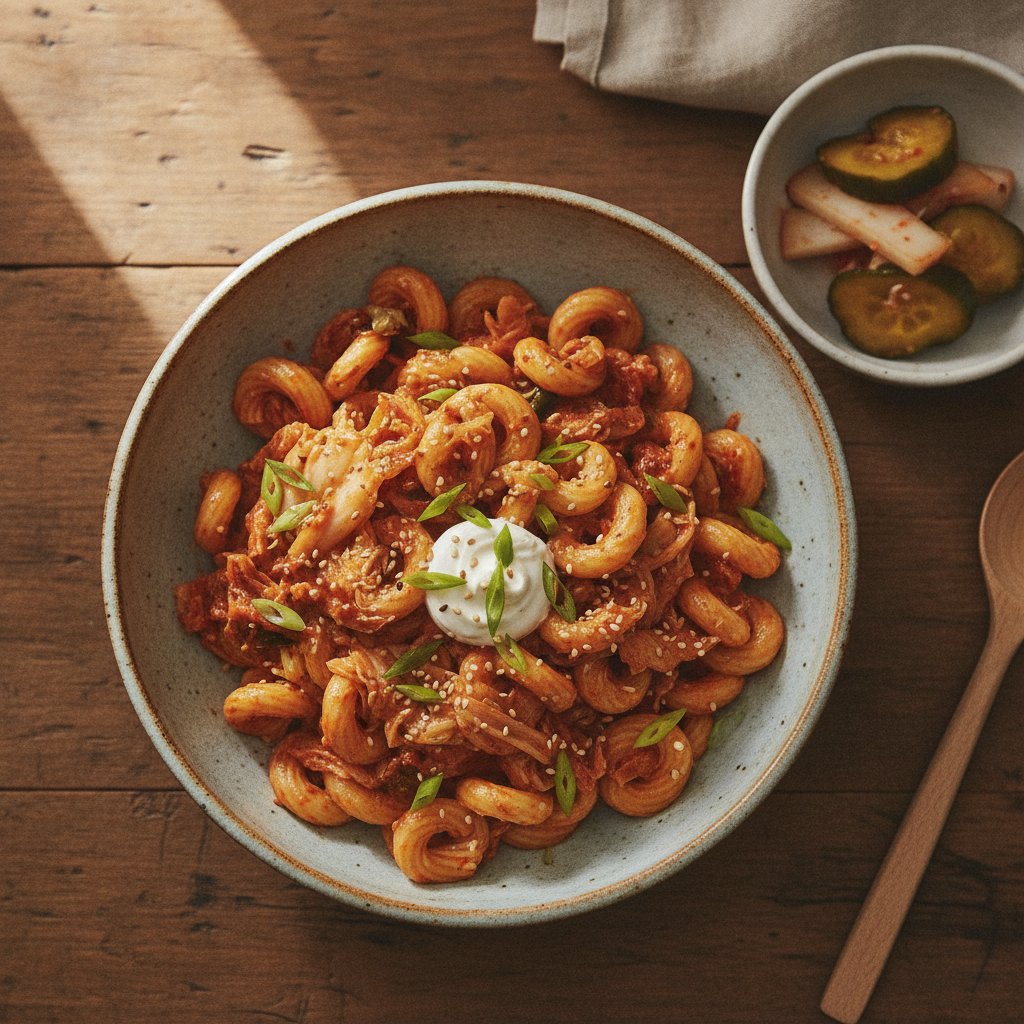
Tips from a Korean Kitchen
The biggest mistake Western home cooks make when trying this recipe is using fresh kimchi. Freshly made kimchi (*geotjeori*) has a crisp texture and bright salad-like taste, but it completely lacks the sour lactic acid needed to cut through heavy cream. You want kimchi that has been sitting in your fridge for at least three to four weeks—the kind that makes you pucker slightly if eaten raw. Look for jars at the market where the cabbage looks slightly translucent and soft.
Always keep your heavy cream at room temperature for ten minutes before adding it to the warm pan. Cold cream poured into a pan with hot, acidic kimchi juice can shock the dairy proteins, causing tiny white curds to form. While curdled sauce still tastes fine, keeping your cream warm ensures that velvety, restaurant-style sheen.
In Seoul cafes, cooks often top this dish with a raw egg yolk or a slice of melted American cheese right before serving. If you want an extra rich texture, place a fresh egg yolk right in the center of the hot pasta bowl. Mixing it in at the table creates an amazingly glossy finish.
Storage
Creamy kimchi pasta is undeniably best enjoyed fresh from the skillet, as cream sauces naturally absorb into noodles over time. However, leftovers keep well in an airtight container in the refrigerator for up to 3 days. Freezing is not recommended because dairy sauces separate and turn grainy upon thawing.
To reheat leftovers without breaking the sauce, place the pasta in a skillet over low heat. Add 2 tablespoons of milk, cream, or water to replenish lost moisture. Gently toss until warmed through. Avoid high microwave heat, which will cause the pork fat and cream to separate into a greasy puddle.
🛒 Creamy Kimchi Pasta
As an Amazon Associate we earn from qualifying purchases.
Shop Ingredients & Tools →FAQ
Can I make creamy kimchi pasta vegetarian?
Yes, absolutely. Skip the bacon and heat 1 tablespoon of neutral oil along with 1 teaspoon of toasted sesame oil in your pan. Saute sliced shiitake or king oyster mushrooms until brown before adding your garlic and kimchi. Check your kimchi label, as traditional kimchi contains fish sauce or salted shrimp; look for a brand explicitly labeled vegan.
Why did my kimchi cream sauce curdle?
Curdling happens when high heat combines with the acid in kimchi juice to strip stability from dairy. To prevent this, use full-fat heavy cream rather than low-fat milk or half-and-half, keep the stove heat on low when adding dairy, and bring your cream to room temperature before pouring it into the hot pan.
What is the best type of pasta shape to use?
Long, flat noodles like fettuccine or thick strands like bucatini and spaghetti are ideal because they provide plenty of surface area for the thick cream sauce to coat. If you prefer short shapes, rigatoni or penne rigate work well because their exterior ridges capture small bits of chopped kimchi and bacon inside every bite.
More on Kimchi Noodles & Pasta
- 10-Minute Upgraded Kimchi Ramen HackHow to quickly transform packaged instant ramen into a rich Korean kimchi soup using simple tips.
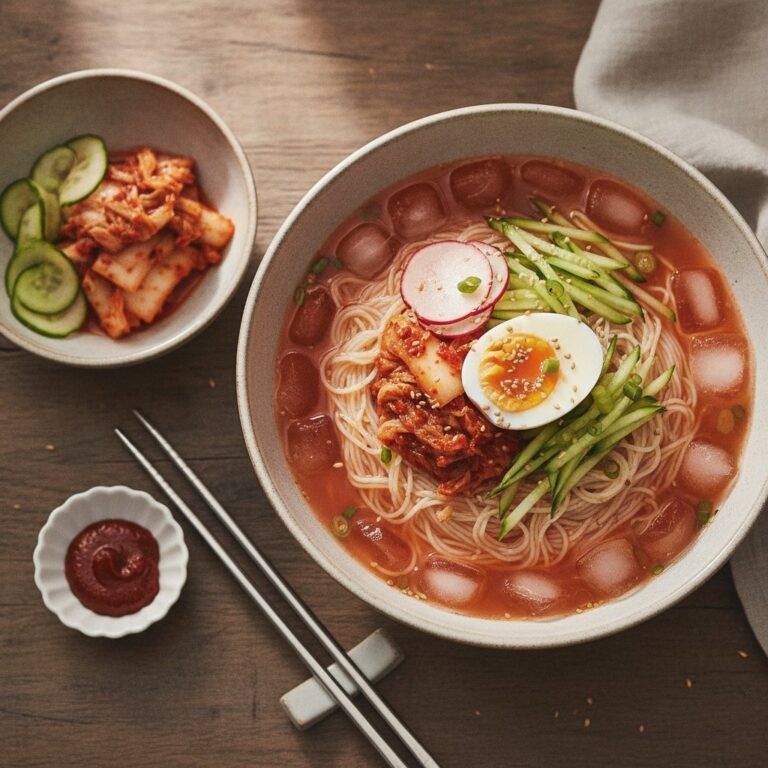
- Easy Kimchi Bibim GuksuA quick recipe for spicy Korean cold noodles made with somyeon, sour kimchi, and gochujang.
- Cold Kimchi Noodle SoupA guide to making authentic Korean chilled kimchi noodle soup with slushy broth and chewy somyeon.
See every Kimchi Noodles & Pasta post in our Kimchi guide.
Handy toolsRecipe scaler · Measurement converter · Korean pantry guide · Recipe Finder
🛒 Creamy Kimchi Pasta
As an Amazon Associate we earn from qualifying purchases.
Shop Ingredients & Tools →More Korean Recipes
- Crispy Potato Kimchi Pancake (Gamja Kimchi Jeon)
- Gaji Kimchi (Korean Stuffed Eggplant Kimchi Recipe)
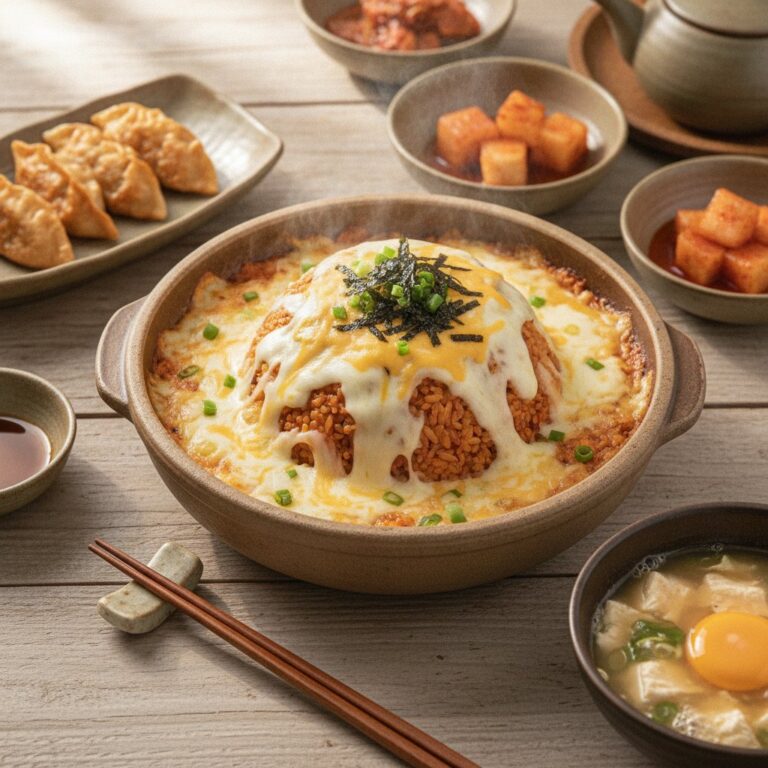
- Pan-Fried Kimchi Rice Balls (Kimchi Jumokbap)
- Kimchi Dubu Jorim: Spicy Braised Tofu with Kimchi
🛒 Creamy Kimchi Pasta
As an Amazon Associate we earn from qualifying purchases.
Shop Ingredients & Tools →