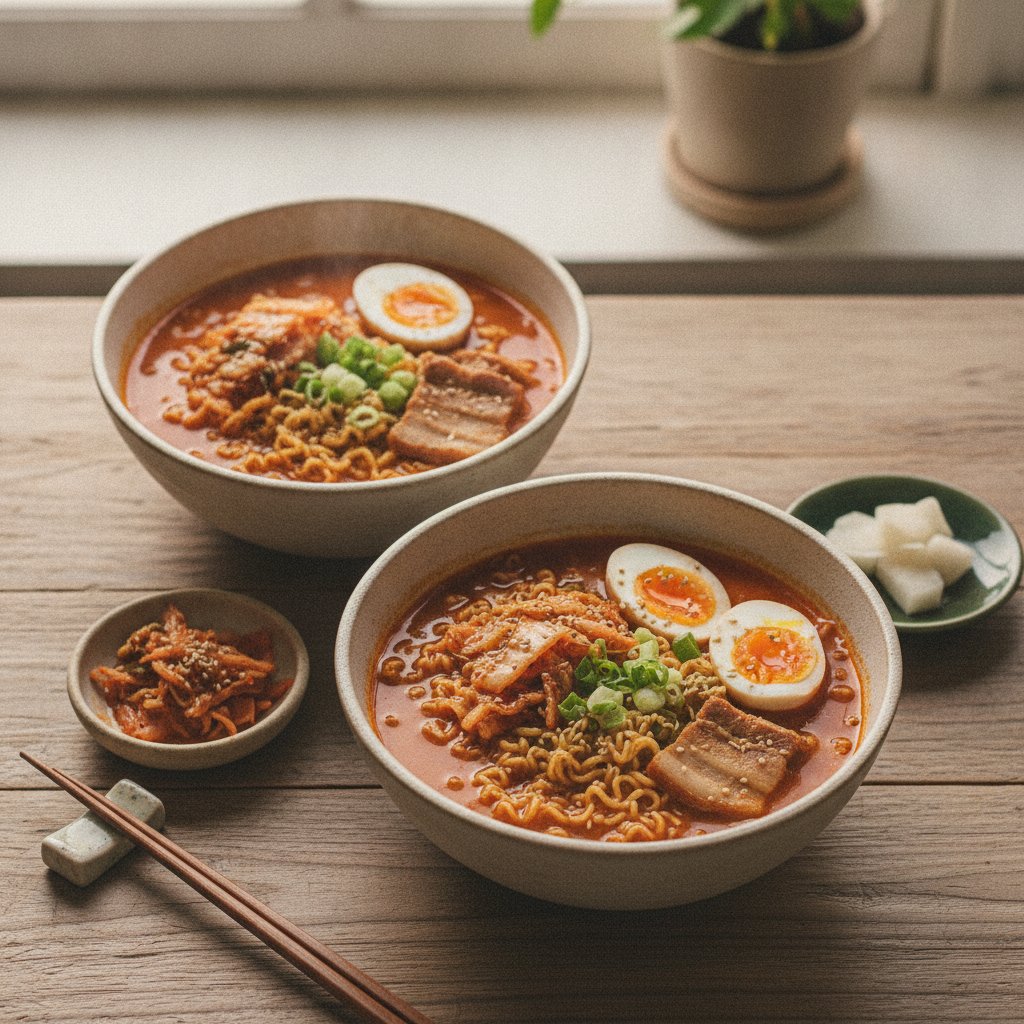
10-Minute Kimchi Ramen Hack (Upgraded Kimchi Ramyeon)
This post contains affiliate links. As an Amazon Associate, we earn from qualifying purchases at no extra cost to you.
At a glance
- In shortHow to quickly transform packaged instant ramen into a rich Korean kimchi soup using simple tips.
- Best forRamen lovers looking for a fast, upgraded late-night snack
- Time10 min
- DifficultyEasy
- HeatMedium
- Key pointsSautéing aged kimchi in sesame oil turns sharp acidity into a rich soup base. · Use 3/4 of the seasoning packet to balance the salt from added kimchi juice. · Finish with butter or cheese to emulsify spicy oils into a velvety broth.
- Heads-upAvoid boiling on low heat because a weak simmer makes instant noodles mushy.
An Honest Midnight Snack from a Seoul Kitchen
Late at night in Seoul, when rain hits the metal window frames outside my apartment, there is only one dish my family consistently craves: a piping hot pot of kimchi ramyeon (kimchi instant noodles). South Korea is one of the highest consumers of instant noodles in the world, but if you step into any Korean home, you will rarely see someone simply boiling water and dumping in the powder packet as the package directs. We treat instant noodle packets as a canvas—a fast, savory base waiting to be upgraded with whatever sits inside our refrigerator drawers.
Standard instant soup broth can often feel flat, overly salty, or artificial when prepared plain. The trick to fixing this lies in combining high-acid ingredients with rich fats in a quick single-pot method. By taking just ten minutes to proper stir-fry sour kimchi with garlic before adding water, you release caramel sugars and glutamates that turn ordinary packaged broth into a rich, complex soup. It is the exact comfort dish served in late-night bunsikjip (Korean snack restaurants) across Seoul, and you can easily make it anywhere in the world using basic pantry staples.
Why This Works
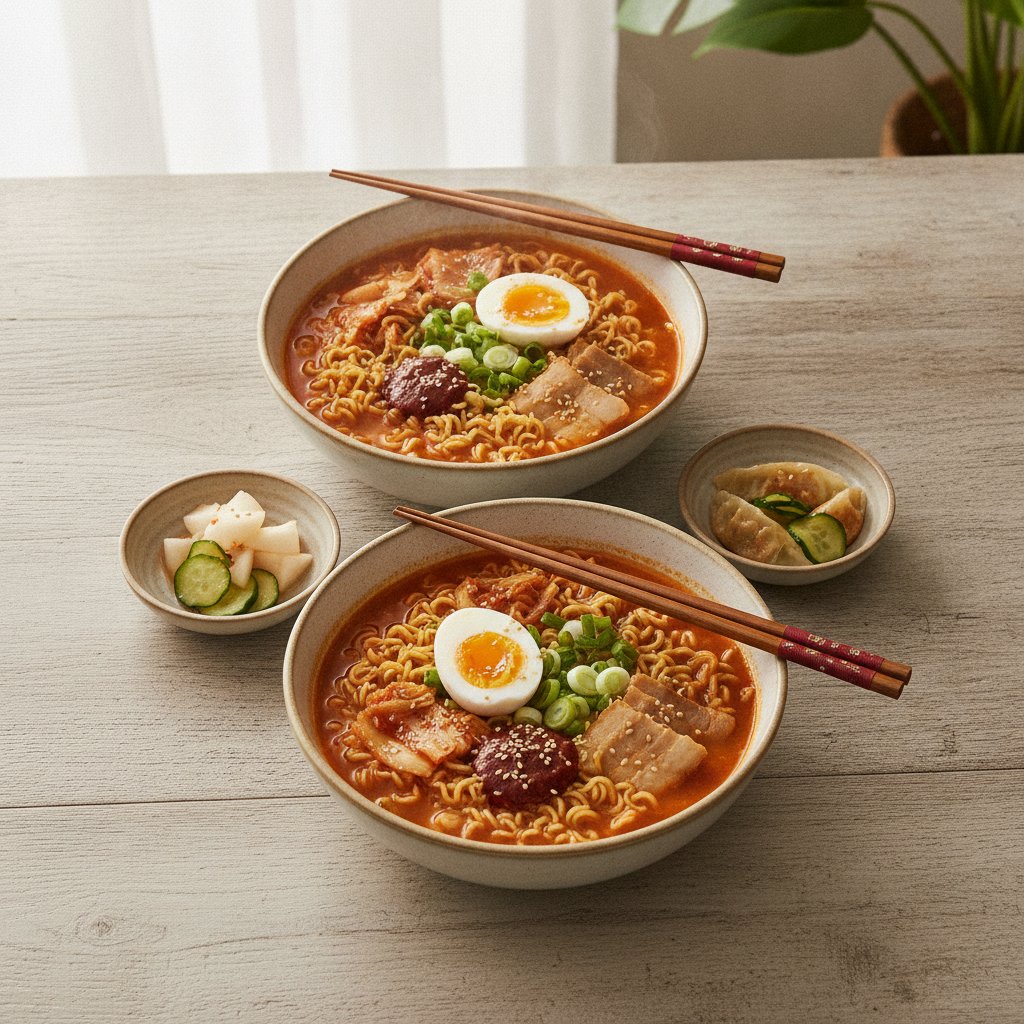
- Sautéing unlocks deep umami: Cooking aged kimchi in sesame oil before adding liquid converts sharp, harsh lactic acid into a mellow, sweet, and deeply savory base that plain boiling cannot replicate.
- Kimchi juice balances the packet seasoning: Replacing a portion of the salty powder packet with authentic fermented kimchi-gukmul (kimchi brine) adds bright acidity and natural broth depth.
- Fat emulsification smooths the heat: Finishing the broth with a touch of unsalted butter or a slice of American cheese binds the spicy chili oils, creating a velvety broth texture without diluting the Korean flavors.
Ingredients
- 1 pack instant ramen noodles (120 g / 4.2 oz), such as Shin Ramyun, Jin Ramen, or your favorite spicy beef flavor
- 100 g (about 1/2 cup) sour, well-aged kimchi, roughly chopped
- 30 ml (2 tbsp) kimchi-gukmul (kimchi juice straight from the jar)
- 15 ml (1 tbsp) toasted sesame oil
- 2 cloves garlic, finely minced
- 500 ml (about 2 cups) water or unsalted broth
- 1 large egg
- 15 g (1 tbsp) unsalted butter OR 1 slice American processed cheese
- 20 g (2 stalks) scallions (green onions), thinly sliced
- 5 g (1 tsp) gochugaru (Korean coarse chili flakes), optional for extra heat
Substitutions
If you cannot find well-aged kimchi at your local Western grocery store, purchase any fresh jar of store-bought kimchi and leave it sealed on your kitchen counter overnight. Room temperature accelerates fermentation, producing the sourness required for cooking. If you do not have toasted sesame oil, neutral vegetable oil or a small pat of regular butter works well for sautéing. For those avoiding spicy food, choose a mild chicken or vegetable instant noodle packet and reduce the kimchi juice slightly.
How to Make It
-
Sauté the kimchi and aromatics: Place a small saucepan over medium heat and add 15 ml (1 tbsp) of toasted sesame oil. Add 100 g (1/2 cup) of chopped kimchi and 2 minced garlic cloves. Stir-fry constantly for 2 to 3 minutes until the kimchi turns soft and slightly translucent around the edges. Why: Raw kimchi contains sharp lactic acid. Direct heat caramelizes the natural sugars in the cabbage and garlic, building a rich flavor foundation for the soup.
-
Build and balance the broth: Pour 500 ml (2 cups) of water and 30 ml (2 tbsp) of kimchi juice into the pot. Add three-quarters of the included instant seasoning packet (and the dried vegetable packet). Stir well and bring the mixture to a rapid boil over high heat. Why: Kimchi juice contains natural sea salt and garlic seasonings. Using the entire seasoning powder packet alongside kimchi brine often results in an overly salty broth; starting with three-quarters allows you to control the sodium balance.
-
Cook the noodles with air aeration: Drop the instant noodle block into the rolling boil. Set a timer for 3 minutes (one minute less than the packet instructions). As the noodles loosen, use tongs or chopsticks to lift them out of the broth into the air every 30 seconds. Why: Exposing hot starch strands briefly to cool air while cooking creates a firm, chewy noodle texture—a technique known in Korean kitchens as making the noodles springy (*tteang-tteang*).
-
Poach the egg and enrich the soup: Turn the heat down to low. Push the noodles to one side of the pot to create a small open pool of broth. Crack 1 large egg directly into the liquid. Do not scramble it; let it poach gently in the simmering soup for 1 minute. Add 15 g (1 tbsp) of butter or lay 1 slice of American cheese directly over the noodles. Why: Gentle poaching keeps the egg yolk whole so it doesn’t cloud your entire broth, while the fat from the butter or cheese emulsifies with the spicy liquid, rounding off sharp spice notes.
-
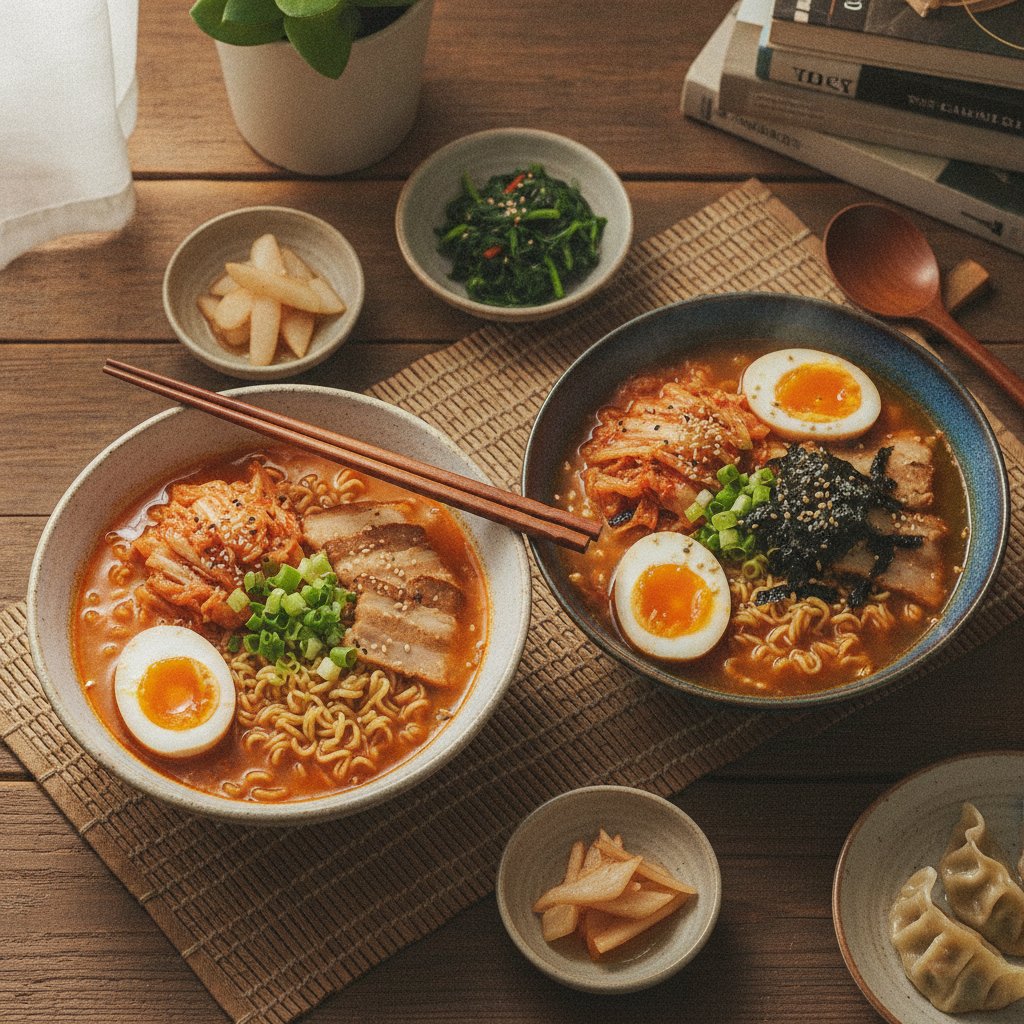
Garnish and serve hot: Turn off the burner immediately. Top the noodles with 20 g of fresh sliced scallions and a sprinkle of gochugaru (chili flakes) if you prefer extra heat. Serve immediately directly out of the cooking pot for authentic home style comfort.
Tips from a Korean Kitchen
In Korean home cooking, small adjustment details yield dramatic differences in texture and flavor. Here are four practical guidelines we rely on when transforming simple instant soup:
- Always select sour kimchi (Ssuk-seong Kimchi): Freshly made kimchi (*geotjeori*) is crisp and delicious as a side dish, but it lacks the soluble lactic acid needed to flavor hot broth. Aged kimchi has soft leaves and a sharp aroma that dissolves cleanly into warm soup base.
- Never boil on low heat from the start: Instant ramen noodles require fast, high-heat cooking. A weak simmer causes the noodle starch to absorb excess water, turning the strands mushy before the center cooks through.
- Try the classic finish (Ramyeon-bap): When you finish eating the noodles, do not discard the remaining spicy kimchi broth. Scoop half a bowl of cold cooked white rice directly into the warm soup. Cold rice absorbs warm broth rapidly without making the soup starch-thick, turning your leftovers into a satisfying rice soup (*gukbap*).
- Mind your pot size: Use a small, thin metal pot if possible. Stainless steel or nickel-silver (*yang-eun-nam-bi*) heats up and cools down rapidly, giving you tight control over cooking times so noodles never overcook.
Storage
Instant noodles absorb broth quickly, so it is best to enjoy this dish immediately upon cooking. However, if you have leftover broth and kimchi, store the liquid without noodles in an airtight glass container in the refrigerator for up to 3 days. Reheat the broth on the stove until boiling, then drop in fresh noodles or cooked rice. Do not freeze prepared ramen, as the noodle texture degrades completely upon thawing.
FAQ
Can I make this kimchi ramen hack without meat ingredients?
Yes. Simply select a plant-based or vegan instant noodle brand (such as Soon Veggie Ramen) and double-check your kimchi label to ensure it is made without fermented shrimp (*saeujeot*) or fish sauce. Sautéing the kimchi in sesame oil provides plenty of savory depth without meat-based broth bases.
What should I do if my store-bought kimchi is not sour enough?
If your kimchi is fresh and mild, stir half a teaspoon of rice vinegar or white vinegar into the pot along with the kimchi juice during step 2. The added acetic acid simulates the sharp tang of long-term fermentation instantly.
Is slice cheese really authentic in Korean instant ramen?
Yes, absolutely. Processed American cheese slices have been a staple addition at Korean *bunsikjip* (snack bars) and college dormitories since the 1970s. The melting salts and dairy fats in processed cheese blend smoothly into spicy chili broths, producing a famous variation known as *chijeu-ramyeon* (cheese instant noodles).
More on Kimchi Noodles & Pasta
- Easy Kimchi Bibim GuksuA quick recipe for spicy Korean cold noodles made with somyeon, sour kimchi, and gochujang.
- Cold Kimchi Noodle SoupA guide to making authentic Korean chilled kimchi noodle soup with slushy broth and chewy somyeon.
- Kimchi Kalguksu RecipeHow to cook Korean knife-cut noodle soup with sour kimchi in a rich broth.
See every Kimchi Noodles & Pasta post in our Kimchi guide.
Handy toolsRecipe scaler · Measurement converter · Korean pantry guide · Recipe Finder
More Korean Recipes
- Creamy Kimchi Pasta (Kimchi Keurim Pasta)
- Crispy Potato Kimchi Pancake (Gamja Kimchi Jeon)
- Gaji Kimchi (Korean Stuffed Eggplant Kimchi Recipe)
- Pan-Fried Kimchi Rice Balls (Kimchi Jumokbap)