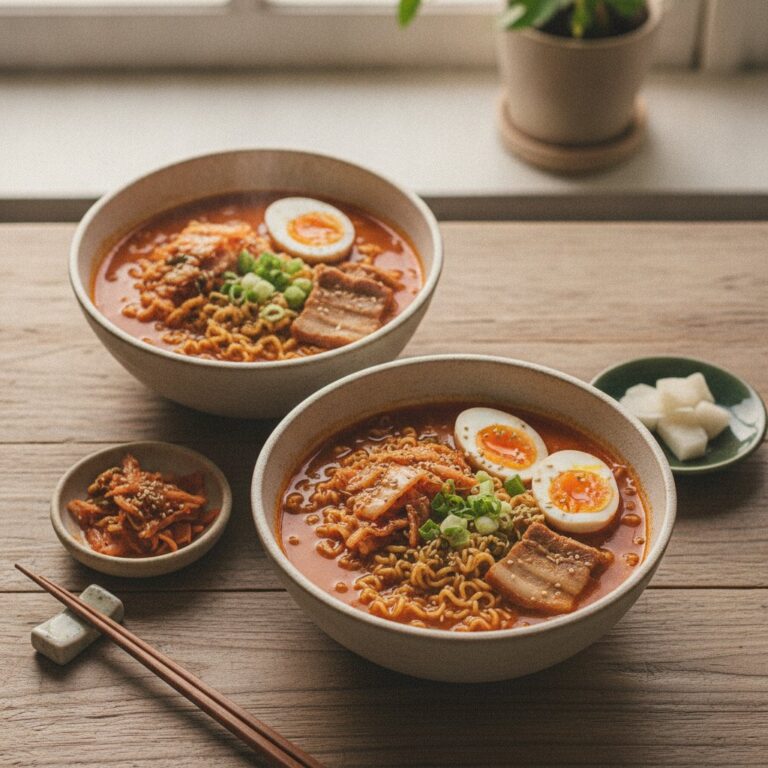
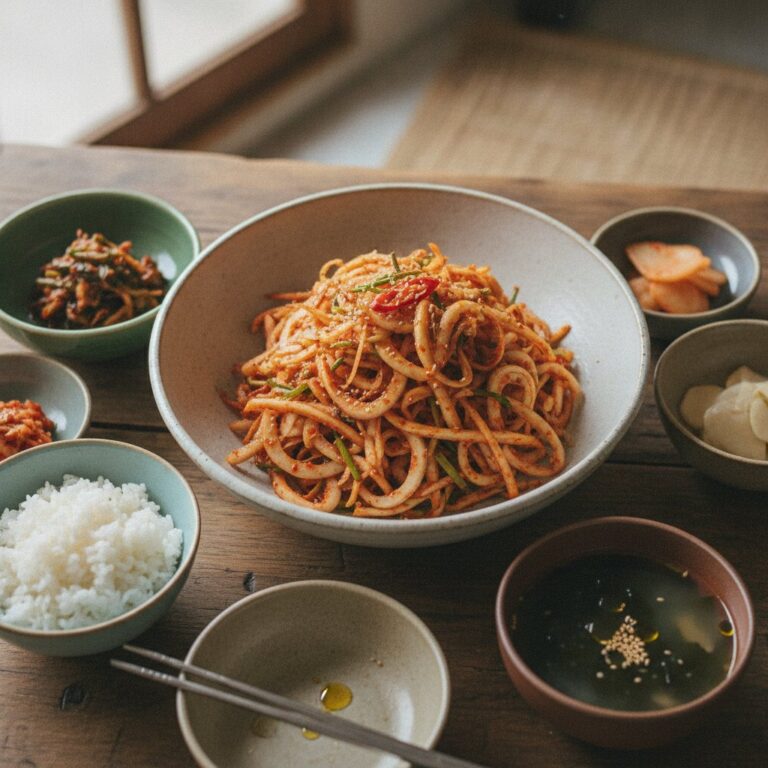
Gochujang Jjigae Recipe: Spicy Pork and Potato Stew
This post contains affiliate links. As an Amazon Associate, we earn from qualifying purchases at no extra cost to you.
At a glance
- In shortA guide to making authentic Korean spicy pork and potato stew at home using basic fridge staples.
- Best forHome cooks wanting to make authentic Korean stew
- DifficultyEasy
- HeatMedium
- Key pointsSearing pork and blooming gochujang in fat deepens flavor and heat. · Simmering potato chunks naturally thickens the stew broth. · Rice-washing water acts as an emulsifier to bind rendered fat into soup.
- Heads-upDo not cut potatoes too small or thin, as they will disintegrate in the broth.
On chilly, overcast rainy days in Seoul, my mother never asked what we wanted for dinner. She simply pulled out our battered nickel-silver pot, chopped a few Yukon Gold potatoes into rough chunks, and set a pot of broth bubbling on the burner. Within fifteen minutes, our small kitchen would fill with the rich, deep fragrance of sweet chili paste, toasted sesame oil, and sizzling pork fat. That comforting aroma meant only one thing: gochujang jjigae (spicy chili paste stew).
While kimchi jjigae (kimchi stew) and doenjang jjigae (soybean paste stew) get most of the international spotlight, this rich pork and potato stew is the ultimate cozy meal in authentic Korean home cooking. It is a humble everyday dish, known in Korea as jipbap (home-cooked meal style food), that comes together quickly using simple fridge staples. Unlike delicate soups, a true gochujang jjigae is thick, hearty, and boldly seasoned. Tender bite-sized pieces of pork belly or shoulder yield their rich fat to create a silky, deeply savory broth, while creamy potatoes break down just enough to give the soup a wonderfully rich body.
If you have a tub of red pepper paste sitting in your fridge and want to turn basic grocery store staples into an authentic Korean meal, this detailed gochujang jjigae recipe will show you exactly how home cooks in Seoul balance heat, sweetness, and savory depth every single time.
Why This Works
- Searing the pork and blooming the paste: Searing pork shoulder or pork belly first renders out savory fat. Sautéing the gochujang directly in that warm rendered fat cooks off the raw paste taste, caramelizing its natural sugars and rounding out its heat.
- Starchy potato thickening: Simmering chunky potato pieces directly in the seasoned broth releases natural starches, thickening the stew naturally without needing cornstarch slurry or heavy roux.
- Layered umami base: Combining fermented chili paste with a quick anchovy-kelp stock or rice washing water creates a complex background flavor that keeps the stew from tasting flat or overly sweet.

Ingredients
- 500 g (about 1.1 lbs) pork shoulder or pork belly: cut into bite-sized 1-inch pieces
- 2 medium Yukon Gold potatoes (about 350 g / 12 oz): peeled and cut into thick 1-inch chunks
- 1 medium zucchini (about 200 g / 7 oz): cut into half-moons, roughly 1/2-inch thick
- 1/2 medium yellow onion (about 100 g / 3.5 oz): sliced into thick chunks
- 150 g (about 5 oz) medium-firm tofu: cut into 1-inch cubes
- 2 green onions: sliced diagonally into 1-inch pieces
- 1 fresh red chili or green jalapeño (optional): thinly sliced for extra color and spice
- 3 tbsp Korean red pepper paste (gochujang): commercial brands like CJ Haandrepl or Sunchang work great
- 1 tbsp Korean red pepper flakes (gochugaru): adds bright red color and clean spice without adding extra sweetness
- 1 tbsp Korean soup soy sauce (guk-ganjang): adds essential salty umami; regular light soy sauce works as a backup
- 1 tbsp minced fresh garlic: about 3-4 cloves
- 1 tsp minced fresh ginger: cuts through the richness of the pork
- 1 tbsp toasted sesame oil: for initial searing and aromatic base
- 750 ml (about 3.25 cups) dried anchovy and kelp stock: or rice-washing water (ssalttmul)
Substitutions
If you cannot source every traditional Korean ingredient at your local supermarket, do not worry. Home cooking is all about adaptability:
- Pork options: Pork shoulder (boston butt) or pork belly offer the best meat-to-fat balance. However, boneless chicken thighs cut into chunks or even thinly sliced beef ribeye make delicious alternatives. For a vegetarian version, substitute mushroom stock and double the amount of king oyster mushrooms and tofu.
- Korean soup soy sauce (guk-ganjang): Soup soy sauce is saltier and lighter in color than standard soy sauce. If you do not have it, use equal parts standard light soy sauce and fish sauce (such as Red Boat or Three Crabs), or simply use regular soy sauce with a light pinch of sea salt.
- Stock options: While Korean home cooks traditionally use dasima (dried kelp) and dried anchovy stock, you can easily use plain low-sodium chicken broth, vegetable broth, or simple ssalttmul (the starchy water saved from rinsing white rice). The starch in rice water helps bind the broth beautifully.
🛒 Gochujang Jjigae Recipe
As an Amazon Associate we earn from qualifying purchases.
Shop Ingredients & Tools →How to Make It
-
Sear the pork to render fat (3 to 4 minutes): Place a heavy-bottomed pot or Dutch oven over medium heat. Add 1 tablespoon of toasted sesame oil and your cut pork pieces. Cook, stirring occasionally, until the outer surfaces turn pale pink to light brown and start releasing their natural fat. Why: Rendering the pork fat into the sesame oil creates a flavorful cooking base that coats the vegetables and mellows the spicy chili paste later on.
-
Bloom the aromatics and chili paste (1 to 2 minutes): Lower the heat slightly to medium-low. Add the minced garlic, minced ginger, 3 tablespoons of gochujang, and 1 tablespoon of gochugaru directly to the pork and fat. Stir gently and fry everything together for about 90 seconds until glossy and fragrant. Why: Gochujang contains naturally fermented wheat starch and soybeans. Briefly sautéing it in warm fat caramelizes those natural sugars, removing any raw bite and building a deeper, darker, more savory flavor base.
-
Add stock and sturdy vegetables (boil 10 to 12 minutes): Pour in the 750 ml of anchovy stock or rice water, stirring with a wooden spoon to scrape up any flavorful brown bits stuck to the bottom of the pot. Add the potato chunks and sliced yellow onions. Turn the heat up to medium-high and bring the liquid to a rolling boil. Once boiling, cover the pot with a lid, turn the heat down to medium-low, and let it simmer gently for 10 to 12 minutes. Why: Potatoes require significant time to soften. Boiling them first ensures they become creamy inside while releasing starch to naturally thicken your stew broth.
-
Add quick-cooking vegetables and tofu (simmer 5 minutes): Uncover the pot and check the potatoes by gently piercing one chunk with a fork; it should be nearly tender. Stir in the sliced zucchini, tofu cubes, and 1 tablespoon of soup soy sauce. Leave the lid off and let the stew simmer on medium heat for another 4 to 5 minutes until the zucchini becomes tender-crisp and the tofu absorbs the red broth. Why: Zucchini and tofu cook quickly. Adding them near the end keeps the zucchini from turning mushy and prevents the delicate tofu from breaking apart.
-
Finish with fresh greens and final seasoning (1 minute): Scatter the diagonally cut green onions and sliced fresh chilis across the top of the bubbling stew. Let them cook for just one minute until wilted. Taste the broth carefully. If you prefer a saltier soup, add a splash of soy sauce or fish sauce; if it feels too spicy or intense, stir in a spoonful of extra broth or water. Remove from heat immediately and serve bubbling hot straight from the pot alongside warm bowls of sticky white rice.

Tips from a Korean Kitchen
Making a truly memorable Korean stew at home comes down to small details that elevate simple ingredients into something extraordinary:
- Save your rice water (ssalttmul): When preparing white rice to serve with your meal, pour off and save the water from your second or third rice wash. The subtle starch suspended in this water acts as an emulsifier, binding the rich rendered pork fat and spicy gochujang together into a silky, cohesive soup rather than a greasy broth.
- Do not cut potatoes too small: Keep your potato chunks thick (about 1 inch / 2.5 cm). If chopped too thin, they will disintegrate completely into the boiling liquid, turning your stew into a cloudy puree rather than a clear stew with distinct hearty textures.
- Control sweetness carefully: Different commercial gochujang brands vary significantly in sweetness levels. If you find your stew tastes slightly too sweet after adding the paste, add half a teaspoon of fish sauce or a extra splash of soup soy sauce to bring the profile back toward the savory side.
- Serve in traditional stoneware if possible: In Korea, stews like this are frequently cooked or served in a thick earthenware pot known as a ttukbaegi. Earthenware retains heat exceptionally well, keeping your broth piping hot and bubbling from your first bite down to the very last spoonful.
Storage
Gochujang jjigae makes fantastic leftovers because the rich flavors continue to meld and deepen overnight in the refrigerator.
- Refrigeration: Allow the leftover stew to cool completely to room temperature. Transfer it into an airtight glass or food-safe container and store in the fridge for up to 3 to 4 days.
- Reheating: Reheat leftovers in a small saucepan over medium-low heat until heated through completely. Because the potatoes will continue to absorb liquid and release starch as it sits, the broth will naturally thicken in the fridge. Simply add 2 to 3 tablespoons of fresh water or broth when reheating to restore the original liquid consistency.
- Freezing: Freezing is generally not recommended for this particular stew. While pork freezes well, cooked potatoes and tofu suffer significant structural damage during freezing and thawing, turning spongy and watery in texture. Enjoy this stew fresh or within a few days from the refrigerator.
🛒 Gochujang Jjigae Recipe
As an Amazon Associate we earn from qualifying purchases.
Shop Ingredients & Tools →FAQ
Can I make gochujang jjigae without meat?
Yes, you can easily adapt this stew into a delicious vegetarian or vegan dish. Replace the pork with a mix of thick-cut mushrooms, such as king oyster, shiitake, or beech mushrooms, which offer a meaty chew and wonderful natural umami. Use vegetable broth or rice water instead of anchovy stock, and substitute light soy sauce for any fish sauce.
How spicy is gochujang jjigae compared to kimchi jjigae?
Gochujang jjigae generally has a warmer, rounder spice profile than kimchi jjigae. Gochujang contains fermented rice starch, giving it a natural underlying sweetness that tempers the raw heat of the peppers. If you prefer a milder stew, reduce the gochujang paste to 2 tablespoons and leave out the additional ground red pepper flakes (gochugaru) and fresh chili slices.
What should I serve alongside this spicy pork stew?
In Korea, a hot stew is always served as the centerpiece of a meal accompanied by fresh short-grain white rice (ssal-bap) or purple multi-grain rice (heukmi-bap). Simple, clean side dishes (banchan) like seasoned spinach (sigeumchi-namul), rolled omelets (gyeran-mari), or crisp pickled radishes balance the spicy heat of the main dish wonderfully.
More on Stews & Hot Pots
- How to Make Cheonggukjang JjigaeA guide to making authentic Korean fermented soybean stew with anchovy broth, kimchi, and pork belly.
- Creamy Biji Jjigae (Ground Soybean Stew)A step-by-step guide to making rich Korean ground soybean stew with pork and aged kimchi.
- Sundubu Jjigae (Soft Tofu Stew) RecipeA step-by-step recipe for making restaurant-style Korean soft tofu stew at home with easy substitutions.
See every Stews & Hot Pots post in our Soups & Stews guide.
Handy toolsRecipe scaler · Measurement converter · Korean pantry guide · Recipe Finder
🛒 Gochujang Jjigae Recipe
As an Amazon Associate we earn from qualifying purchases.
Shop Ingredients & Tools →More Korean Recipes
- Cold Seaweed Soup Recipe (Miyeok Naenguk)
- Gopchang Jeongol Recipe: Spicy Beef Intestine Hot Pot
- Jeonju Style Kongnamul Gukbap Rice Soup
- Gul Miyeokguk: Easy Korean Oyster Seaweed Soup
🛒 Gochujang Jjigae Recipe
As an Amazon Associate we earn from qualifying purchases.
Shop Ingredients & Tools →