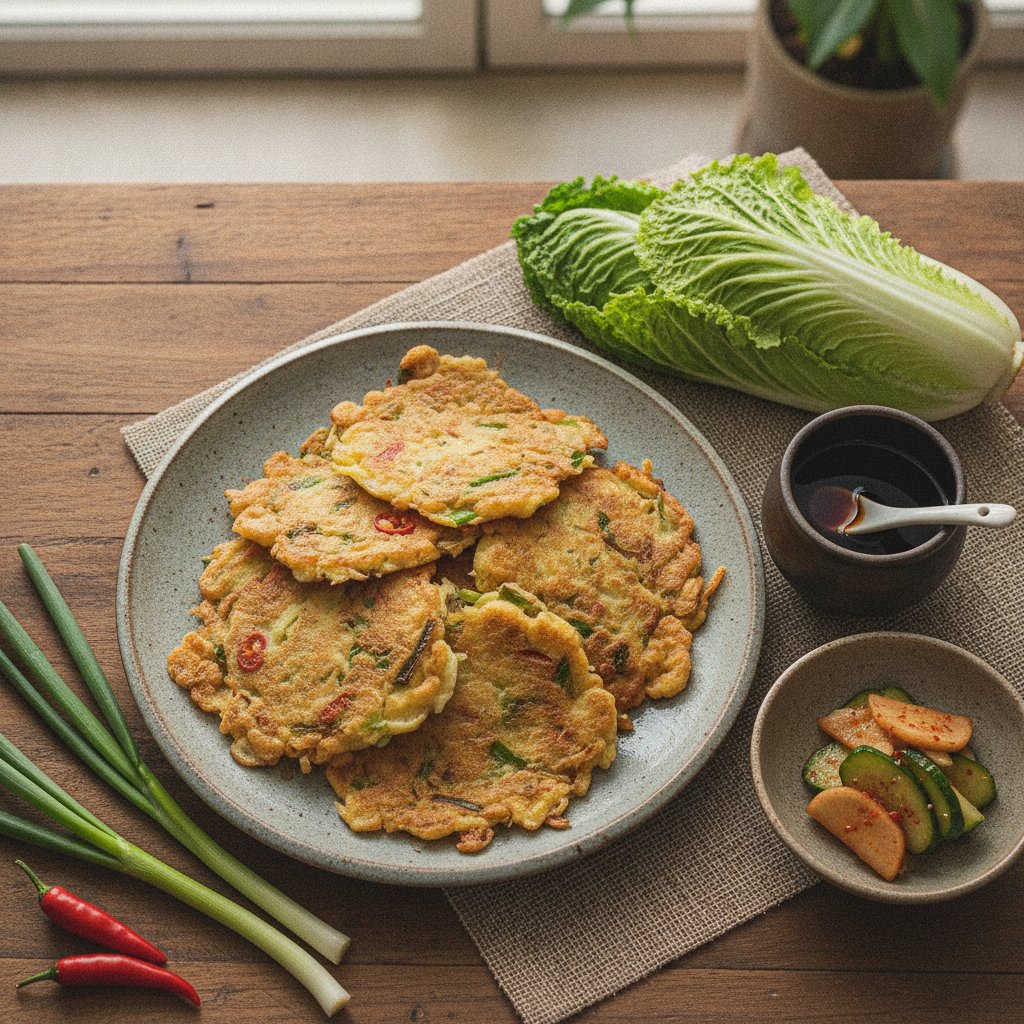
Crispy Napa Cabbage Pancake Recipe (Baechu Jeon)
This post contains affiliate links. As an Amazon Associate, we earn from qualifying purchases at no extra cost to you.
At a glance
- In shortA guide to making crispy Korean napa cabbage pancakes with a delicate batter and quick dipping sauce.
- Best forHome cooks seeking an easy, crisp Korean vegetable pancake
- DifficultyEasy
- HeatMild
- Key pointsFlattening cabbage stems ensures full pan contact for even browning. · Ice-cold batter with starch creates a light, glass-like crispness. · Cooling finished pancakes on a wire rack keeps the crust crisp.
- Heads-upKeep batter chilled and maintain enough hot oil in the pan so the pancake shallow-fries cleanly.
On rainy days in Seoul, you can hear the deep sizzle of hot oil echoing through every traditional market long before you step under the wooden eaves of the food stalls. In Korea, rain almost instantly triggers a collective craving for jeon (pan-fried battered dishes). The rhythmic pitter-patter of raindrops sounds remarkably like batter hitting a generous pool of hot oil in a shallow skillet. While visitors often gravitate toward elaborate versions filled with seafood or aged kimchi, my family always turns to the humblest version of all: baechu jeon (napa cabbage pancake).
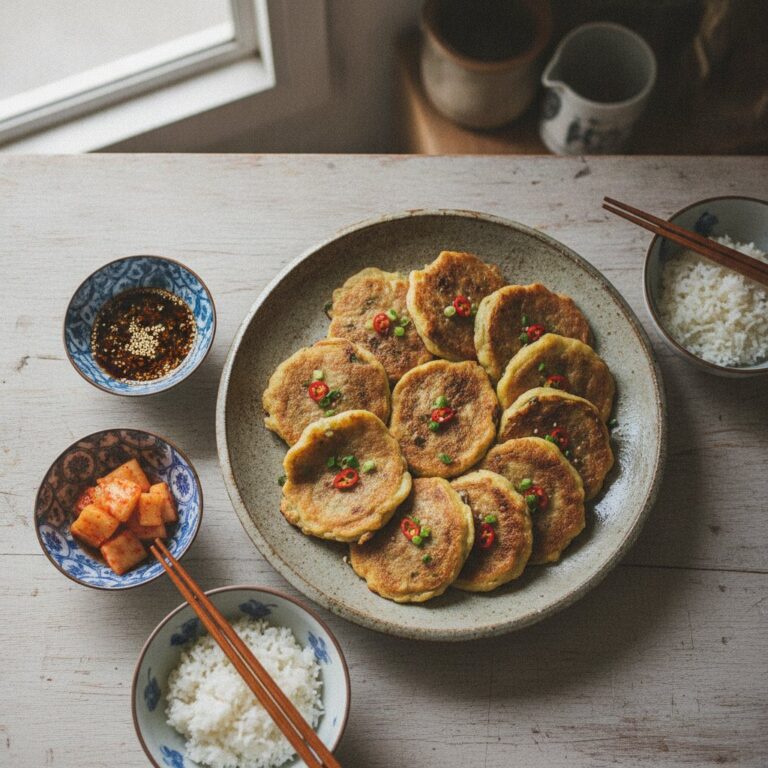
Unlike heavily battered savory pancakes that rely on dozens of added ingredients, this traditional dish highlights a single humble vegetable. Whole, fresh napa cabbage leaves are dipped into a light, seasoned batter and pan-fried whole until the edges turn into golden, lacy filigree while the thick white stems become tender and sweet. In Gyeongsang-do, the southeastern province where this dish is a beloved staple, home cooks know that a good napa cabbage pancake recipe relies on restraint. It is light, incredibly crisp, naturally sweet, and surprisingly quick to prepare with ingredients you likely already have in your kitchen.
Why This Works
- Scoring and gently tenderizing the thick white stem flattens the leaf structure completely, ensuring 100 percent direct contact with the hot frying surface for uniform browning.
- Combining standard all-purpose flour with starch lowers the overall gluten content, creating a thin, delicate batter that browns cleanly without becoming gummy or bread-like.
- Frying the leaves whole over medium-high heat allows the natural moisture locked inside the cabbage stem to steam-cook internally while the outer batter shell quickly crisp-fries in hot oil.
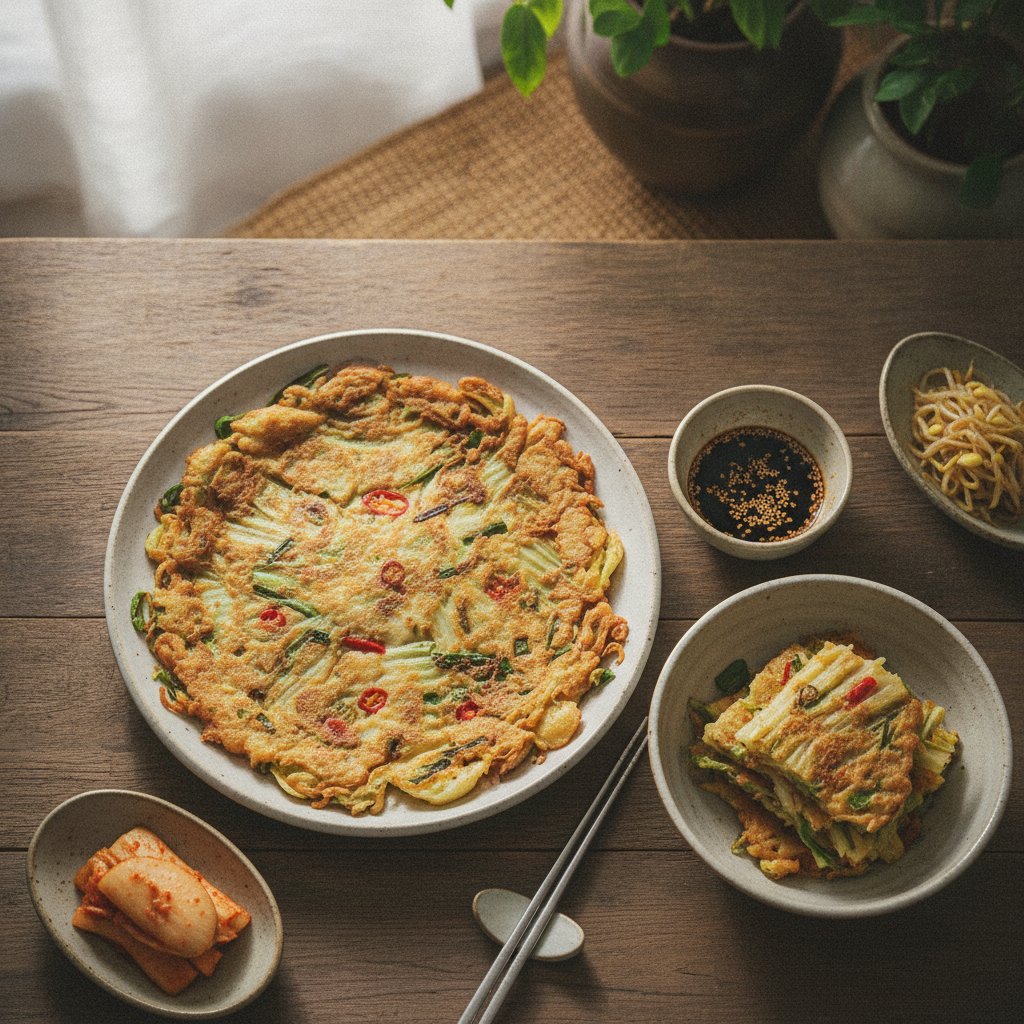
Ingredients
- 4 to 6 large whole leaves napa cabbage (baechu), about 250 g (9 oz total)
- 120 g (about 1 cup) all-purpose flour
- 30 g (about 3 tbsp) cornstarch or potato starch
- 240 ml (1 cup) ice-cold water
- 3 g (1/2 tsp) fine sea salt
- 1 g (1/4 tsp) garlic powder (optional, for subtle background flavor)
- 45 to 60 ml (3 to 4 tbsp) neutral cooking oil with a high smoke point (canola, grapeseed, or vegetable oil)
- 30 ml (2 tbsp) soy sauce
- 15 ml (1 tbsp) rice vinegar
- 15 ml (1 tbsp) water
- 2 g (1/2 tsp) gochugaru (Korean red pepper flakes)
- 1 g (1/2 tsp) toasted sesame seeds
- 1 scallion, finely sliced (optional)
Substitutions
If you cannot find napa cabbage, savoy cabbage makes the closest alternative because its ruffled leaves hold batter well, though it takes a minute longer to soften. Standard green cabbage is too rigid for whole-leaf frying, but you can slice it into thin ribbons if necessary. Potato starch can be replaced gram-for-gram with cornstarch or tapioca starch to preserve the light texture. If you do not have rice vinegar for the dipping sauce, apple cider vinegar or plain white distilled vinegar works smoothly. For gochugaru, substitute a small sprinkle of coarse red pepper flakes or a dash of hot sauce into the dipping liquid.
🛒 Crispy Napa Cabbage Pancake Recipe
As an Amazon Associate we earn from qualifying purchases.
Shop Ingredients & Tools →How to Make It
-
Prepare the cabbage leaves. Wash the napa cabbage leaves thoroughly in cold water and pat them completely dry with a clean kitchen towel. Place a leaf flat on your cutting board with the white, thick stem facing up. Using the flat side of your knife blade or a heavy rolling pin, gently crush the thick white stem in two or three spots, or make shallow diagonal cross-hatches along the stem using the tip of your chef knife. WHY: Napa cabbage stems are naturally curved and rigid. Flattening the thick central rib breaks the fibrous cell walls so the entire leaf lies flat in the frying pan, preventing cold spots and uneven cooking.
-
Prepare the dry coating. Place 20 g (about 2 tablespoons) of the all-purpose flour onto a broad plate or baking sheet. Lightly dust both sides of each flattened cabbage leaf with the dry flour, shaking off any heavy excess. WHY: Fresh cabbage has a smooth, slick outer surface that naturally repels wet batter. A micro-thin layer of dry flour acts as a binding primer, forcing the thin batter to stick evenly across the leaf without pooling or sliding off.
-
Whisk the cold batter. In a medium mixing bowl, combine the remaining 100 g all-purpose flour, 30 g starch, sea salt, and optional garlic powder. Pour in 240 ml of ice-cold water. Whisk lightly until just combined; a few small lumps are entirely fine. WHY: Cold water slows down gluten formation when mixed with wheat flour. Excessive gluten creates a rubbery, pancake-like crust, whereas a chilled, briefly mixed batter yields a delicate, glass-like crunch once it hits hot oil.
-
Heat the oil thoroughly. Set a large non-stick skillet or well-seasoned cast-iron pan over medium-high heat. Add 30 ml (2 tablespoons) of neutral cooking oil and tilt the pan so the surface is evenly coated. Wait until the oil sparkles and moves fluidly across the pan, about 2 minutes. WHY: Laying battered food into lukewarm oil allows the batter to soak up grease like a sponge before the exterior can set. High initial heat instantly cooks the starch on contact, sealing out excess grease and establishing a crispy shell.
-
Dip and lay the cabbage. Take one dusted cabbage leaf by the stem top, submerge it fully into the cold batter, and lift it out, letting excess batter drip back into the bowl for 2 seconds. Carefully lay the leaf flat into the hot skillet. If your pan is large enough, add a second leaf in the opposite direction so they overlap slightly at the edges. WHY: Allowing excess batter to run off ensures the coating stays thin and crisp rather than heavy and doughy.
-
Pan-fry to golden perfection. Fry over medium heat without moving the leaf for 3 to 4 minutes, until the bottom edges turn deeply golden brown and tiny blisters form across the surface. Carefully flip the leaf over using a wide spatula. Press down gently on the thick stem area with your spatula to guarantee full contact with the pan. Fry the second side for another 2 to 3 minutes until golden spots appear and the cabbage stem turns slightly translucent. WHY: Medium heat gives enough time for the thick stem to cook tender in its own moisture while crisping the outer starch layer without burning it.
-
Drain and cut. Transfer the finished pancake to a wire cooling rack set over a tray. Repeat the process with the remaining cabbage leaves, adding a splash more oil to the pan between batches as needed. Mix the soy sauce, rice vinegar, water, gochugaru, sesame seeds, and sliced scallion in a small bowl. Cut the warm pancakes crosswise into bite-sized rectangular strips and serve immediately with the dipping sauce. WHY: Resting cooked jeon on a wire rack allows steam to escape from both sides, keeping the bottom crust crisp instead of steaming it soggy on a flat plate.
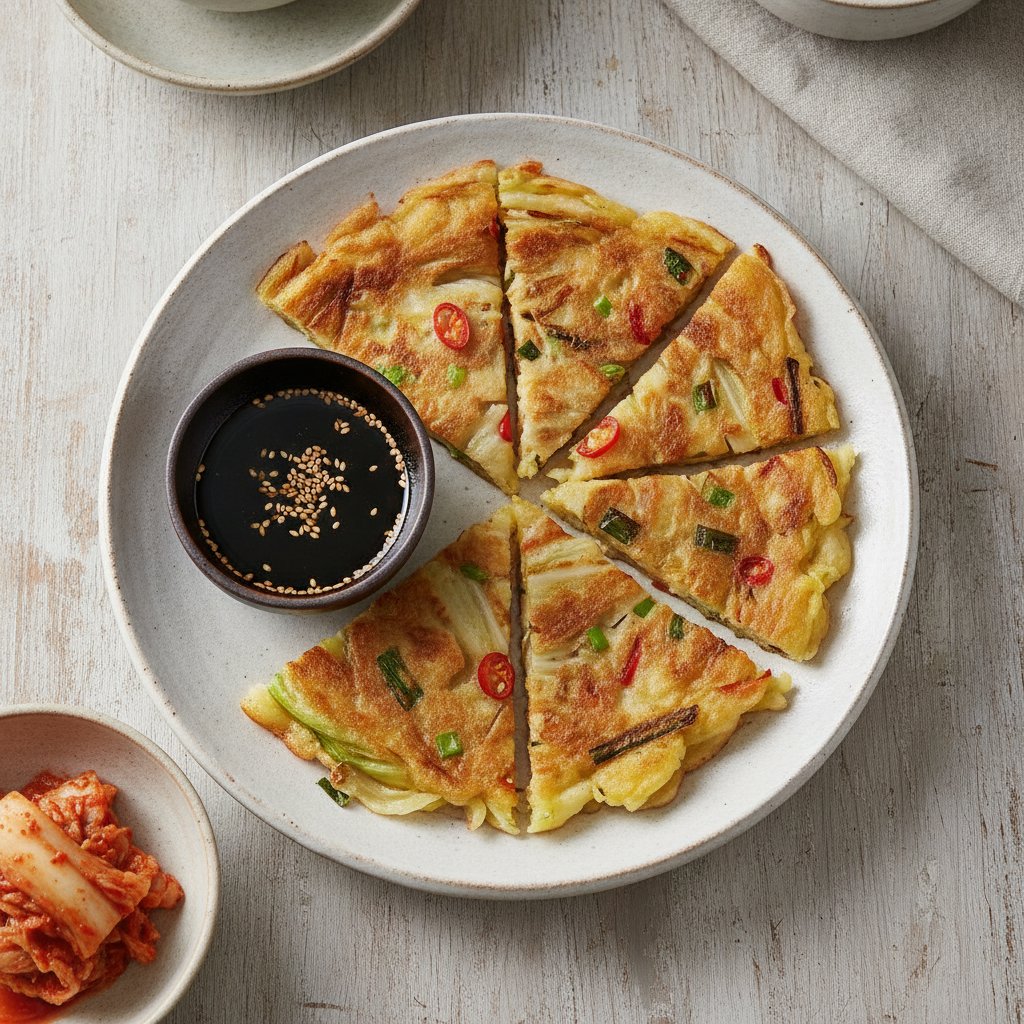
Tips from a Korean Kitchen
The secret to exceptional baechu jeon lies in choosing the right cabbage leaf. In Korean homes, we prefer using the bright yellow inner leaves of late-autumn or winter napa cabbage (known as kimjang baechu). These inner leaves are naturally sweeter, thinner, and hold far less excess water than the tough, dark green outer leaves. If you are shopping at a Western grocery store, look for smaller napa cabbage heads, which generally feature sweeter, more tender leaves ideal for quick pan-frying.
Temperature control during frying is another area where many home cooks struggle. Do not be shy with the oil. Jeon is not meant to be deep-fried, but it cannot be dry-pan cooked either. You need a visible pool of oil moving around the pan so the batter effectively shallow-fries. If the pan looks dry halfway through cooking, drizzle a little extra oil around the outer edges of the pan rather than pouring it directly on top of the cabbage leaf.
Keep your batter cold throughout the cooking process. If you are making a large batch for a family gathering, place the batter bowl over a second larger bowl filled with a few ice cubes. Keeping the flour mixture chilled right up until the moment it enters the hot oil creates a thermal shock that yields maximum crispness every single time.
Finally, avoid the temptation to cut the leaves into tiny pieces before battering. While modern food court stalls sometimes chop cabbage into small bits to mix into a standard round pancake shape, traditional home cooks always fry the leaves whole. Cooking the leaf whole preserves the distinct texture difference between the silky, tender leaf tip and the satisfyingly crisp-tender stem base.
Storage
Napa cabbage pancakes are undeniably best served immediately while hot from the skillet. However, leftovers can be stored in an airtight container lined with parchment paper in the refrigerator for up to 2 days. Do not freeze cooked baechu jeon, as the high water content of the cabbage will turn mushy upon thawing.
To reheat leftovers and restore their original crunch, avoid the microwave at all costs, as steam will turn the batter soft and rubbery. Instead, heat a dry non-stick skillet over medium heat and warm the leftover pancake pieces for 1 to 2 minutes per side until heated through and crisp. Alternatively, place them in an air fryer set to 180°C (350°F) for 3 to 4 minutes.
🛒 Crispy Napa Cabbage Pancake Recipe
As an Amazon Associate we earn from qualifying purchases.
Shop Ingredients & Tools →FAQ
Can I use pre-made Korean pancake mix (buchimgaru) for this recipe?
Yes, you can use store-bought buchimgaru (Korean pancake mix) if you have it on hand. Simply replace the all-purpose flour, starch, and salt with equal amounts of buchimgaru and cold water. Store-bought mixes already contain garlic powder, onion powder, and seasoning, making the preparation even faster.
Why did my napa cabbage pancake turn out soft and soggy instead of crispy?
Sogginess usually happens for three reasons: the pan was not hot enough when the leaf was added, too much wet batter clung to the leaf, or the cooked pancake was placed directly on a flat plate where steam became trapped underneath. Ensure your oil is shimmering hot, shake off excess batter, and cool cooked pancakes on a wire rack.
Is baechu jeon served as a main dish or a side dish in Korea?
In Korea, baechu jeon is typically served as a side dish (banchan) during everyday meals, or as an appetizer alongside rice wines like makgeolli (Korean unrefined rice wine) on rainy days or during festive holiday gatherings. Because it is light and low in heavy fats, it pairs beautifully with spicy stew or savory grilled meats.
More on Korean Pancakes & Eggs
- Korean Pan Fried Tofu with Egg (Dubu Jeon)A guide to making Dubu Jeon, a classic Korean pan-fried tofu wrapped in a light green onion and carrot egg batter.
- Stuffed Perilla Leaf PancakesA guide to making Korean stuffed perilla leaf pancakes filled with seasoned meat and tofu.
- Korean Pan-Fried Fish (Saengseon Jeon)Learn how to make saengseon jeon, delicate Korean pan-fried white fish fillets in a soft egg batter.
See every Korean Pancakes & Eggs post in our Banchan guide.
Handy toolsRecipe scaler · Measurement converter · Korean pantry guide · Recipe Finder
🛒 Crispy Napa Cabbage Pancake Recipe
As an Amazon Associate we earn from qualifying purchases.
Shop Ingredients & Tools →More Korean Recipes
- Crunchy Korean Soy Pickled Radish (Mu Jangajji)
- Korean Braised Dried Pollack Strips (Hwangtae Jorim)
- Korean Pan Fried Fish Recipe (Saengseon Jeon)
- Easy Nabak Kimchi Recipe (Korean Water Kimchi)
🛒 Crispy Napa Cabbage Pancake Recipe
As an Amazon Associate we earn from qualifying purchases.
Shop Ingredients & Tools →