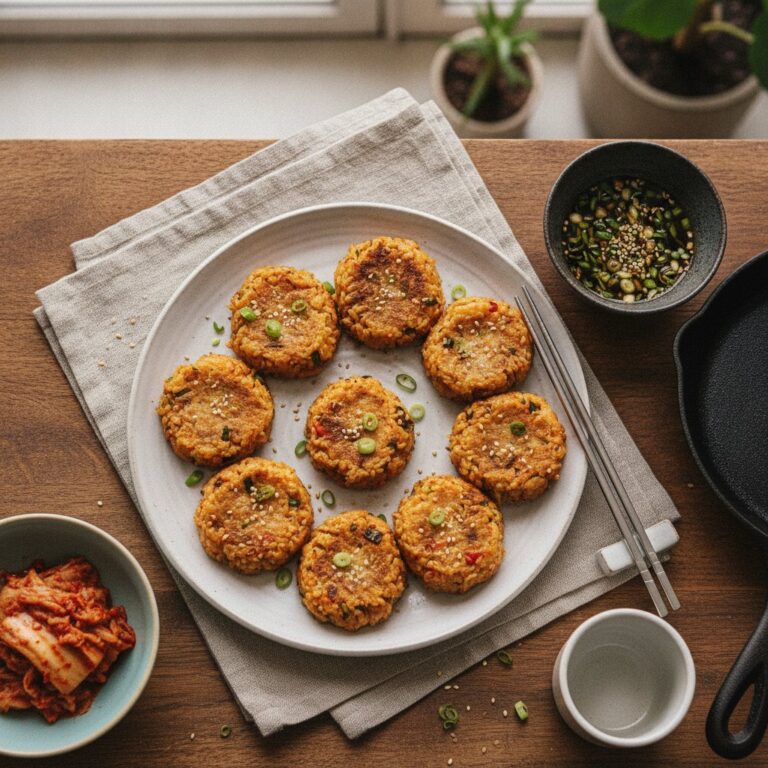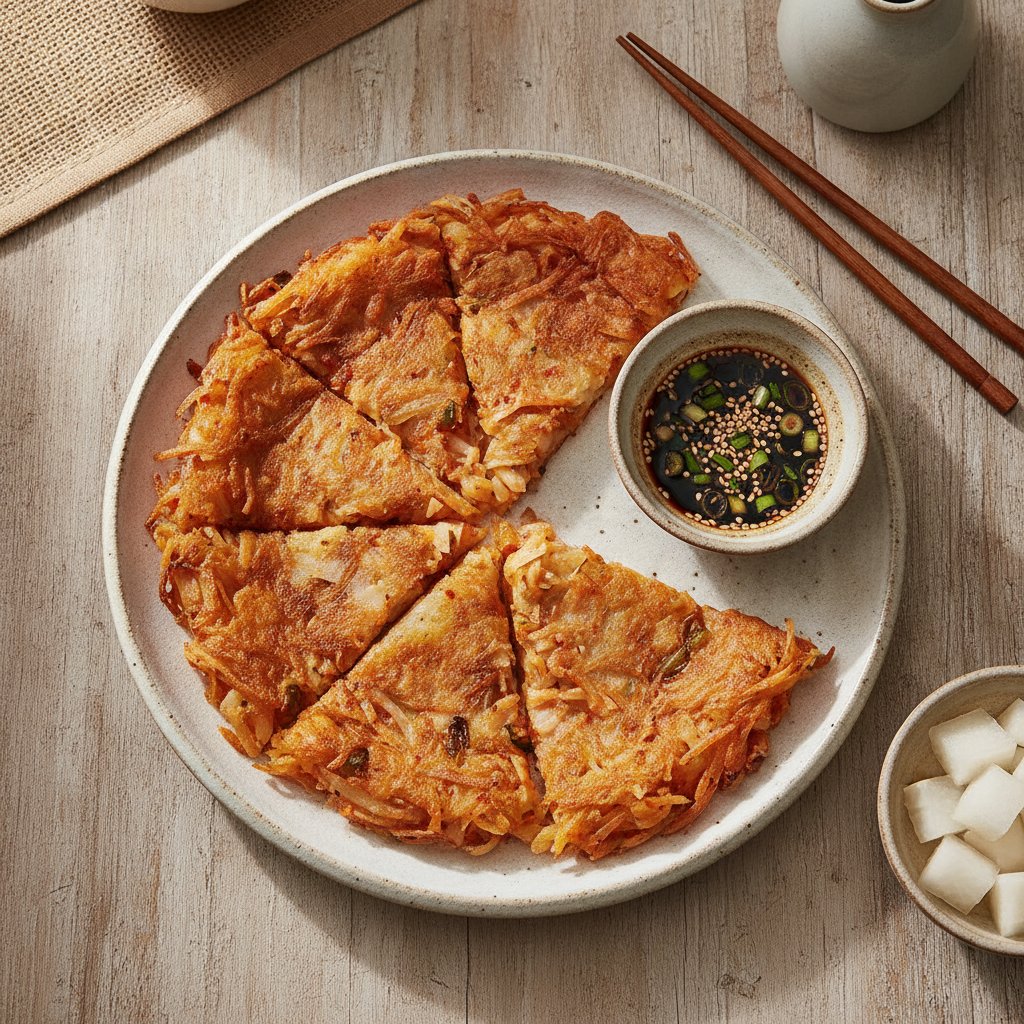
Crispy Potato Kimchi Pancake (Gamja Kimchi Jeon)
At a glance
- In shortLearn how to make crispy Korean potato kimchi pancakes using grated and julienned potatoes with aged kimchi.
- Best forHome cooks seeking a crisp Korean potato kimchi pancake
- DifficultyEasy
- HeatMild
- Key pointsCombining grated and julienned potatoes creates a crisp dual texture. · Squeezing kimchi liquid prevents the batter from steaming and softening. · Cooling on a wire rack preserves the crispy texture on both sides.
- Heads-upPlating hot pancakes on a flat ceramic plate creates steam that softens the bottom crust.
When gray rain starts rattling against my kitchen window here in Seoul, my hands reach for a bag of Russet potatoes and a tub of sour, well-aged kimchi before I even realize what I am doing. In Korea, rainy days and savory pancakes are inseparable. The popular myth goes that the pitter-patter of raindrops mimics the sizzle of oil in a hot skillet. Whether that is true or just an excuse to eat fried food, opening a cold drink and listening to a pan hiss with batter is one of life’s greatest simple pleasures.
Prep: 20 min · Cook: 15 min · Total: 35 min · Serves 2
While classic kimchijeon (kimchi pancake) relies heavily on wheat flour and gamjajeon (potato pancake) relies solely on grated potato starch, combining the two into gamja kimchi jeon (crispy potato and kimchi pancakes) offers an extraordinary balance of flavors and textures. Plain kimchi pancakes can sometimes turn out soft or doughy if the batter ratio is slightly off. Pure potato pancakes are delightfully chewy, but they lack a sharp counterpoint to cut through the richness. By blending the earthiness and structural crispness of real potato with the spicy, tangy crunch of fermented kimchi, you create a pancake that stays crispy at the edges while remaining tender and flavorful in the center.
This home-style version is designed specifically for kitchens outside Korea. You do not need specialized equipment, Korean food grinders, or obscure ingredients. With basic potatoes from your local supermarket and a jar of aged kimchi, you can achieve the exact edge-to-center crunch that Korean home cooks look for.
Why This Works
- Dual-texture potato prep: Grating half of the potatoes into a fine paste provides continuous starch structure, while julienning the other half creates dozens of exposed shred edges that crisp up like hash browns in the pan.
- Squeezed kimchi integration: Ringing out excess brine from the kimchi prevents excess liquid from steaming the batter, ensuring the oil fries the pancake instead of boiling it.
- Starch-coating technique: Tossing the potato and kimchi mix in dry potato starch before adding any liquid locks in internal moisture while forming an instant shatter-crisp crust upon contact with hot oil.
Ingredients
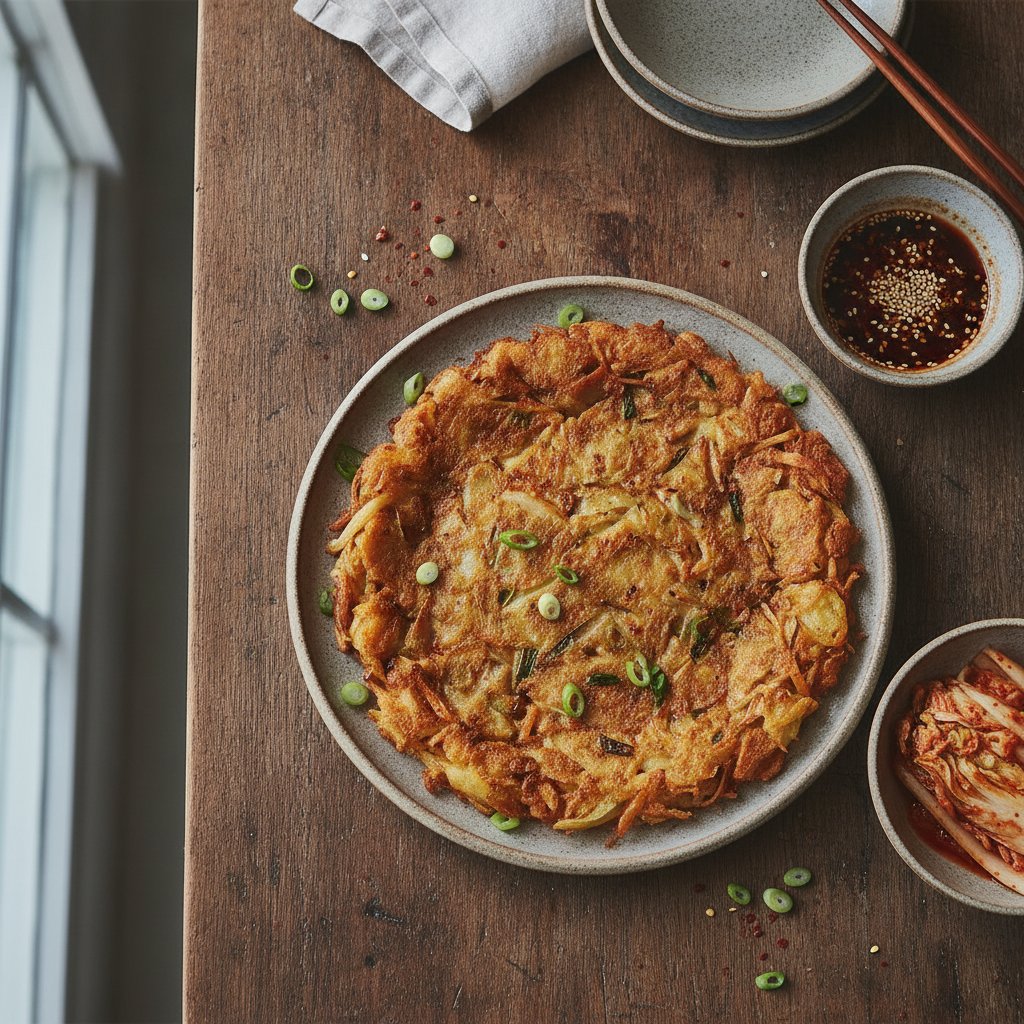
- 500 g (about 1.1 lbs or 2 large) Russet or Yukon Gold potatoes, peeled
- 200 g (about 1 cup, packed) well-aged, sour baechu kimchi (napa cabbage kimchi), drained and finely chopped
- 30 ml (2 tbsp) kimchi liquid reserved from the jar
- 35 g (about 1/4 cup) potato starch or cornstarch
- 30 g (about 1/4 cup) all-purpose flour
- 2 stalks scallions (green onions), thinly sliced
- 3 g (1/2 tsp) fine sea salt
- 60 ml (4 tbsp) neutral cooking oil (vegetable, canola, or avocado oil), divided for frying
Dipping Sauce (Optional but recommended):
- 15 ml (1 tbsp) soy sauce
- 15 ml (1 tbsp) rice vinegar or white distilled vinegar
- 15 ml (1 tbsp) water
- 2 g (1/2 tsp) toasted sesame seeds
- 1/2 stalk scallion, finely minced
Substitutions
If you cannot find raw potato starch at your grocery store, standard cornstarch is an identical 1:1 substitute that yields an equally crisp texture. For the potatoes, high-starch varieties like Russet work best for maximum crispiness, though Yukon Gold offers a rich, buttery flavor profile. If your kimchi is relatively young and lacks a sour punch, stir 2.5 ml (1/2 tsp) of rice vinegar into your chopped kimchi to mimic the acidity of fully fermented kimchi. For a gluten-free version, simply substitute the all-purpose flour with additional potato starch or a 1:1 gluten-free baking flour blend.
🛒 Crispy Potato Kimchi Pancake
As an Amazon Associate we earn from qualifying purchases.
Shop Ingredients & Tools →How to Make It
- Prep the potatoes using two different cuts: Using the fine side of a box grater, grate half of the potatoes (250 g) into a large mixing bowl to create a smooth, thick potato puree. Use a sharp knife or a mandoline to cut the remaining half (250 g) into very thin matchsticks (julienne). Why: The grated paste acts as a natural binder that holds the pancake together without needing heavy flour batters, while the matchsticks crisp up into distinct, crunchy strips.
- Prepare and squeeze the kimchi: Take your aged kimchi and squeeze it over a small bowl to catch the excess liquid, reserving 30 ml (2 tbsp) for later. Finely chop the squeezed kimchi into bite-sized pieces roughly 1/2-inch wide. Why: Excessive unmeasured kimchi juice will saturate the flour, causing the batter to steam into a rubbery pancake rather than pan-fry to a crisp finish.
- Combine the batter elements: In the bowl with the grated and matchstick potatoes, add the chopped kimchi, reserved kimchi liquid, sliced scallions, potato starch, all-purpose flour, and salt. Mix gently with a spatula or tongs until all the potato strands are evenly coated in a light, glossy layer of batter. Why: Gentle mixing coats the raw ingredients without working the gluten in the flour or drawing too much natural water out of the fresh potatoes.
- Heat the skillet thoroughly: Place a heavy non-stick skillet or seasoned cast-iron pan over medium-high heat. Add 30 ml (2 tbsp) of neutral cooking oil and allow it to heat until it shimmers across the surface and flows easily when tilted. Why: Introducing potato starch into cool oil causes the pan to absorb grease, making the pancake sodden instead of crisping the outer starch layer immediately.
- Form and lay the pancake: Transfer half of the potato kimchi batter into the hot pan. Use the back of a spoon or spatula to press the mixture out into an even, thin circle about 8 inches across. Reduce the heat slightly to medium. Why: Spreading the batter thinly ensures heat quickly reaches the center to cook the raw potato shreds through before the outer kimchi burns.
- Sizzle until golden: Cook undisturbed for 4 to 5 minutes. You will see the edges turn translucent, set firm, and take on a deep golden color, while the center bubbles. Gently shake the pan; if the pancake slides freely, it is ready to turn. Why: Leaving the pancake undisturbed allows a continuous starch crust to form against the hot metal.
- Flip and sear the second side: Carefully flip the pancake over using a wide spatula. Drizzle an additional 15 ml (1 tbsp) of oil along the perimeter of the pan, lifting the edges slightly so the fresh oil runs underneath. Press down firmly across the top with your spatula to flatten the pancake. Fry for another 3 to 4 minutes until the bottom is deeply browned and crisp. Why: Adding oil halfway through replaces what was absorbed by the top crust, ensuring the second side crisps up with equal intensity.
- Slice and serve immediately: Transfer the pancake to a wire cooling rack for 1 minute to keep the bottom dry, then move to a cutting board. Slice into wedges and serve warm with the mixed dipping sauce. Repeat the process with the remaining batter and oil.
Tips from a Korean Kitchen
- Choose sour kimchi over fresh kimchi: In Korea, fresh kimchi (geotjeori) is saved for fresh meals, while heavily fermented, sour kimchi (shin kimchi) is reserved for stews and pancakes. The sharp acid cuts through the oil and starch, giving the dish its signature depth. If your kimchi tub has been sitting in the back of the fridge for a month, it is in prime condition for this recipe.
- Do not skimp on cooking oil: Korean street food vendors do not light-fry their pancakes; they practically shallow-fry them. You need enough oil to coat the bottom of the pan entirely at all times. If the pan looks dry, add another spoonful of oil around the edges.
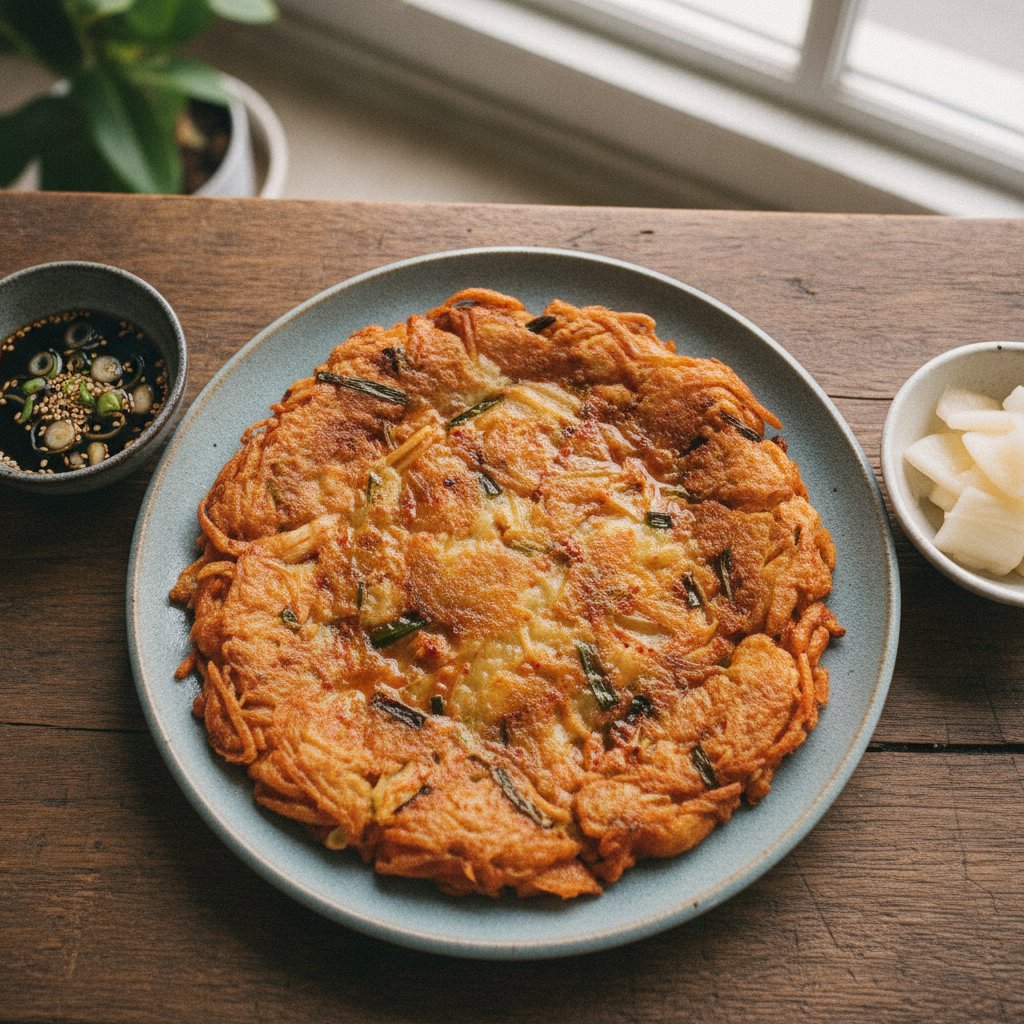
- Use a wire rack before plating: Plating a piping-hot potato pancake directly onto a flat ceramic plate creates steam underneath it. That trapped steam will soften your hard-earned crispy bottom in less than sixty seconds. Letting it rest on a wire rack for just one minute keeps both sides shatteringly crisp.
- Fry in smaller portions if needed: If you find flipping large pancakes intimidating, scoop 3-inch wide mounds of batter into the pan to make individual mini-pancake rounds. They cook faster, are effortless to flip, and maximize the ratio of crispy edge-to-center in every bite.
Storage
Potato kimchi pancakes are best eaten fresh from the pan. However, if you have leftovers, store them in an airtight container in the refrigerator for up to 3 days. Do not microwave cooked pancakes, as this turns potato starch soft and gummy. To reheat, warm a skillet over medium heat with a light drop of oil and cook for 2 minutes per side until heated through and re-crisped. Alternatively, reheat leftover pancakes in an air fryer set to 190°C (375°F) for 3 to 4 minutes. You can also freeze fully cooked pancakes separated by parchment paper for up to 1 month; reheat them directly from frozen in a hot skillet or air fryer.
🛒 Crispy Potato Kimchi Pancake
As an Amazon Associate we earn from qualifying purchases.
Shop Ingredients & Tools →FAQ
Why is my potato kimchi pancake soggy instead of crispy?
Sogginess usually comes from three factors: too much kimchi liquid in the batter, overcrowding the pan with a pancake that is too thick, or not using enough cooking oil over high enough heat. Make sure to drain your kimchi thoroughly and keep your batter layer thin so steam can escape easily while frying.
Can I make potato kimchi pancake batter ahead of time?
It is best to fry the batter within 20 minutes of mixing. Raw grated potatoes oxidation rapidly when exposed to air, turning dark gray or brown. Additionally, salt in the kimchi will continuously draw water out of raw potatoes over time, watering down your batter and ruining the crispy texture.
What is the best potato to use for gamja kimchi jeon?
High-starch potatoes like Russet (baking) potatoes are the absolute best choice because their high starch content and low moisture yield the crispest crust. Medium-starch varieties like Yukon Gold are also fantastic because they add a rich flavor and pleasant golden hue.
More on Kimchi Pancakes & Snacks
- Crisp Bindaetteok (Korean Mung Bean Pancakes)Learn how to make authentic, crispy Korean mung bean pancakes at home using split peeled mung beans.
- Crispy Kimchi Pancake (Kimchijeon)How to make crispy Korean kimchi pancakes from scratch using simple pantry staples.
- Crispy Kimchi Mandu RecipeLearn how to make authentic pan-fried Korean kimchi dumplings with a crispy base.
See every Kimchi Pancakes & Snacks post in our Kimchi guide.
Handy toolsRecipe scaler · Measurement converter · Korean pantry guide · Recipe Finder
🛒 Crispy Potato Kimchi Pancake
As an Amazon Associate we earn from qualifying purchases.
Shop Ingredients & Tools →More Korean Recipes
- Gaji Kimchi (Korean Stuffed Eggplant Kimchi Recipe)
- Pan-Fried Kimchi Rice Balls (Kimchi Jumokbap)
- Kimchi Dubu Jorim: Spicy Braised Tofu with Kimchi
- Kimchi Kalguksu Recipe: Korean Knife-Cut Noodle Soup
🛒 Crispy Potato Kimchi Pancake
As an Amazon Associate we earn from qualifying purchases.
Shop Ingredients & Tools →