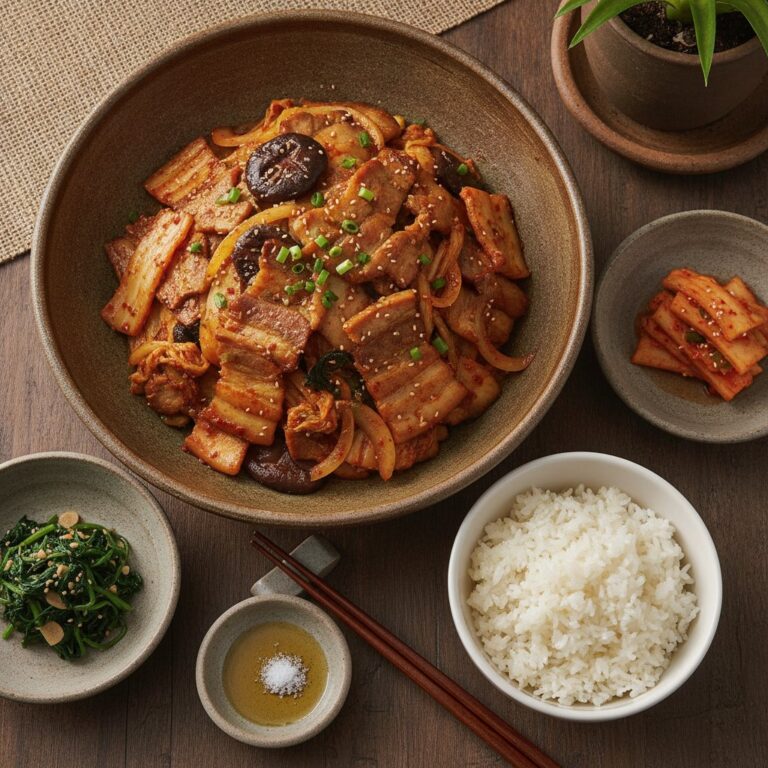
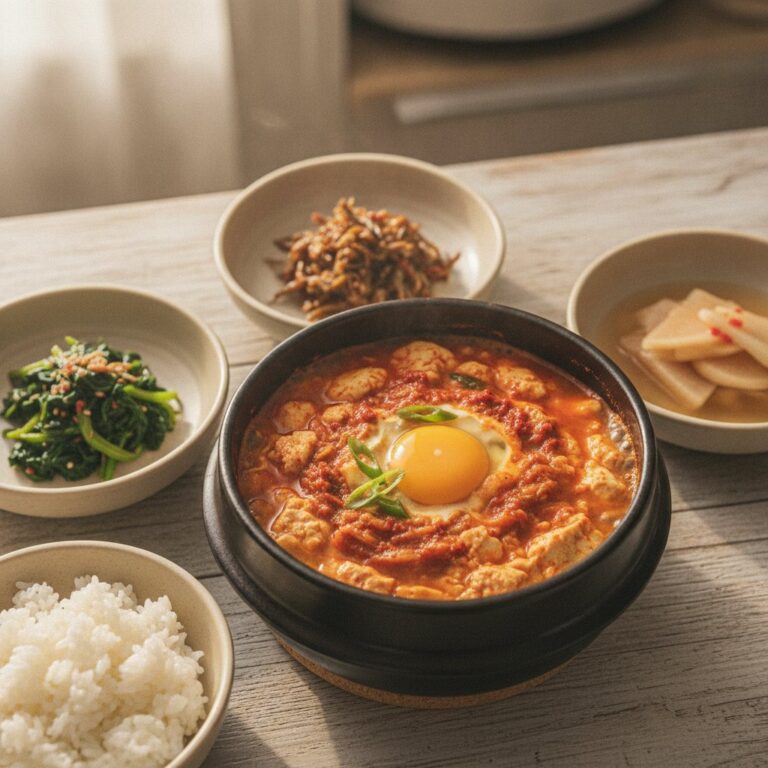
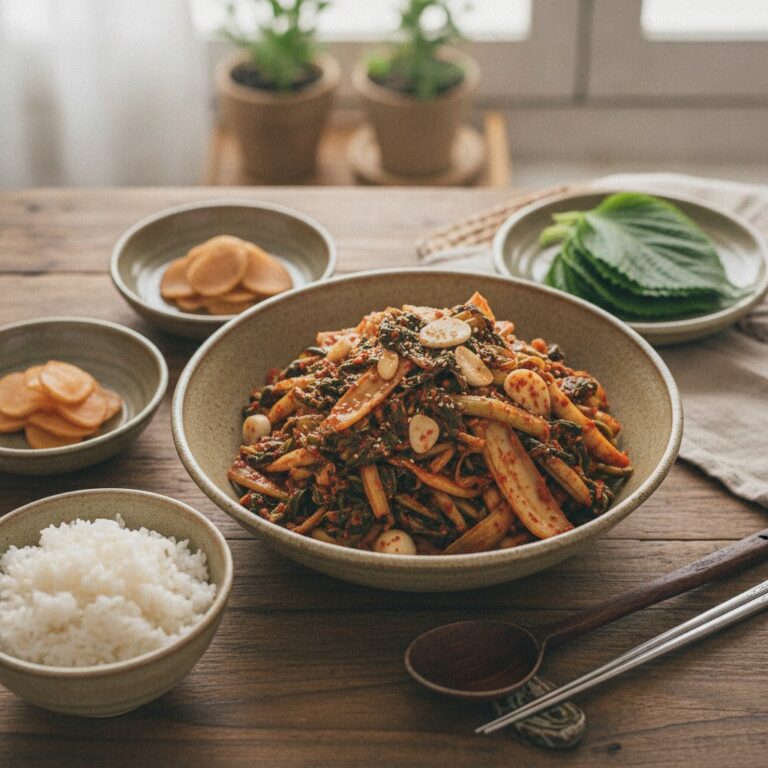
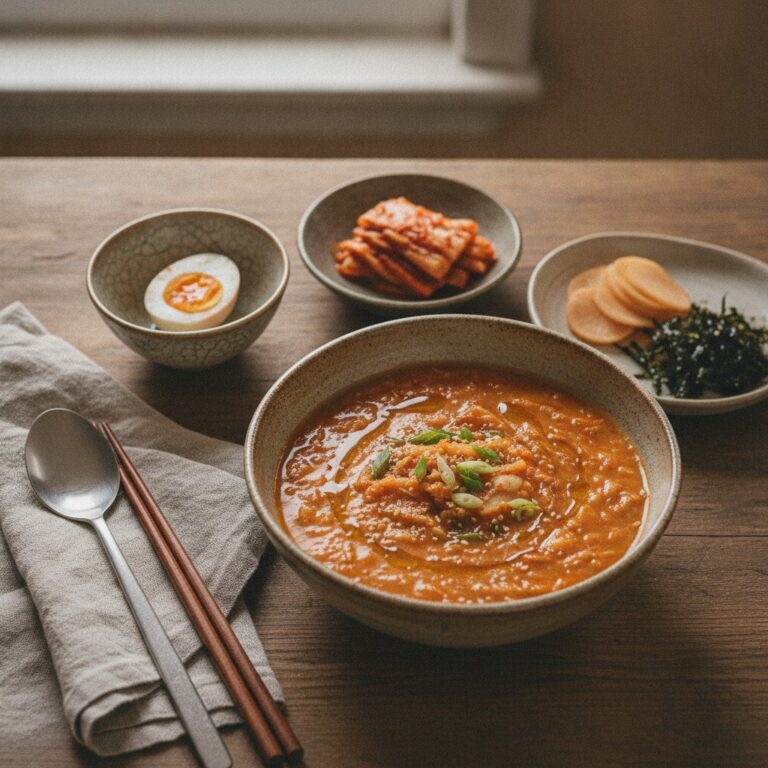
Kimchi Jjigae (Kimchi Stew) with Sour Kimchi
This post contains affiliate links. As an Amazon Associate, we earn from qualifying purchases at no extra cost to you.
At a glance
- In shortA guide to making authentic Korean Kimchi Jjigae using sour kimchi, pork, and anchovy broth.
- Best forHome cooks wanting to turn sour kimchi into Korean stew
- DifficultyEasy
- HeatMedium
- Key pointsWell-fermented sour kimchi provides the best depth and flavor for stew. · Sautéing kimchi with rendered pork fat caramelizes it and reduces sourness. · Anchovy broth elevates umami, though water or bouillon can be substituted.
- Heads-upDo not use fresh kimchi, as deeply fermented kimchi is required for signature flavor.
Annyeonghaseyo, my dear food lovers! It’s me, your Korean home cook, back from my bustling kitchen here in Seoul. Today, we’re diving into a topic near and dear to every Korean heart (and stomach): what to do with that wonderfully, deliciously, perfectly sour kimchi sitting in the back of your fridge.
In Korea, we say, “Sour kimchi is a treasure!” And it’s true. While fresh, crisp kimchi is fantastic for banchan (side dishes), that older, fermented, tangy kimchi is the secret ingredient for some of our most beloved comfort foods. Today, we’re tackling the king of them all: Kimchi Jjigae (김치찌개), or Kimchi Stew.
Kimchi Jjigae isn’t just a dish; it’s a hug in a bowl. It’s what we turn to on a chilly evening, after a long day, or even to cure a hangover (trust me, it works!). It’s a staple in every Korean home and restaurant, served bubbling hot in a stone pot, often with a side of steamed rice and a few simple banchan. My family, like many others, often enjoys it as a hearty lunch or a comforting dinner, especially when we’re craving something spicy, savory, and deeply satisfying.
This particular version focuses on extracting the maximum flavor from your sour kimchi, balancing its tanginess with rich pork and aromatic seasonings. It’s designed to give you that authentic taste you’d find in a Korean home, using ingredients you can mostly find at your local Western grocery store, with a few key items from an Asian market or online. Forget those watery, bland versions you might have tried; this is the real deal, perfect for anyone who loves robust, soulful Korean food.
Ingredients
- 500 g (about 1.1 lb) well-fermented, sour kimchi, cut into bite-sized pieces (reserve 2-3 tbsp of its juice)
- 200-250 g (about 7-9 oz) pork belly or pork shoulder, cut into 3-4 cm (1.5 inch) pieces
- 1 medium onion, sliced
- 2-3 cloves garlic, minced
- 1/2 block (about 200 g / 7 oz) firm or extra-firm tofu, sliced into 2 cm (3/4 inch) thick pieces
- 2-3 green onions (scallions), cut into 5 cm (2 inch) lengths
- 4 cups (about 950 ml) anchovy broth or water (see substitutions for broth options)
For the Seasoning Paste:
- 2 tbsp gochugaru (Korean chili flakes)
- 1 tbsp gochujang (Korean chili paste)
- 1 tsp doenjang (Korean soybean paste), optional but recommended for depth
- 1 tsp sugar (to balance the sourness of the kimchi)
- 1 tbsp soy sauce (or Korean soup soy sauce, guk ganjang)
- 1 tsp sesame oil
Substitutions
Don’t fret if you can’t find every single ingredient! Here’s how to adapt:
- Pork: While pork belly adds the most delicious richness, pork shoulder works wonderfully too. For a leaner option, chicken breast or thigh can be used, though the flavor profile will be slightly different. For vegetarians, skip the meat and add more tofu, mushrooms (like shiitake or enoki), or even some canned tuna (though it won’t be vegetarian then!).
- Anchovy Broth: This is key for authentic flavor, but if you don’t have dried anchovies or kelp, you can use regular water with 1 teaspoon of Dashida (Korean beef bouillon powder) for a quick flavor boost. Vegetable broth or plain water will also work, but the stew might taste less rich.
- Gochugaru & Gochujang: These are fundamental to Korean cooking. While some heat can come from other chili flakes, the unique flavor and color of gochugaru and the fermented depth of gochujang are hard to replicate. I highly recommend a trip to an Asian market or ordering them online. They last a long time in the fridge!
- Doenjang: This adds a wonderful, earthy depth. If you don’t have it, don’t worry, the jjigae will still be delicious.

How to Make It
-
Prepare the Broth (If using anchovy broth): If you’re making anchovy broth from scratch, combine 4 cups of water with 5-6 dried anchovies (guts removed for less bitterness) and a 5×5 cm piece of dried kelp (dashima) in a pot. Bring to a boil, then reduce heat and simmer for 15-20 minutes. Remove anchovies and kelp. Why: A good broth is the foundation of any great Korean stew. It adds an umami depth that plain water simply can’t achieve.
-
Sauté Pork and Kimchi: Heat a medium-sized pot (ideally a Korean stone pot or a heavy-bottomed pot) over medium-high heat. Add the pork and cook, stirring occasionally, until it’s nicely browned and some fat has rendered, about 5-7 minutes. Why: Browning the pork creates a Maillard reaction, developing deep, savory flavors. If using leaner meat, you might add a tiny bit of neutral oil (like canola) at this stage.
-
Add Kimchi and Aromatics: Add the sour kimchi to the pot with the pork. Sauté together for another 5-7 minutes, stirring occasionally, until the kimchi softens and turns slightly translucent. Then, add the sliced onion and minced garlic. Continue to sauté for 2-3 minutes, until the onion starts to soften. Why: Sautéing the kimchi with the rendered pork fat is crucial! It caramelizes the kimchi, intensifying its flavor and mellowing its sourness, making it incredibly rich. Cooking the onion and garlic at this stage allows their flavors to bloom without burning.
-
Introduce the Seasoning Paste: In a small bowl, mix together the gochugaru, gochujang, doenjang (if using), sugar, soy sauce, and sesame oil to form a paste. Add this paste to the pot with the kimchi and pork. Stir well to coat everything, cooking for about 1-2 minutes. Why: Cooking the chili paste and flakes for a short time helps to develop their flavor and reduce any raw taste, integrating them deeply into the stew’s base.
-
Simmer the Stew: Pour in the reserved kimchi juice and the anchovy broth (or your chosen liquid). Bring the stew to a boil over medium-high heat. Once boiling, reduce the heat to medium-low, cover, and let it simmer for at least 15-20 minutes. The longer it simmers, the deeper the flavors will become, so if you have time, 30-40 minutes is even better! Why: Simmering allows all the wonderful flavors from the kimchi, pork, and seasonings to meld together beautifully, softening the kimchi further and ensuring the pork is tender.
-
Add Tofu and Green Onions: Gently add the sliced tofu to the stew. Scatter the green onions on top. Continue to simmer for another 5-10 minutes, uncovered, until the tofu is heated through and the green onions are slightly wilted. Why: Tofu is added later because it doesn’t need a long time to cook and adding it too early might cause it to break apart. Green onions provide a fresh, aromatic finish.
-
Taste and Adjust: Before serving, taste the stew. Depending on your kimchi’s saltiness and sourness, you might need to add a pinch more sugar to balance the sourness, a splash more soy sauce for saltiness, or a bit more gochugaru for extra heat. Why: Every batch of kimchi is different! Adjusting at the end ensures your jjigae is perfectly balanced to your preference.
-
Serve: Ladle the hot Kimchi Jjigae into individual bowls (or serve directly from the pot). It’s best enjoyed with freshly steamed white rice.

🛒 Kimchi Jjigae with Sour Kimchi
As an Amazon Associate we earn from qualifying purchases.
Shop Ingredients & Tools →Tips from a Korean Kitchen
-
The Magic of Sour Kimchi:
Seriously, don’t use fresh kimchi for this! The deeply fermented, tangy flavor of old, sour kimchi is what gives Kimchi Jjigae its signature, robust taste. Fresh kimchi will result in a much milder, less complex stew. If your kimchi isn’t quite sour enough, you can leave it out on the counter for a day or two to speed up fermentation before making the stew.
-
Fat = Flavor:
The fat from pork belly is essential here. It renders out and coats the kimchi, allowing it to caramelize and become incredibly flavorful. Don’t be afraid of it! If you’re using leaner cuts or making a vegetarian version, a tablespoon of neutral cooking oil at the sautéing stage is a good idea.
-
Broth Makes a Difference:
While water works, a proper anchovy-kelp broth truly elevates the jjigae, giving it an authentic depth that’s hard to beat. Taking a few extra minutes to make it is well worth the effort. Alternatively, a good quality vegetable broth or Korean beef bouillon can stand in.
-
Taste, Taste, Taste!:
Kimchi varies wildly in saltiness and sourness. What works for my kimchi might not be perfect for yours. Always taste your stew before serving and adjust seasonings (sugar, soy sauce, gochugaru) as needed. A touch of sugar often helps balance out the intense sourness of very old kimchi.
Storage
Kimchi Jjigae is one of those dishes that often tastes even better the next day! Store any leftovers in an airtight container in the refrigerator for up to 3-4 days. The flavors will continue to deepen and meld. For longer storage, you can freeze the stew base (without tofu, as tofu can get a strange texture when frozen) for up to one month. Thaw in the refrigerator, then reheat on the stovetop and add fresh tofu and green onions. Reheat gently on the stovetop over medium-low heat until bubbling hot.
FAQ
Can I use fresh (not sour) kimchi for Kimchi Jjigae?
While you can, I strongly advise against it for the best results. Fresh kimchi lacks the deep, complex sourness and fermented flavor that is the hallmark of a good Kimchi Jjigae. It will result in a much milder, less authentic-tasting stew. If your kimchi isn’t sour enough, let it sit out at room temperature for a day or two to ferment further before using it for jjigae.
My Kimchi Jjigae is too sour. What can I do?
A little sourness is desired, but if it’s overwhelming, you can balance it out! Try adding a pinch more sugar (a teaspoon at a time), a splash more anchovy broth or water, or a bit of milk or a slice of American cheese (a popular Korean hack!) to mellow the tang. Adding more protein like extra tofu or canned tuna can also help dilute the sourness.
What kind of pork is best for Kimchi Jjigae?
Pork belly (samgyeopsal) is considered the classic and best choice due to its fat content, which renders out and infuses the stew with incredible richness and flavor. Pork shoulder (moksal) is a close second, offering a good balance of meat and fat. Leaner cuts like pork loin or tenderloin can be used, but you might want to add a tablespoon of cooking oil when sautéing to make up for the lack of rendered fat.
🛒 Kimchi Jjigae with Sour Kimchi
As an Amazon Associate we earn from qualifying purchases.
Shop Ingredients & Tools →More on Kimchi Soups & Stews
- Classic Pork Belly Kimchi JjigaeHow to make rich, authentic Korean kimchi stew at home using aged kimchi and pork belly.
- Quick Tuna Kimchi JjigaeHow to make a rich, authentic Korean tuna kimchi stew in twenty minutes using pantry staples.
- Easy Kimchi Bean Sprout Soup RecipeA complete guide to making traditional Korean kimchi bean sprout soup with a light, flavorful broth.
See every Kimchi Soups & Stews post in our Kimchi guide.
Handy toolsRecipe scaler · Measurement converter · Korean pantry guide · Recipe Finder
More Korean Recipes
- Kimchi Yangnyeom (Kimchi Paste) for Homemade Kimchi
- Dongchimi Recipe: Crisp & Refreshing Korean Radish Water Kimchi
- Zesty Yeolmu Kimchi (Young Radish Kimchi) for Summer
- Authentic Vegan Kimchi (비건 김치) Recipe That Tastes Just Right
🛒 Kimchi Jjigae with Sour Kimchi
As an Amazon Associate we earn from qualifying purchases.
Shop Ingredients & Tools →