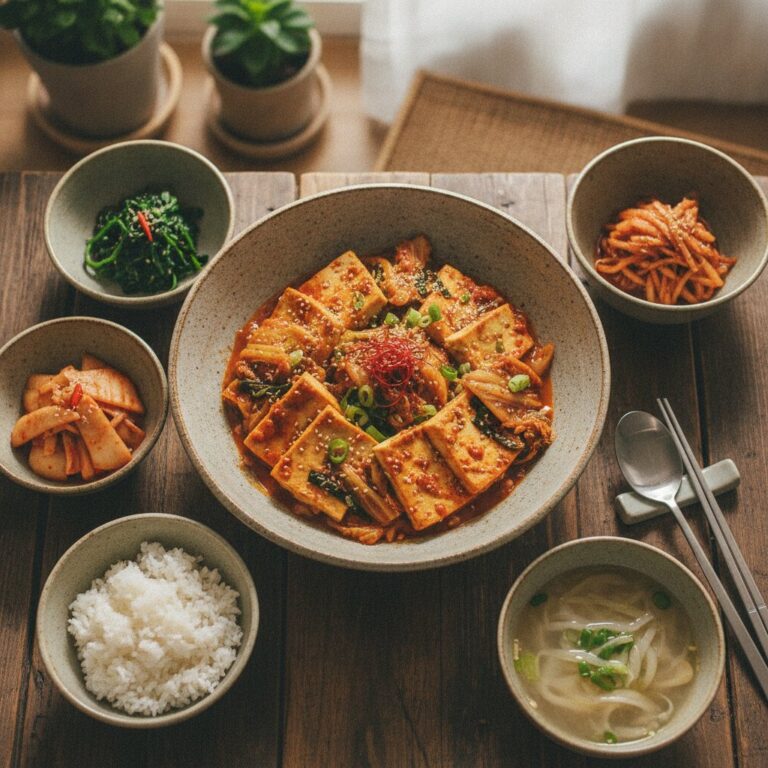
Spicy Korean Squid Radish Soup (Ojingeo Mu Guk)
This post contains affiliate links. As an Amazon Associate, we earn from qualifying purchases at no extra cost to you.
At a glance
- In shortA guide to making authentic Korean spicy squid and radish soup in about 30 minutes.
- Best forHome cooks wanting a quick, authentic Korean soup
- Time30 min
- DifficultyEasy
- HeatMedium
- Key pointsSearing radish and chili flakes in sesame oil blooms flavor without harshness. · Add squid during the final 3 to 4 minutes of cooking to keep it tender. · Use the napjak-sseolgi technique to slice radish thinly for quick cooking.
- Heads-upDo not overcook the squid or it will become tough and rubbery.
On chilly winter mornings in Seoul, my mother always kept a pot of ojingeo mu guk (spicy squid and radish soup) simmering softly on the back burner. The pungent aroma of toasted sesame oil, blooming red pepper flakes, and rich ocean broth filled our small apartment before the sun even cleared the city high-rises. In Korean home cooking, this soup is considered pure soul food—a quick, nourishing meal made whenever fresh squid comes home from the market, or when someone in the family needs a warm pick-me-up.
Squid and Korean radish are a classic pairing in our cuisine. The natural sweetness of mu (Korean radish) tempers the fiery heat of gochugaru (Korean red pepper flakes), while squid releases deep, savory glutamate into the broth as it cooks. Unlike elaborate hot pots or long-simmered bone broths, ojingeo mu guk comes together in roughly thirty minutes. It is light on the stomach, fiery enough to clear your sinuses, and deeply satisfying paired with a simple bowl of warm white rice and fresh kimchi.
Why This Works
- Blooming the chili flakes in oil: Searing the radish and gochugaru in sesame oil before adding broth extracts fat-soluble flavor compounds, building a vibrant red broth without a raw chili harshness.
- Timing the squid addition: Cooking squid for just 3 to 4 minutes at the very end ensures the seafood stays tender and sweet rather than turning tough and rubbery.
- Irregular radish slicing: Slicing the radish into thin, uneven wedges using the traditional napjak-sseolgi technique maximizes surface area, allowing it to cook fast and absorb seasonings deeply.

Ingredients
- 500 g (about 1.1 lbs) fresh or thawed squid, cleaned and cut into bite-sized pieces
- 400 g (about 14 oz) Korean radish (mu), peeled and sliced into thin wedges
- 1.2 L (about 5 cups) myeolchi dasima yuksu (anchovy kelp broth) or plain water
- 2 tablespoons gochugaru (Korean red pepper flakes)
- 1 tablespoon guk-ganjang (Korean soup soy sauce)
- 1 tablespoon fish sauce (myeolchiet or kkanaariet)
- 1 tablespoon toasted sesame oil
- 4 cloves garlic, minced
- 2 green onions, sliced diagonally
- 1 Korean green chili pepper (cheongyang chili) or jalapeño, sliced (optional for extra heat)
- 1 pinch ground black pepper
Substitutions
If you cannot source every Korean ingredient at your local supermarket, these easy swaps will keep the flavor authentic and delicious:
- Korean Radish (Mu): Japanese daikon is the closest substitute. Daikon contains a bit more water and cooks slightly faster, so reduce cooking time by a minute or two. In a pinch, turnip works, though it carries a pepperier bite.
- Guk-ganjang (Korean Soup Soy Sauce): Guk-ganjang is saltier and lighter in color than regular soy sauce, designed not to darken clear broths. If you do not have it, use 2 teaspoons of regular light soy sauce mixed with 1/2 teaspoon of fine sea salt.
- Anchovy Kelp Broth: You can buy dried anchovy broth bags online or at Asian markets (brands like CJ or Ottogi are widespread). Alternatively, use 1.2 liters of mild vegetable broth, diluted chicken broth, or simply plain water with a small piece of dried kombu (kelp).
- Squid: Frozen squid tubes or calamari rings from standard Western grocery chains work brilliantly. Just thaw them fully in cold water and pat them dry before slicing.
🛒 Spicy Korean Squid Radish Soup
As an Amazon Associate we earn from qualifying purchases.
Shop Ingredients & Tools →How to Make It
- Prepare the squid and radish: Cut the squid tubes into thin bite-sized rings or scoring cross-hatch patterns onto the inner surface before cutting into 1.5-inch rectangular pieces. Slice the peeled Korean radish thin using the napjak-sseolgi technique—holding the radish in one hand and shaving off rough, uneven 1/8-inch slices with a knife. This traditional random cut helps broth cling to the radish edges.
- Bloom the chili flakes and sear the radish: Set a medium soup pot over medium heat. Add 1 tablespoon of toasted sesame oil, the sliced radish, and 2 tablespoons of gochugaru. Stir-fry constantly for about 2 to 3 minutes until the oil turns a brilliant ruby red and the radish slices begin to look glossy and slightly translucent around the edges. Blooming the chili flakes in oil neutralizes raw pepper bitterness and creates a smooth heat base.
- Pour in the broth and bring to a simmer: Add 1.2 liters of anchovy kelp broth (or water) to the pot. Turn the heat up to high and bring the broth to a rolling boil. Once boiling, lower the heat to medium, cover with a lid, and let it cook for about 8 to 10 minutes. You want the radish to soften until it is easily pierced with a chopstick.
- Season the soup broth: Uncover the pot and stir in 1 tablespoon of guk-ganjang (soup soy sauce), 1 tablespoon of fish sauce, and the minced garlic. The fish sauce provides essential umami complexity without making the soup taste explicitly fishy. Skim off any light red foam or bubbles floating on the surface with a spoon for a cleaner broth appearance.
- Add the squid and finish cooking: Drop the prepared squid pieces and sliced green chili peppers into the simmering pot. Stir gently to separate the squid pieces. Cook uncovered for just 3 to 4 minutes over medium heat. The squid will turn opaque, curl up slightly, and turn soft and tender. Avoid overcooking at this stage, as squid hardens quickly when boiled too long.
- Garnish and serve hot: Stir in the green onions and a pinch of ground black pepper during the last 30 seconds of cooking. Turn off the heat immediately. Ladle the hot soup into individual deep bowls, ensuring each serving gets plenty of squid, soft radish, and rich spicy broth.

Tips from a Korean Kitchen
In Korean home kitchens, small details elevate a simple weekday soup into something memorable. Keep these tips in mind when cooking:
- Score your squid tubes: Lightly cutting a diamond pattern onto the inner wall of the squid tube creates tiny ridges. These ridges catch the seasoned soup and hold onto flavor, while also making the squid meat feel far more tender when chewed.
- Don’t skip the skim: As the soup boils, chili lipids and proteins form a froth on top. Skimming this foam off twice during cooking gives your broth a bright, sparkling crimson color instead of a muddy appearance.
- Control your heat level: Standard gochugaru provides a manageable, gentle warmth. If you prefer a milder soup, cut the gochugaru back to 1 tablespoon. For authentic spice lovers, add sliced cheongyang chilies along with extra gochugaru during the initial radish sear.
- Use broth instead of water: While plain water works in a pinch, taking 10 minutes to boil dried anchovies and a sheet of dried kelp makes a world of difference. It supplies the underlying savory base that anchors the sweet radish and seafood tones.
If Something Goes Wrong
| Problem | Likely Cause | Fix |
|---|---|---|
| Squid feels tough or rubbery | Boiled too long or added too early in the cooking process. | Remove squid immediately from heat. Next time, add squid in the final 3–4 minutes only. |
| Broth tastes bitter or raw | Gochugaru burned during the initial stir-fry step. | Keep heat at medium-low and keep ingredients moving constantly while blooming chili flakes in oil. |
| Broth lacks depth or tastes watery | Used plain water without enough seasoning or time for radish to release flavor. | Stir in an extra 1/2 tsp of fish sauce or guk-ganjang, or use anchovy-kelp broth base. |
Scaling & Make-Ahead
Scaling: When doubling this recipe for a crowd, double the radish, broth, and seasonings fully, but increase the squid to only 1.5 times the original amount (approx. 750 g) to avoid crowding the pot. Add the squid in batches if your pot is narrow.
Make-Ahead: You can slice the radish and pre-make the anchovy kelp broth up to 3 days in advance. To meal prep the soup itself, simmer the broth, radish, and seasonings ahead of time, then store. Reheat the soup to a boil and drop in the fresh squid just 3 minutes before serving so it retains its tender texture.
Storage
Ojingeo mu guk keeps exceptionally well in the refrigerator for up to 3 days when stored in an airtight glass container. In fact, many Koreans argue the soup tastes even better the next day as the radish continues to absorb the rich, spicy broth.
🛒 Spicy Korean Squid Radish Soup
As an Amazon Associate we earn from qualifying purchases.
Shop Ingredients & Tools →Key Takeaways
- Bloom chili flakes early: Stir-frying gochugaru and radish in toasted sesame oil extracts fat-soluble flavor and prevents raw pepper bitterness.
- Precision squid timing: Always simmer squid for only 3 to 4 minutes at the very end to guarantee a tender, delicate bite.
- Napjak-sseolgi cutting technique: Shaving radish into thin, irregular slices maximizes surface area for fast cooking and maximum broth absorption.
- Umami-rich broth base: Using anchovy kelp broth (myeolchi dasima yuksu) combined with guk-ganjang and fish sauce builds an authentic, deeply satisfying Korean ocean broth.
More on Seafood & Fish Soups
- Easy Korean Spicy Fish Stew (Maeuntang)How to make authentic Korean spicy fish stew (maeuntang) at home using simple grocery store ingredients.
- Spicy Korean Fish Roe Stew (Altang)A step-by-step guide to making authentic Korean spicy fish roe stew at home.
- Miyeokguk (Korean Seaweed Soup)Learn how to make traditional Korean seaweed soup, a classic birthday and comfort dish.
See every Seafood & Fish Soups post in our Soups & Stews guide.
Handy toolsRecipe scaler · Measurement converter · Korean pantry guide · Recipe Finder
🛒 Spicy Korean Squid Radish Soup
As an Amazon Associate we earn from qualifying purchases.
Shop Ingredients & Tools →More Korean Recipes
- How to Make Cheonggukjang Jjigae Fermented Soybean Stew
- Bugeoguk Recipe: Korean Dried Pollack Soup
- Gochujang Jjigae Recipe: Spicy Pork and Potato Stew
- Cold Seaweed Soup Recipe (Miyeok Naenguk)
🛒 Spicy Korean Squid Radish Soup
As an Amazon Associate we earn from qualifying purchases.
Shop Ingredients & Tools →