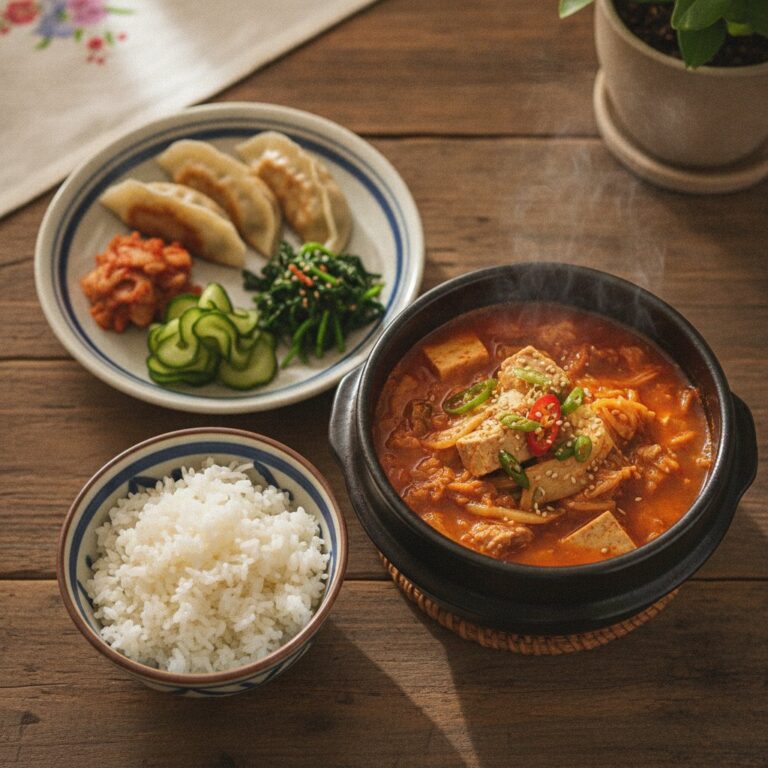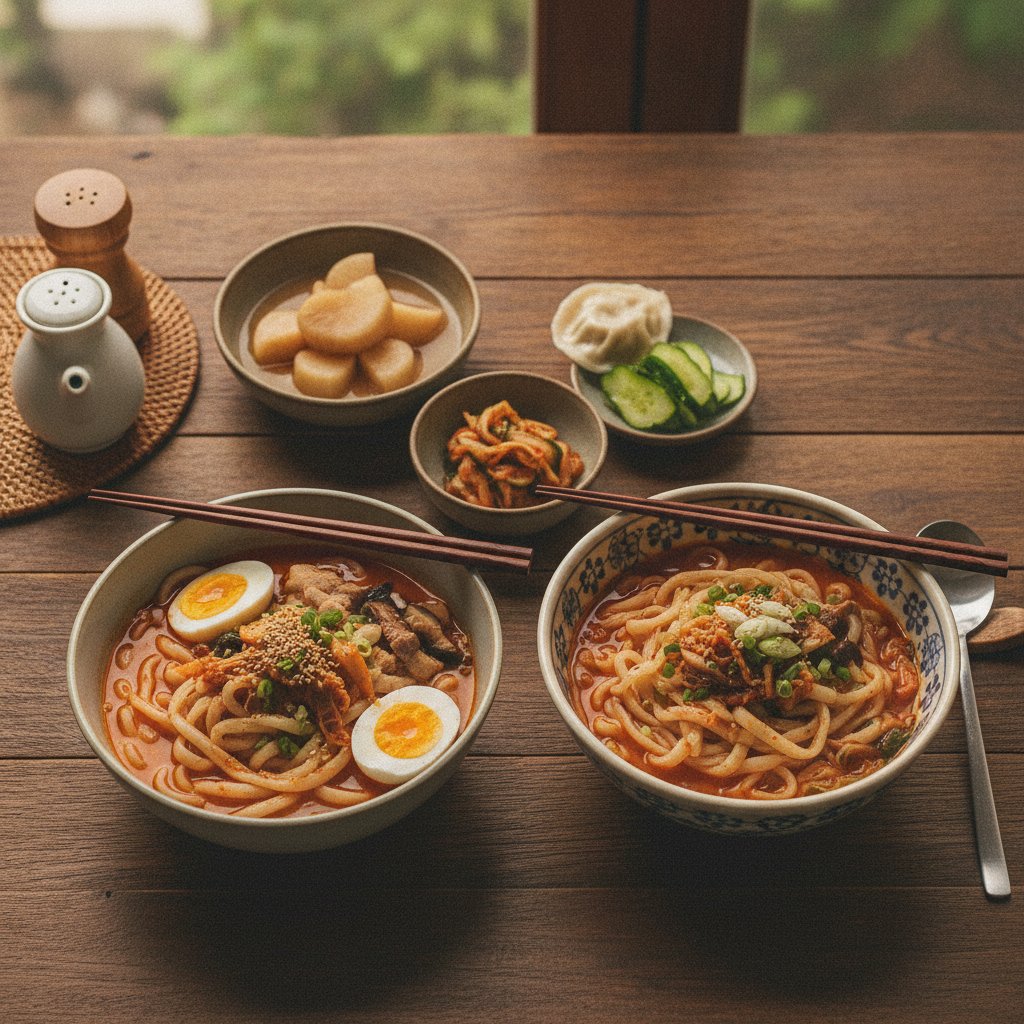
Kimchi Kalguksu Recipe: Korean Knife-Cut Noodle Soup
This post contains affiliate links. As an Amazon Associate, we earn from qualifying purchases at no extra cost to you.
At a glance
- In shortHow to cook Korean knife-cut noodle soup with sour kimchi in a rich broth.
- Best forHome cooks looking for a quick Korean noodle soup recipe
- Time20 min
- DifficultyEasy
- HeatMedium
- Key pointsSearing sour kimchi in sesame oil builds a rich, caramelized base. · Cooking starch-coated fresh noodles in the broth creates a silky body. · A pinch of sugar balances the sharp acidity of well-aged kimchi.
- Heads-upRemove dried kelp immediately once water boils to prevent a bitter, slimy broth.
On rainy afternoons in Seoul, when the moisture fogs up the kitchen windows and nobody wants to step outside, my mother would always pull out her large wooden cutting board. She would roll out a simple flour-and-water dough, fold it back on itself, and cut thick, rustic ribbons with her trusty chef’s knife. That satisfying tap-tap-tap on the wood meant one thing: kalguksu (knife-cut noodle soup) was on the menu. When she tossed a generous mound of sour kimchi into the simmering broth, the entire apartment would fill with a sharp, mouthwatering aroma that could instantly cure any grey mood.
Kimchi kalguksu (kimchi knife-cut noodle soup) is the ultimate Korean rainy-day comfort food. Unlike light, clear noodle soups that rely on subtle seafood broths, this red-hued version is bold, tangy, and deeply cozy. The thick, flat wheat noodles release just enough surface starch as they cook to transform the clear soup into a silky, comforting broth that clings to every strand. In Korean homes, we do not save this dish for special occasions; we make it whenever we have a jar of sour kimchi sitting in the back of the fridge and a craving for something hearty and quick.
If you live far from Korea, do not worry. You do not even need to make noodles from scratch to get an authentic taste. With fresh wheat noodles from an Asian grocery store (or even simple supermarket swaps) and a few key techniques, you can recreate a bowl of true Seoul comfort food right in your own kitchen.
Why This Works
- Searing sour kimchi in sesame oil first builds a rich, caramelized flavor base and mellows out harsh raw acidity before any liquid hits the pot.
- Cooking starch-coated fresh noodles directly in the broth gently thickens the soup, giving it a signature silky body without needing artificial thickeners.
- Balancing aged kimchi juice with a dash of soy sauce and sugar creates a complex, savory broth that tastes like it simmered for hours in just 20 minutes.
Ingredients
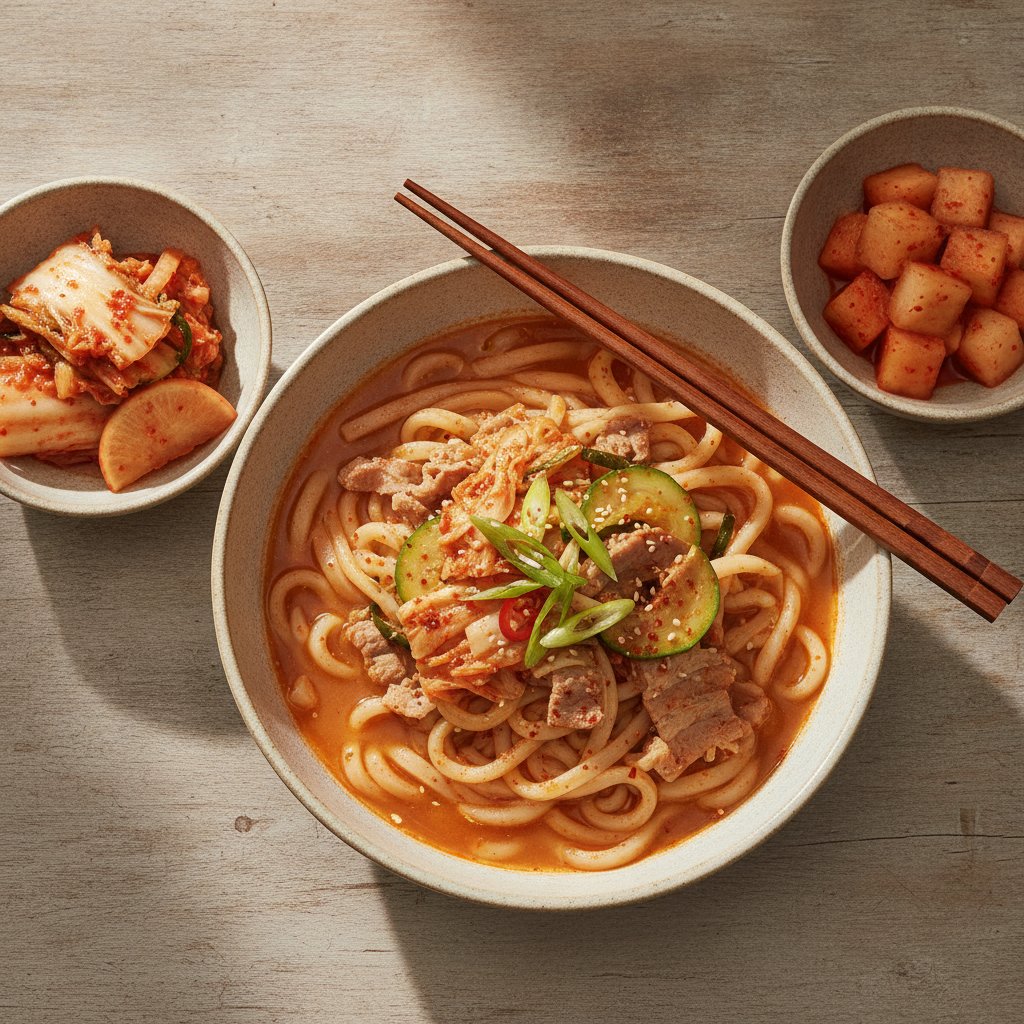
To make four generous bowls of kimchi kalguksu, gather the following ingredients. Using well-fermented, sour kimchi is the single most important secret here!
- For the Anchovy-Kelp Broth Base:
- 1.5 liters (about 6.5 cups) cold water
- 10 grams (one 3×3-inch piece) dashima (dried kelp)
- 15 grams (about 8 to 10 large) gukmul-yong myeolchi (dried soup anchovies), heads and guts removed
- For the Soup & Aromatics:
- 15 ml (1 tbsp) cham-gireum (toasted sesame oil)
- 300 grams (about 1.5 cups) aged, sour baechu-kimchi (napa cabbage kimchi), chopped into bite-sized pieces
- 120 ml (1/2 cup) aged kimchi juice, strained from your kimchi container
- 10 grams (1 tbsp) gochugaru (Korean red pepper flakes)
- 15 grams (1 tbsp) minced fresh garlic
- 100 grams (about 1/2 small) yellow onion, thinly sliced
- 100 grams (about 1 cup) aobak (Korean zucchini) or regular zucchini, cut into matchsticks
- 150 grams (about 5 oz) oyster or shiitake mushrooms, sliced
- 150 grams (about 5 oz) firm tofu, cut into bite-sized rectangular slabs (optional, but traditional)
- 2 scallions (green onions), cut diagonally into 1-inch pieces
- For the Noodles & Seasoning:
- 400 grams (about 14 oz) fresh kalguksu noodles (or store-bought fresh wheat noodles)
- 15 ml (1 tbsp) guk-ganjang (Korean soup soy sauce) or regular light soy sauce
- 5 grams (1 tsp) granulated sugar (to balance acidity)
- Salt and freshly cracked black pepper to taste
Substitutions
If you cannot visit a Korean market, you can still easily make this recipe using standard Western grocery staples:
- Fresh Kalguksu Noodles: Look for fresh store-bought udon noodles, fresh Chinese wheat noodles, or even fresh fettuccine in the refrigerated pasta aisle. Dried thick wheat noodles or fettuccine work in a pinch, though you should boil dried pasta in a separate pot first for 2 minutes less than package instructions before transferring to the soup broth.
- Anchovy-Kelp Broth: Replace the homemade anchovy stock with an equal amount of low-sodium chicken broth, vegetable broth, or dashi stock made from commercial dashi powder (such as Hon-Dashi). If using chicken broth, add 1 teaspoon of fish sauce to replicate the sea-savory depth.
- Korean Soup Soy Sauce: Korean guk-ganjang is lighter in color but saltier than regular soy sauce. If substituting with standard soy sauce, use 2 teaspoons of regular soy sauce combined with 1/2 teaspoon of fine sea salt.
🛒 Kimchi Kalguksu Recipe
As an Amazon Associate we earn from qualifying purchases.
Shop Ingredients & Tools →How to Make It
-
Prepare the broth base: Place 1.5 liters (6.5 cups) of cold water, the dried kelp, and cleaned dried anchovies into a medium pot. Bring to a gentle boil over medium-high heat. As soon as the water reaches a boil, remove the kelp with tongs and discard it. Why: Boiling kelp too long releases bitter compounds and excessive mucilage, which makes the soup slimy rather than clean. Lower the heat to medium-low and simmer the anchovies for an additional 10 to 12 minutes. Strain the broth into a heatproof bowl and discard the anchovies.
-
Sauté the kimchi and spices: Heat 15 ml (1 tbsp) of toasted sesame oil in a large pot or Dutch oven over medium heat. Add the chopped sour kimchi, minced garlic, and sliced yellow onion. Sauté for about 3 to 4 minutes until the onions turn translucent and the kimchi turns soft and slightly glossy. Why: Searing kimchi caramelizes its natural sugars and softens its raw pungency, building a mellow, deeply flavored foundation. Stir in 10 grams (1 tbsp) of gochugaru during the last minute of sautéing to bloom the red pepper flakes in the warm oil without burning them.
-
Simmer the soup base: Pour the strained anchovy broth and 120 ml (1/2 cup) of kimchi juice into the pot with the sautéed kimchi mixture. Bring the soup to a lively boil over high heat, then reduce the heat to medium-low, cover with a lid, and simmer for 8 to 10 minutes. Why: This quick simmer allows the sour kimchi juices to fully infuse the seafood broth, creating a cohesive, aromatic base before adding delicate vegetables and noodles.
-
Prep the fresh noodles: While the soup simmers, take your fresh kalguksu noodles out of their package. Gently dust off any excess dry flour or starch with your fingers over the sink. Why: Fresh noodles are heavily coated in starch to prevent sticking. Shaking off the excess prevents the soup from turning into an overly thick, gluey porridge while leaving just enough starch to give the broth a velvety texture.
-
Cook the noodles and vegetables: Turn the heat under the soup back up to medium-high until it returns to a rolling boil. Drop the prepped noodles into the pot, stirring gently with chopsticks to separate the strands. Immediately add the sliced zucchini, mushrooms, and tofu slabs. Cook for roughly 4 to 6 minutes, stirring occasionally, until the noodles become chewy and tender (translucent along the edges) and the vegetables are cooked through.
-
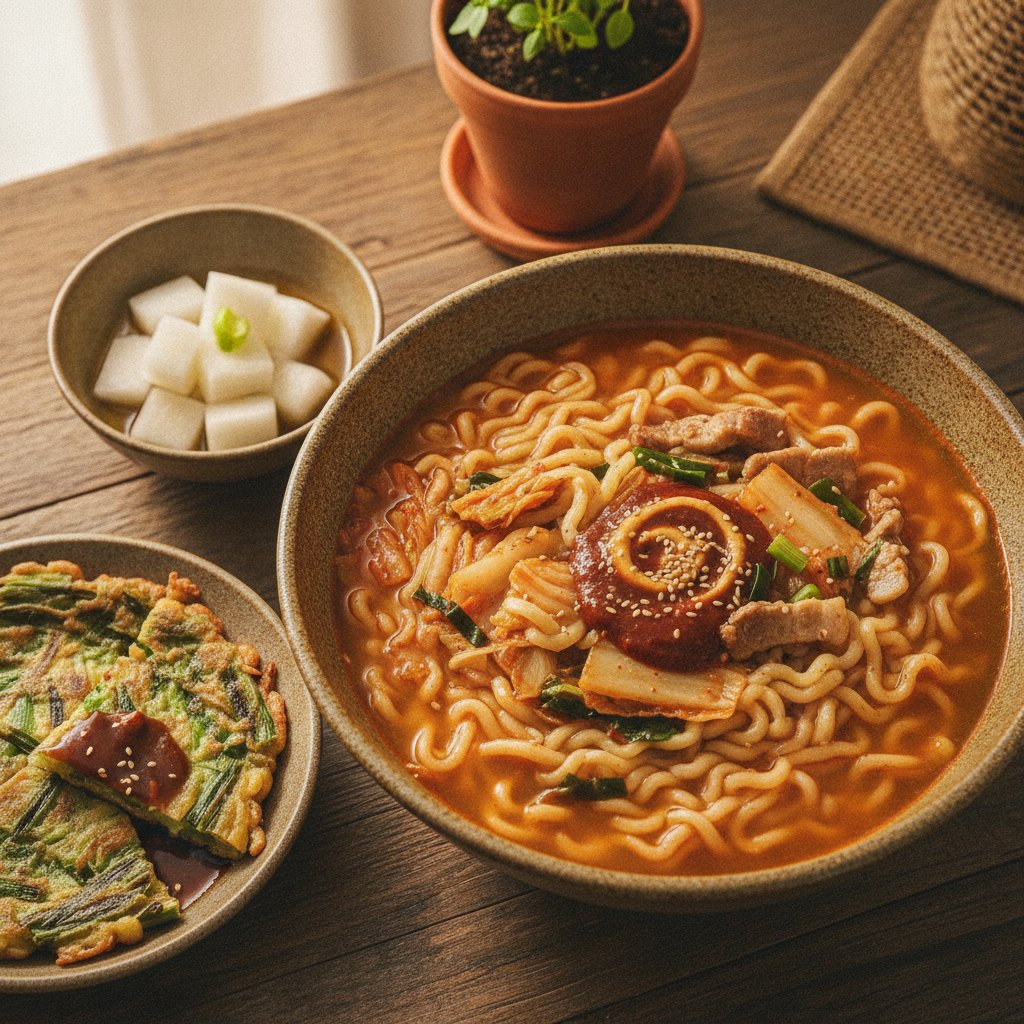
Season and finish: Stir in 15 ml (1 tbsp) of soup soy sauce and 5 grams (1 tsp) of sugar. Taste the broth carefully. If your kimchi was extra sharp, add another tiny pinch of sugar; if you prefer it saltier, add a pinch of salt. Toss in the green onions during the last 30 seconds of cooking. Ladle into wide deep bowls and serve immediately while piping hot.
Tips from a Korean Kitchen
- Always use well-aged kimchi: Freshly made kimchi (geotjeori) will yield a bland, watery soup. You need sour kimchi (shin-kimchi) that has been fermenting in your fridge for several weeks or months. Look for jars with slightly bulging lids or bubbling juices—that bright acidity is where all the deep flavor comes from.
- Adjust starch levels to your taste: If you love a clear, light broth, boil your fresh noodles in a separate pot of water for 3 minutes, drain them, and then transfer them into the hot kimchi broth for the final 2 minutes. If you love a thick, comforting broth (the way most Seoul home cooks make it), cook them directly in the soup pot as directed.
- Never skip the sugar: Even a tiny half-teaspoon of sugar does not make the dish sweet; instead, it rounds out the sharp lactic acid of aged kimchi and balances the salt from the broth.
- Keep chopsticks moving: Fresh wheat noodles like to drop to the bottom of the pot and stick. Stir gently every minute during the boiling step to keep the strands separate and evenly cooked.
Storage
Kimchi kalguksu is best enjoyed immediately after cooking, as wheat noodles continue absorbing liquid and will soften over time. However, if you have leftovers, store the soup and noodles separately whenever possible.
Refrigeration: Store leftover soup base in an airtight container in the refrigerator for up to 4 days. If noodles are already mixed in, store the entire soup in the fridge for up to 2 days; note that the noodles will absorb much of the broth. When reheating, add 120 ml (1/2 cup) of fresh water or stock to loosen the soup and warm over medium heat until steaming hot.
Freezing: You can freeze the prepared kimchi soup base (without noodles or zucchini) for up to 2 months. Thaw overnight in the refrigerator, bring to a rolling boil on the stove, and drop in fresh noodles and vegetables right before serving for a fresh-cooked meal.
🛒 Kimchi Kalguksu Recipe
As an Amazon Associate we earn from qualifying purchases.
Shop Ingredients & Tools →FAQ
Can I make kimchi kalguksu without anchovy stock?
Yes, absolutely. While traditional Korean noodle soups rely on dried anchovy and kelp stock for seafood umami, you can easily substitute low-sodium chicken broth, vegetable stock, or mushroom broth. If using chicken or vegetable broth, add a splash of fish sauce (about 1 teaspoon) or a teaspoon of Korean dashida (seasoning powder) to recreate that savory depth.
What can I use if I cannot find fresh kalguksu noodles?
Fresh store-bought udon noodles, fresh ramen noodles, or refrigerated fresh pasta like fettuccine make excellent substitutes. If you only have dried pasta available, use dried fettuccine or linguine. Par-boil dried pasta in salted water for 2 minutes less than package instructions, drain, and finish cooking directly in the kimchi broth so the noodles absorb the flavor.
How sour should my kimchi be for this noodle soup?
The ideal kimchi for this soup is extra fermented—the kind that tastes too tangy or sharp to eat plain on its own. If your kimchi is relatively new and fresh, you can mimic the sourness of aged kimchi by adding 1 teaspoon of rice vinegar or white vinegar directly into the broth along with the kimchi juice.
More on Kimchi Noodles & Pasta
- Creamy Kimchi PastaHow to make creamy kimchi pasta using well-aged kimchi, heavy cream, bacon, and gochujang.
- 10-Minute Upgraded Kimchi Ramen HackHow to quickly transform packaged instant ramen into a rich Korean kimchi soup using simple tips.
- Easy Kimchi Bibim GuksuA quick recipe for spicy Korean cold noodles made with somyeon, sour kimchi, and gochujang.
See every Kimchi Noodles & Pasta post in our Kimchi guide.
Handy toolsRecipe scaler · Measurement converter · Korean pantry guide · Recipe Finder
🛒 Kimchi Kalguksu Recipe
As an Amazon Associate we earn from qualifying purchases.
Shop Ingredients & Tools →More Korean Recipes
- Crispy Kimchi Grilled Cheese (Kimchi Chijeu Tosteu)
- Crispy Tuna Kimchi Pancakes (Chamchi Kimchi Jeon)
- Volcano Cheese Kimchi Fried Rice (Kimchi Bokkeumbap)
- Cold Kimchi Noodle Soup (Kimchi Mali Guksu)
🛒 Kimchi Kalguksu Recipe
As an Amazon Associate we earn from qualifying purchases.
Shop Ingredients & Tools →