Kimchi Dubu Jorim: Spicy Braised Tofu with Kimchi
This post contains affiliate links. As an Amazon Associate, we earn from qualifying purchases at no extra cost to you.
At a glance
- In shortA guide to making Korean spicy braised tofu with kimchi.
- Best forHome cooks wanting to prepare Korean comfort food
- DifficultyEasy
- HeatMedium
- Key pointsSearing tofu first creates a crust that prevents it from crumbling. · Layering onions under the tofu shields it from direct heat and scorching. · Using well-fermented sour kimchi provides necessary acidity for braising.
- Heads-upDo not freeze this dish as it changes tofu's structure, making it spongy and dry.
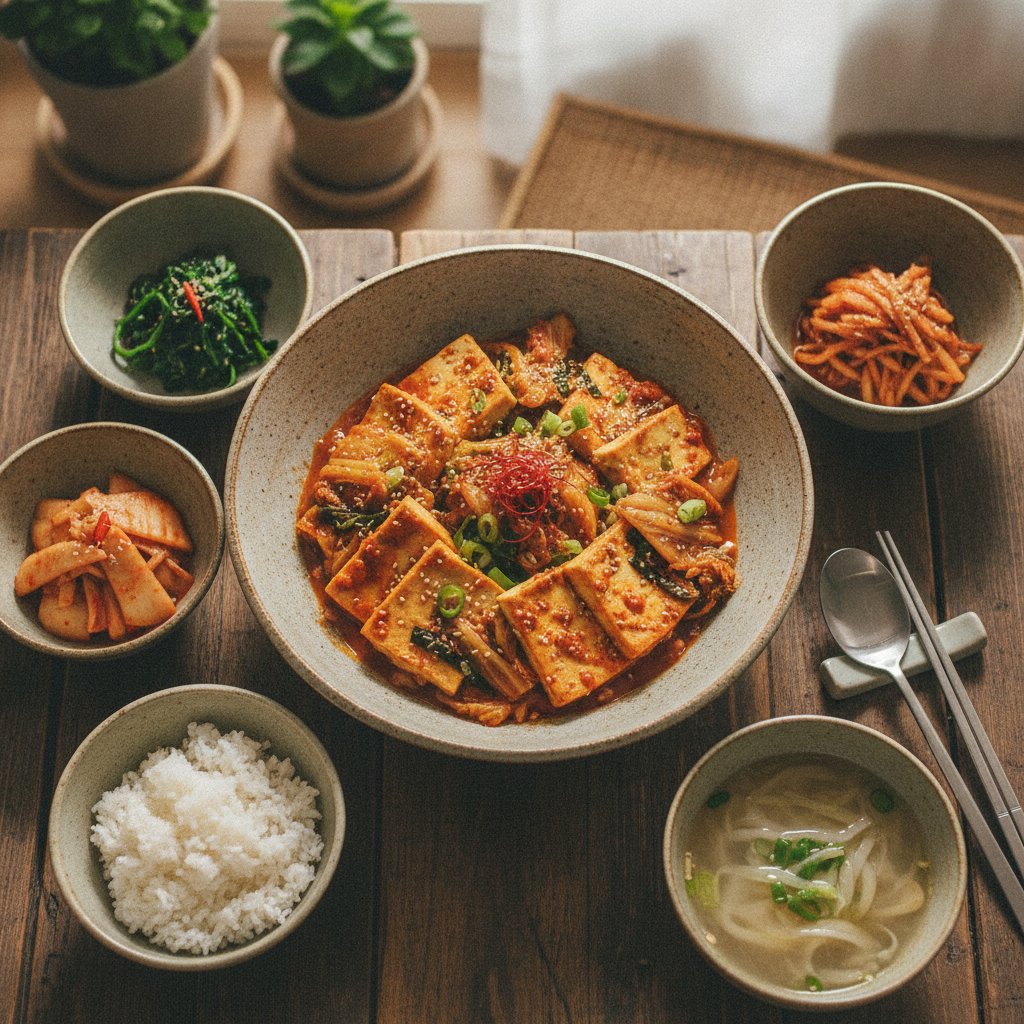
On cold, rainy evenings in Seoul, when nobody in my house felt like setting up a multi-course meal, my mother would open our fridge and pull out two staples: a big plastic tub of well-aged kimchi and a fresh block of firm tofu. Within fifteen minutes, the entire kitchen would fill with the mouthwatering aroma of toasted sesame oil, garlic, and tangy chili broth. That quick dinner was kimchi dubu jorim (spicy braised tofu with kimchi), one of the most beloved comfort foods in Korean home cooking.
While Western restaurants often feature pan-fried tofu or dramatic tableside stews, this home-style dish quietly sits at the heart of daily Korean dining. It bridges the gap between a everyday side dish (banchan) and a hearty main dish. The secret lies in how the tofu absorbs the bold, sour broth of fermented Napa cabbage, transforming humble soy protein into something rich, tender, and deeply savory. Serve this over a bowl of hot steamed white rice, and you have an incredible meal made almost entirely from fridge leftovers and pantry staples.
Why This Works
- Searing the tofu first builds a resilient, golden outer skin that keeps the slabs intact and allows them to soak up liquid like a sponge without turning into mush.
- Braising aged kimchi softens its tough cabbage fibers while releasing natural tartness and umami into the savory soy-garlic sauce.
- Layering onions beneath the tofu creates a natural thermal cushion that prevents scorching while adding a subtle background sweetness to balance the spicy broth.
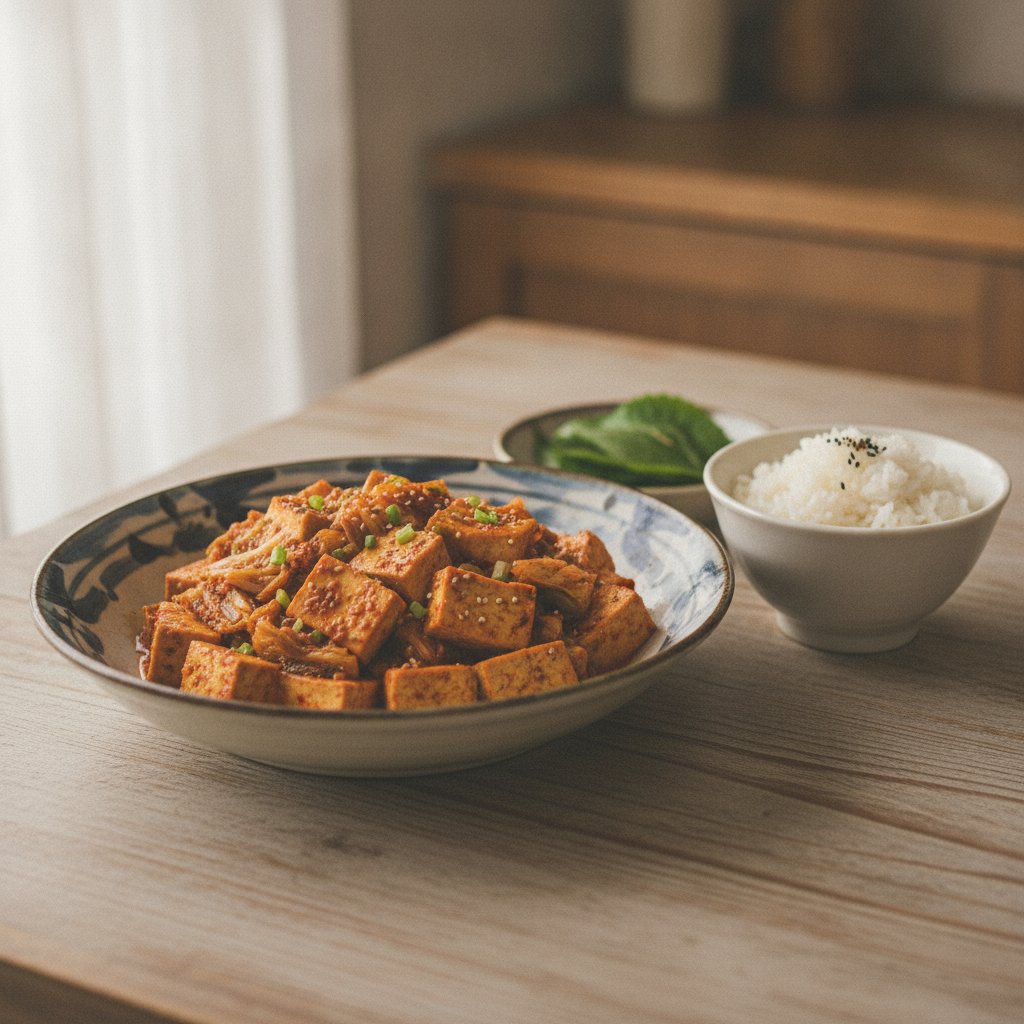
Ingredients
- 500 g (about 18 oz) firm tofu (dubu), drained
- 200 g (about 1.5 cups) well-fermented, sour Napa cabbage kimchi, chopped into bite-sized pieces
- 60 ml (about 1/4 cup) kimchi juice, ladled straight from your kimchi jar
- 1/2 medium yellow onion (about 75 g / 2.6 oz), thinly sliced
- 2 stalks green onion, sliced diagonally into 2-inch pieces
- 1 fresh red or green chili pepper, thinly sliced (optional, for extra heat)
- 15 ml (1 tbsp) neutral cooking oil (such as canola or vegetable oil)
- 240 ml (1 cup) anchovy-kelp stock or plain water
- 30 ml (2 tbsp) Korean soy sauce (yangjo ganjang or regular soy sauce)
- 10 g (1 tbsp) Korean coarse chili flakes (gochugaru)
- 15 g (1 tbsp) Korean chili paste (gochujang)
- 15 g (1 tbsp) garlic (about 3 to 4 cloves), finely minced
- 10 g (1 tbsp) sugar or Korean rice syrup (joocheong)
- 15 ml (1 tbsp) toasted sesame oil (chamgireum)
- 5 g (1 tsp) toasted sesame seeds, for final garnish
Substitutions
If you cannot find specific items at your local supermarket, here is how to substitute without losing authentic Korean taste:
- Anchovy-kelp stock: In Korea, we buy pre-made dried broth bags containing anchovies and kelp (dashima). If you prefer a vegetarian version, simmer a piece of dried kombu (kelp) in warm water for 10 minutes, or simply use a mild vegetable broth.
- Kimchi freshness: Braised tofu with kimchi requires sour, well-fermented kimchi. Freshly made kimchi lacks the lactic acidity required for braising. If your kimchi is too fresh, add 1/2 teaspoon of rice vinegar to the liquid to recreate that aged tanginess.
- Gochugaru: Korean chili flakes have a distinct smoky, mild heat and fruity aroma. Do not replace them with Indian chili powder or Western red pepper flakes, which are much sharper and spicy. If you must substitute, use a mixture of sweet paprika and a tiny pinch of cayenne pepper.
🛒 Kimchi Dubu Jorim
As an Amazon Associate we earn from qualifying purchases.
Shop Ingredients & Tools →How to Make It
- Prep and dry the tofu: Cut the block of firm tofu into 1.5 cm (half-inch) thick slices. Lay the slices on a clean dish towel or double layer of paper towels, then gently press down with another towel on top. Let them sit for 5 minutes. Why: Removing surface water prevents violent oil splatters during frying and helps the tofu form a crisp outer layer.
- Mix the braising sauce: In a measuring cup or small bowl, whisk together the anchovy stock (or water), soy sauce, gochugaru, gochujang, minced garlic, and sugar until the paste dissolves evenly. Why: Mixing the sauce beforehand ensures the thick gochujang breaks down smoothly instead of clumping in the pan.
- Pan-sear the tofu: Heat 15 ml (1 tbsp) of neutral oil in a wide, non-stick skillet over medium-high heat. Carefully arrange the tofu slabs in a single layer. Fry for 4 to 5 minutes per side, without moving them prematurely, until both sides develop a light golden crust. Transfer the seared tofu onto a plate. Why: Searing browns the proteins on the outside, creating structural integrity so the tofu can simmer gently without crumbling.
- Build the flavor layer: Lower the pan heat to medium. In the same skillet (no need to wash it), scatter the sliced yellow onions across the bottom, followed by the chopped kimchi. Lay the seared tofu slabs on top of the kimchi in a slightly overlapping pattern. Why: The bed of vegetables prevents the tofu from direct pan contact, shielding it from scorching while releasing caramelized sweetness from below.
- Simmer and braise: Pour the mixed braising sauce and reserved kimchi juice evenly over the layered tofu. Bring the skillet to a gentle boil, then turn the heat down to medium-low. Cover the pan with a tight-fitting lid and let it braise for 8 to 10 minutes. Uncover once or twice to ladle liquid over the tops of the tofu slabs. Why: Trapping steam under a lid cooks the tough raw cabbage and allows the porous tofu crust to absorb the spicy seasoned stock deeply.
- Finish with aromatics: Remove the lid once the liquid has reduced by about half and thickened slightly. Scatter the green onions and optional sliced chili pepper over the top. Drizzle the toasted sesame oil across the pan and cook uncovered for 2 more minutes. Remove from heat and sprinkle with toasted sesame seeds before serving hot. Why: Adding sesame oil right at the end preserves its delicate aroma, which breaks down if cooked over high heat for too long.
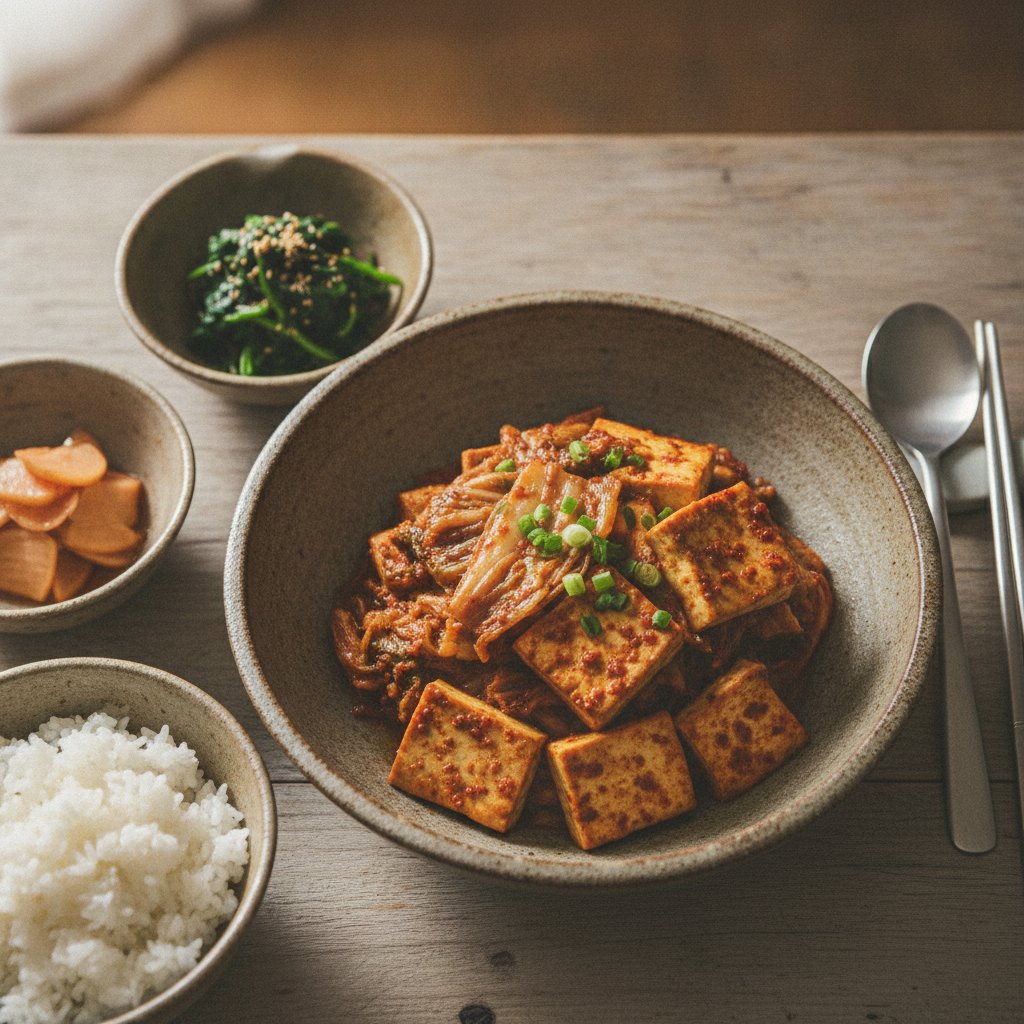
Tips from a Korean Kitchen
Here are a few small techniques that make a big difference when cooking this classic banchan at home:
- Use the right pan size: Choose a shallow skillet wide enough to hold all your tofu slabs in a single layer or slightly overlapping. If your pan is too narrow, the tofu gets piled high and won’t absorb the braising sauce uniformly.
- Don’t skip the basting: While the dish simmers, take a spoon and gently ladle the pan juices over any uncovered portions of tofu. This coats the tops with garlic and gochugaru, ensuring full flavor throughout every bite.
- Adjust heat with kimchi juice: If your pan starts running dry before the cabbage becomes translucent and soft, add another splash of reserved kimchi juice or warm broth rather than turning down the heat completely.
- Taste before adding salt: Store-bought kimchi varies drastically in saltiness and sourness. Taste your braising liquid right after mixing; if your kimchi is already very salty, reduce the soy sauce by half a tablespoon.
Storage
Kimchi dubu jorim keeps wonderfully in the refrigerator, making it an excellent meal-prep option. Store leftovers in an airtight glass container for up to 4 days in the fridge. As it sits, the tofu continues to soak up the chili sauce, tasting even better the next day.
To reheat, transfer the desired portion to a small skillet with a tablespoon of water, cover, and heat over medium-low for 3 to 4 minutes until warm throughout. You can also microwave it covered on medium power for 1 to 2 minutes. We do not recommend freezing this dish, as freezing drastically alters the structure of firm tofu, making it spongy and dry upon thawing.
🛒 Kimchi Dubu Jorim
As an Amazon Associate we earn from qualifying purchases.
Shop Ingredients & Tools →FAQ
Can I make this braised tofu dish vegetarian or vegan?
Yes, absolutely. To make it completely plant-based, substitute the traditional anchovy stock with a quick kelp broth (simmering dried kombu in water for 10 minutes) or mild vegetable stock. Additionally, verify that your store-bought kimchi does not contain fish sauce or salted shrimp (saeujeot).
Why did my tofu break apart while braising?
Tofu usually breaks down for two reasons: using tofu that is too soft (such as silken or medium-soft varieties) or skipping the initial searing step. Always buy firm or extra-firm tofu, press out excess water, and fry until a distinct golden skin forms before adding it to the braising sauce.
What should I serve alongside kimchi dubu jorim?
In Korea, this is served hot alongside a bowl of freshly steamed short-grain white rice or mixed purple rice (heukmi-bap). Because the dish is rich, tangy, and spicy, it pairs exceptionally well with mild, refreshing sides like crisp cucumber salad (oi muchim), steamed eggs (gyeran-jjim), or plain roasted seaweed sheets (gim).
More on Kimchi Rice & Mains
- Pan-Fried Kimchi Rice BallsA guide to making crisp Korean pan-fried kimchi rice balls with a savory center.
- Kimchi Fried Rice with SpamA guide to making quick Korean kimchi fried rice with Spam, aged kimchi, and day-old rice.
- Sweet and Savory Stir-Fried KimchiLearn how to transform sour fermented kimchi into a tender, savory Korean side dish with sugar and sesame oil.
See every Kimchi Rice & Mains post in our Kimchi guide.
Handy toolsRecipe scaler · Measurement converter · Korean pantry guide · Recipe Finder
🛒 Kimchi Dubu Jorim
As an Amazon Associate we earn from qualifying purchases.
Shop Ingredients & Tools →More Korean Recipes
- Kimchi Kalguksu Recipe: Korean Knife-Cut Noodle Soup
- Crispy Kimchi Grilled Cheese (Kimchi Chijeu Tosteu)
- Crispy Tuna Kimchi Pancakes (Chamchi Kimchi Jeon)
- Volcano Cheese Kimchi Fried Rice (Kimchi Bokkeumbap)
🛒 Kimchi Dubu Jorim
As an Amazon Associate we earn from qualifying purchases.
Shop Ingredients & Tools →