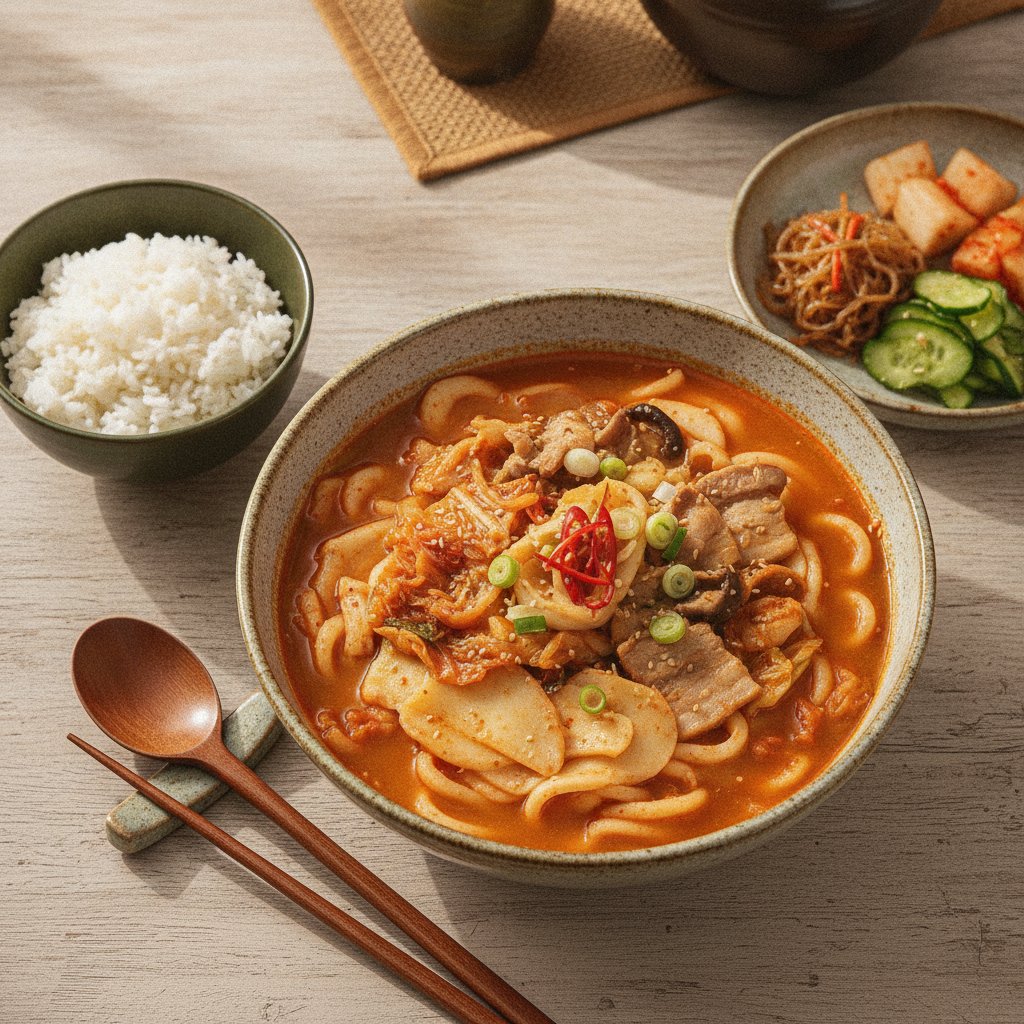
Spicy Kimchi Sujebi Recipe: Korean Hand-Torn Noodle Soup
This post contains affiliate links. As an Amazon Associate, we earn from qualifying purchases at no extra cost to you.
At a glance
- In shortHow to make authentic Korean spicy hand-torn noodle soup with aged kimchi and anchovy broth.
- Best forHome cooks looking to prepare Korean hand-torn noodle soup
- DifficultyEasy
- HeatMedium
- Key pointsChilling the dough relaxes gluten for paper-thin stretching without snapping. · Adding potato starch to flour gives the torn noodles a springy, chewy texture. · Sautéing aged kimchi in sesame oil builds umami and reduces harsh acidity.
- Heads-upRemove dried kelp immediately after boiling to prevent the broth from becoming slimy.
Whenever dark rain clouds settle over the Han River in Seoul, my mother pulls out a big stainless steel mixing bowl. There is an unspoken tradition here in Korea: rainy days demand a steaming bowl of kimchi sujebi (spicy hand-torn noodle soup with kimchi). The sound of raindrops pattering on windowpanes mirrors the sizzle of oil and the gentle bubbling of a pot on the stove.
Sujebi is a humble dish deeply rooted in Korean home cooking. During lean times in post-war Korea, wheat flour distributed through relief programs became an everyday staple. Families across the peninsula stretched simple flour dough by tearing off thin sheets directly into boiling broths filled with seasonal vegetables, potatoes, and whatever well-fermented kimchi remained in their earthenware storage jars. Today, it remains one of the ultimate Korean comfort foods.
Making an authentic spicy kimchi sujebi recipe at home is far simpler than making handmade ramen or knife-cut noodles. You do not need a rolling pin, a pasta machine, or complex dough-shaping skills. All you need is a short resting period for your dough, your hands, and a love for deep, warm, spicy broth.
Why This Works
- Resting the dough in the refrigerator allows the flour to fully hydrate and relaxes the gluten structure, yielding a supple dough that stretches paper-thin without snapping back.
- Adding a small proportion of potato starch to standard all-purpose flour gives the torn noodles a springy, pleasantly chewy texture that mimics traditional Seoul noodle shops.
- Sautéing aged kimchi in a touch of sesame oil before pouring in the stock builds a rich flavor foundation, reducing raw acidity while amplifying savory umami.
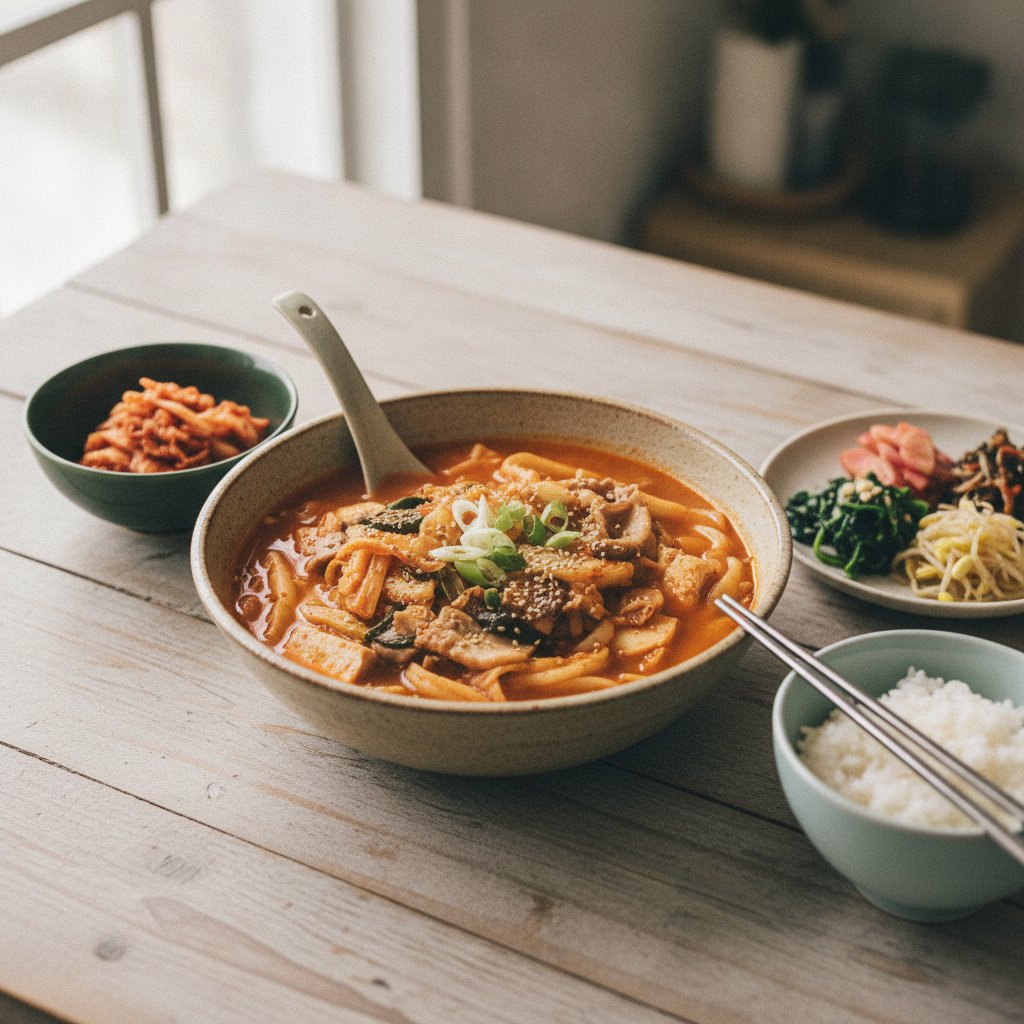
Ingredients
- For the Hand-Torn Dough:
- 240 g (about 2 cups) all-purpose flour
- 30 g (about 3 tbsp) potato starch or cornstarch
- 2 g (1/2 tsp) fine sea salt
- 15 ml (1 tbsp) neutral vegetable oil or sesame oil
- 150 ml (about 2/3 cup) cold water
- For the Soup Base and Broth:
- 1.2 L (about 5 cups) water
- 10-12 large dried soup anchovies (myeolchi), heads and guts removed
- 1 piece dried kelp (dashima), roughly 10 x 10 cm (4 x 4 inches)
- 250 g (about 1.5 cups) well-aged, sour Napa cabbage kimchi, coarsely chopped
- 60 ml (1/4 cup) aged kimchi juice from the jar
- 15 g (1 tbsp) gochujang (Korean red pepper paste, such as CJ or Ottogi)
- 10 g (1 tbsp) gochutgaru (Korean red pepper flakes)
- 15 ml (1 tbsp) soup soy sauce (guk-ganjang) or light soy sauce
- 10 g (1 tbsp) minced fresh garlic
- Vegetables:
- 150 g (1 medium) russet or Yukon Gold potato, peeled and cut into 1/2-cm (1/4-inch) half-moons
- 100 g (about 1/2 small) zucchini, cut into 1/2-cm (1/4-inch) half-moons
- 50 g (1/2 small) yellow onion, sliced into medium strips
- 2 green onions, washed and cut diagonally into 2.5-cm (1-inch) pieces
- 1 red or green chili pepper (optional), sliced diagonally
Substitutions
If you shop primarily at Western supermarkets, you can easily adapt this dish without compromising on taste. Dried anchovies and kelp create the traditional Korean broth base, but replacing them with 1.2 liters of quality low-sodium vegetable stock or chicken broth works very well. If using commercial broth, add 1 teaspoon of fish sauce to replicate that deep background umami. For the dough, if potato starch is unavailable, replace it with an equal amount of cornstarch or simply use extra all-purpose flour. The noodles will be slightly less bouncy, but still tender and comforting. Finally, if you cannot find Korean soup soy sauce, light soy sauce mixed with a tiny pinch of sea salt provides balanced saltiness without darkening the soup excessively.
🛒 Spicy Kimchi Sujebi Recipe
As an Amazon Associate we earn from qualifying purchases.
Shop Ingredients & Tools →How to Make It
- Knead and rest the noodle dough: In a large mixing bowl, whisk together the all-purpose flour, potato starch, and fine sea salt. Pour in the vegetable oil and cold water gradually while stirring with a wooden spoon until a shaggy dough forms. Use your hands to knead the dough inside the bowl for 5 to 7 minutes until it turns smooth and elastic. The dough should feel firm yet pliable, similar to the soft texture of an earlobe. Wrap the dough tightly in plastic wrap and place it in the refrigerator for at least 30 minutes, or up to 2 hours. Resting is crucial because cold hydration relaxes gluten, enabling you to pull the dough into thin sheets later without tearing.
- Simmer the dried kelp and anchovy broth: Remove the dark gut portions and heads from your dried anchovies to prevent lingering bitterness. Place the cleaned anchovies and dried kelp into a soup pot with 1.2 liters of cold water. Bring the water to a boil over medium-high heat uncovered. Once boiling, remove the dried kelp immediately because leaving kelp in boiling water too long releases excess mucilage, making the broth slimy. Reduce heat to medium-low and simmer the anchovies gently for 15 minutes. Strain out the anchovies and reserve the clear golden broth.
- Sauté the sour kimchi and build the soup base: In a main soup pot or Dutch oven, heat 1 teaspoon of sesame oil over medium heat. Add the chopped aged kimchi and sauté for 3 to 4 minutes until the cabbage edges turn translucent and fragrant. Sautéing breaks down harsh acid from raw fermentation and develops sweet caramelized notes. Pour in the clear anchovy broth, aged kimchi juice, gochujang, gochutgaru, soup soy sauce, and minced garlic. Stir well to dissolve the pepper paste completely.
- Cook the potatoes and simmer the stock: Add the sliced potatoes and yellow onions to the pot. Bring the soup back up to a boil over medium-high heat, then lower heat to medium, cover, and cook for 6 to 8 minutes. Potatoes take longer to cook than delicate flour noodles, so giving them a head start ensures every element finishes cooking at the same time.
- Hand-tear and stretch the dough into the pot: Unfold your chilled dough from the refrigerator. Keep a small bowl of cold water nearby. Wet your fingers slightly so the dough does not stick to your skin. Working directly over the bubbling soup, grab a small knob of dough, pull it thin between your thumbs and forefingers until it is almost translucent, and tear off a piece roughly the size of a thumb. Drop the torn piece directly into the boiling broth. Repeat this process continuously until all the dough is pulled and torn. Stir the pot gently once or twice while tearing to prevent individual noodle pieces from sticking together at the bottom.
- Add tender vegetables and finish cooking: Toss in the sliced zucchini, green onions, and chili peppers once all dough pieces are dropped into the pot. Let the soup boil vigorously for another 4 to 5 minutes over medium heat. You will know the sujebi noodles are cooked when they float to the surface and turn semi-translucent along the edges. Taste the broth and adjust seasoning with a pinch of sea salt or an extra splash of kimchi juice if desired. Ladle into wide soup bowls and serve hot.
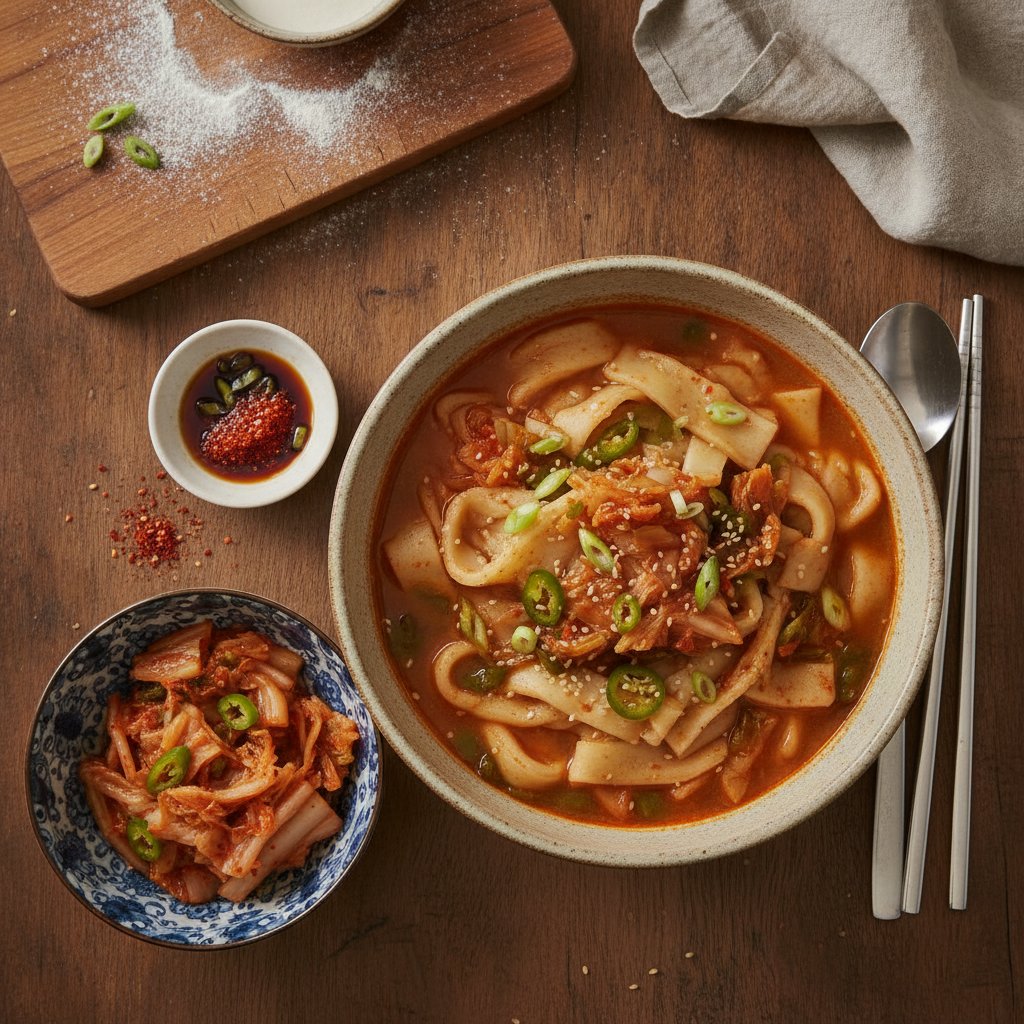
Tips from a Korean Kitchen
First, always choose well-aged kimchi over fresh kimchi. Aged kimchi contains abundant lactic acid and deep fermented complexity that seasons the soup naturally. Fresh kimchi lacks acidity and depth, which will make your broth taste flat.
Second, keep your hands lightly moistened with cold water while stretching the dough. Wet fingers act as a non-stick surface, allowing you to pull pieces down to paper-thin transparency. Thick chunks of dough turn out dense and heavy, whereas unevenly torn pieces with paper-thin edges absorb spicy broth beautifully.
Third, do not rush the tearing process if you are new to the technique. If you pull dough too slowly while the pot boils on high heat, the first batch of torn noodles will overcook before you finish the rest. Turn the stove heat down to low while tearing, then turn it back up to medium-high once all dough pieces are dropped into the pot.
Fourth, skim off red foam that floats to the surface during the final simmer. This quick step gives your soup broth a clean appearance and a smooth mouthfeel.
Storage
Leftover kimchi sujebi can be stored in an airtight container in the refrigerator for up to 2 days. Keep in mind that cooked dough noodles slowly absorb broth over time, becoming softer. When reheating on the stovetop over medium heat, add 1/2 cup of fresh water or stock and a splash of kimchi juice to restore the liquid balance. Uncooked dough can be prepared ahead of time, wrapped tightly in plastic wrap, and stored in the refrigerator for up to 24 hours. Freezing cooked sujebi soup is not recommended, as the delicate hand-torn dough becomes mushy upon thawing.
🛒 Spicy Kimchi Sujebi Recipe
As an Amazon Associate we earn from qualifying purchases.
Shop Ingredients & Tools →FAQ
Can I make kimchi sujebi without anchovy broth?
Yes, absolutely. While traditional Korean home cooks rely on dried anchovy and kelp broth, you can make a great version using vegetable stock. Simmering dried shiitake mushrooms together with kelp in water for 15 minutes creates a rich, savory broth loaded with natural umami.
Why is my sujebi dough tough instead of chewy?
Tough dough usually results from skipping the chilling period or using insufficient water. Giving the dough at least 30 minutes in the refrigerator relaxes gluten strands, making it pliable. Adding a small amount of oil and starch to your flour mixture also guarantees that springy Korean noodle chew.
Can I add protein like pork or seafood to this recipe?
Definitely. Sautéing 100 grams of thinly sliced pork belly alongside the kimchi adds rich flavor to the soup. Alternatively, adding clams, squid, or peeled shrimp during the last 3 minutes of boiling creates a popular coastal variation known as haemul kimchi sujebi.
More on Porridges & Noodle Soups
- Perilla Seed Noodle SoupHow to make rich Korean perilla seed noodle soup with a creamy, dairy-free broth.
- Korean Sweet Red Bean Porridge (Patjuk)A step-by-step recipe for making traditional Korean sweet red bean porridge with chewy rice cake balls.
- Sogogi Beosot Juk: Beef Mushroom PorridgeA guide to making comforting, savory Korean beef and shiitake mushroom rice porridge at home.
See every Porridges & Noodle Soups post in our Soups & Stews guide.
Handy toolsRecipe scaler · Measurement converter · Korean pantry guide · Recipe Finder
🛒 Spicy Kimchi Sujebi Recipe
As an Amazon Associate we earn from qualifying purchases.
Shop Ingredients & Tools →More Korean Recipes
- Gopchang Jeongol Recipe: Spicy Beef Intestine Hot Pot
- Jeonju Style Kongnamul Gukbap Rice Soup
- Gul Miyeokguk: Easy Korean Oyster Seaweed Soup
- Sogogi Beosot Juk: Korean Beef and Mushroom Porridge
🛒 Spicy Kimchi Sujebi Recipe
As an Amazon Associate we earn from qualifying purchases.
Shop Ingredients & Tools →