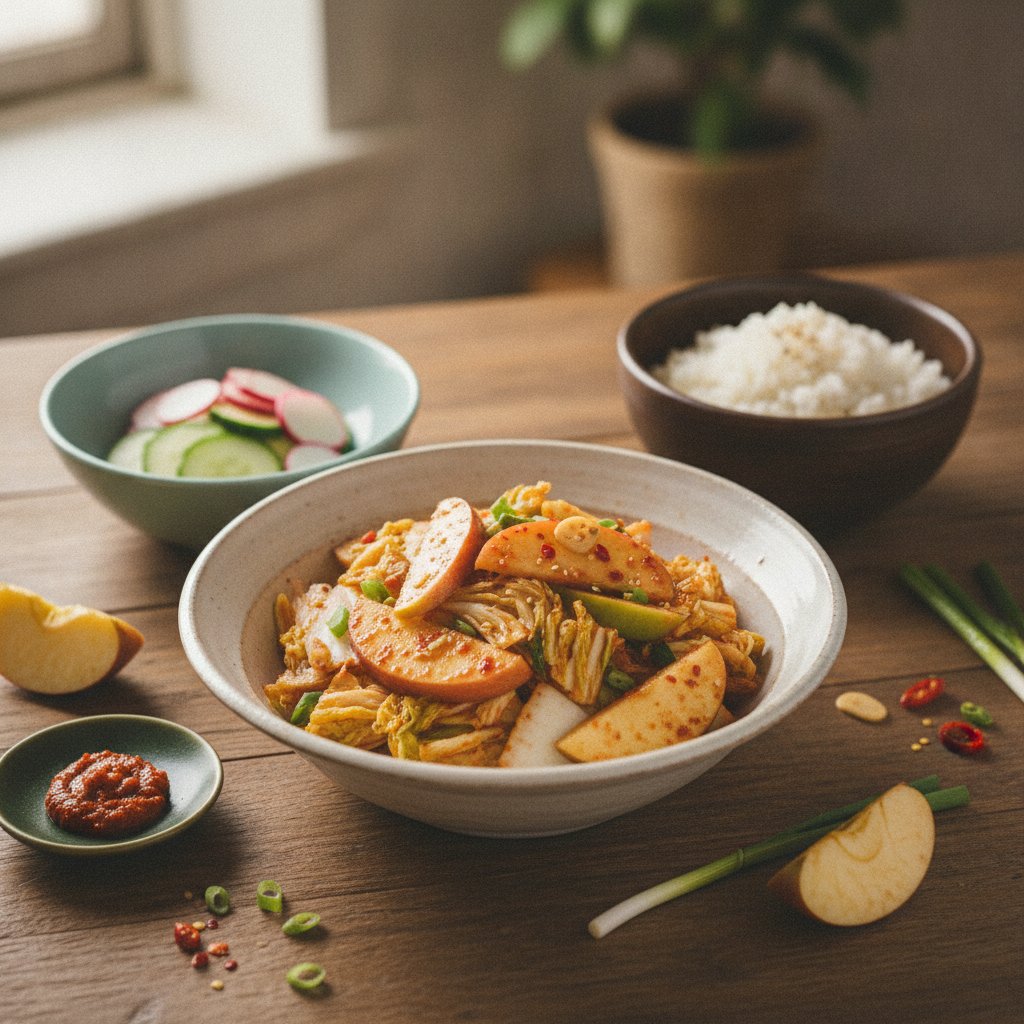
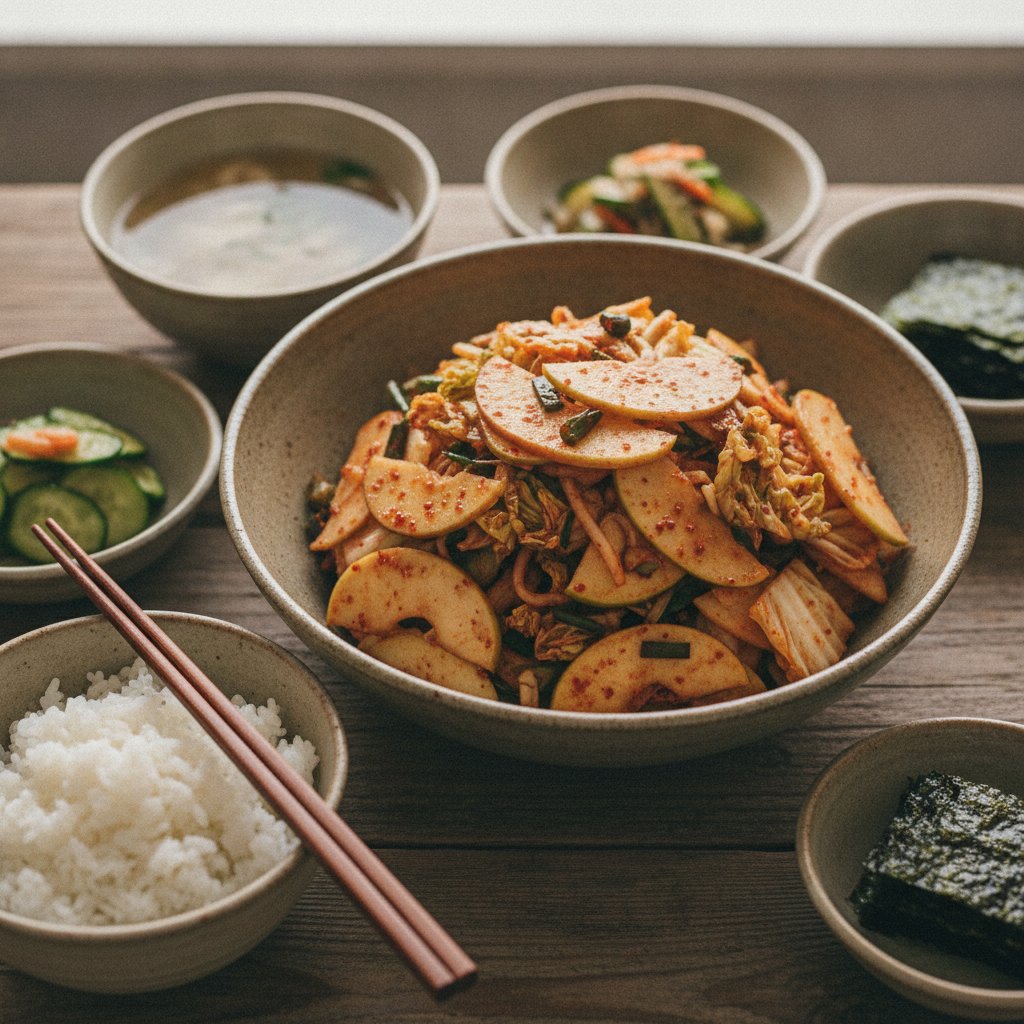
Fresh Apple Kimchi Recipe (Sagwa Baechu Geotjeori)
This post contains affiliate links. As an Amazon Associate, we earn from qualifying purchases at no extra cost to you.
At a glance
- In shortLearn how to make fresh apple and napa cabbage kimchi (sagwa baechu geotjeori) at home.
- Best forHome cooks looking for a quick, fresh Korean salad kimchi
- Time45 min
- DifficultyEasy
- HeatMedium
- Key pointsGeotjeori is a fresh, unfermented kimchi made to be eaten immediately. · Sweet apples replace refined sugar to balance pungent garlic and seafood. · Pre-blooming gochugaru for 10 minutes creates a glossy, clingy sauce.
- Heads-upDo not salt the apples or freeze the finished kimchi, as both ruin its fresh crunch.
In my family’s home in Seoul, crisp autumn mornings always call for a trip to the neighborhood produce stand. While my friends living in Western countries start baking apple pies and spiced crisps, Korean home cooks reach for garlic, fish sauce, and a tub of red pepper flakes. We make sagwa baechu geotjeori (fresh apple and cabbage kimchi), a bright, sweet-and-savory salad-style kimchi that brings incredible life to the autumn table.
Unlike traditional aged kimchi that ferments for weeks in stoneware jars, geotjeori is designed to be eaten immediately after tossing. It relies on the raw, juicy crunch of fresh vegetables tossed in a pungent, spicy seasoning paste. Adding sliced apples creates a stunning contrast: the fruit’s floral sweetness tames the fiery heat of gochugaru (Korean chili flakes), while salt cuts through the apple’s juice to make every bite explosive with flavor. In Korea, we love serving this alongside rich, comforting dishes like suyuk (boiled pork belly) or a steaming bowl of kalguksu (knife-cut noodle soup).
Why This Works
- Short salting time preserves raw crunch: Salting the napa cabbage for just 30 to 40 minutes draws out excess moisture so the leaves soften slightly while remaining deeply crisp alongside raw apple slices.
- Fruit sugar eliminates refined sweeteners: Dense sweet-tart apples release natural sugars into the dressing paste, perfectly balancing the pungent garlic and salted seafood without needing heavy amounts of refined white sugar.
- Pre-blooming the chili paste creates rich texture: Mixing the dried red pepper flakes with liquid aromatics ten minutes before tossing hydrates the pepper, turning a grainy powder into a glossy, clingy sauce that coats every apple wedge evenly.
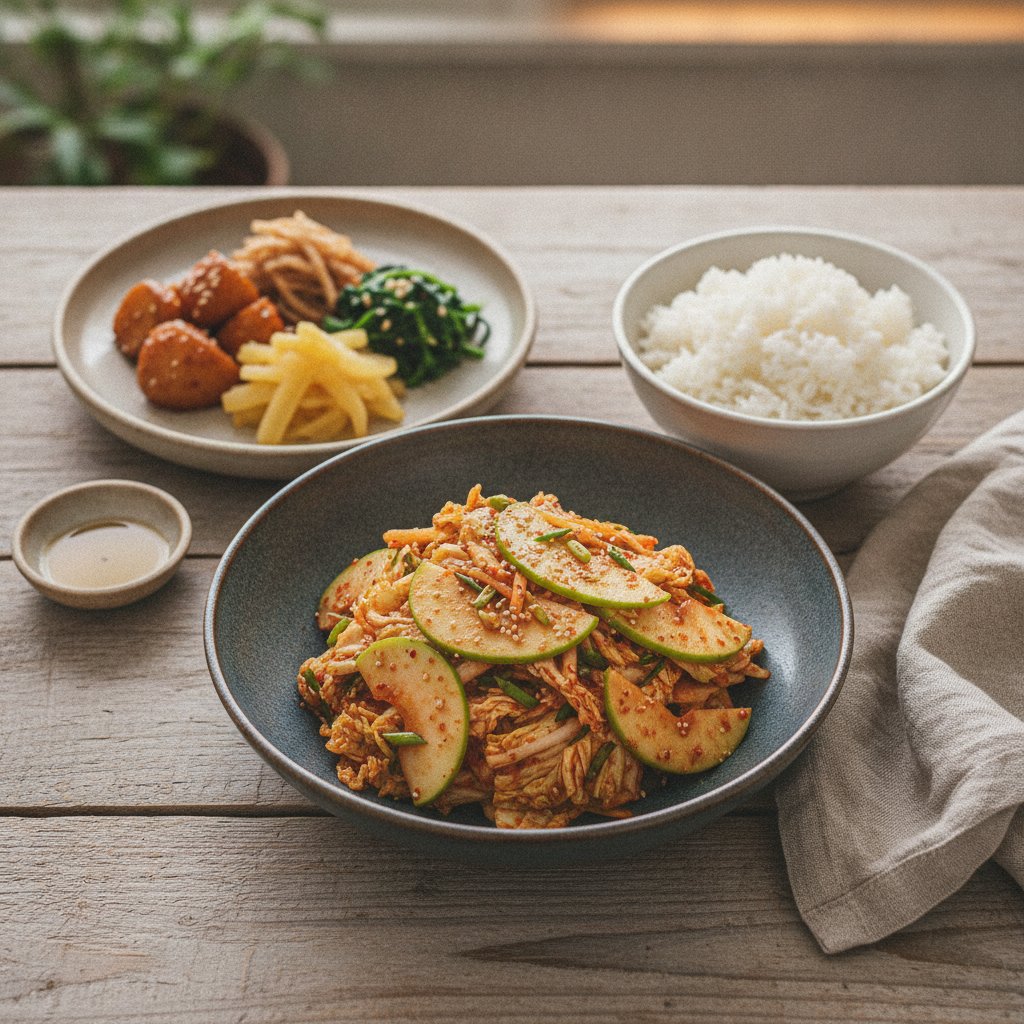
Ingredients
- 1 small head Napa cabbage (about 900 g / 2 lbs)
- 2 medium sweet, crisp apples such as Fuji or Honeycrisp (about 350 g / 12 oz total)
- 3 tbsp coarse Korean sea salt or coarse kosher salt (45 g / 1.5 oz)
- 3 stalks green onions (scallions) (45 g / 1.5 oz), cut into 2-inch pieces
- For the Kimchi Paste (Yangnyeom):
- 4 tbsp coarse gochugaru (Korean chili flakes) (24 g / 0.8 oz)
- 2 tbsp Korean fish sauce (30 ml / 1 fl oz)
- 1 tbsp saeujeot (Korean salted fermented shrimp), finely chopped (15 g / 0.5 oz)
- 2 tbsp minced garlic (6-7 cloves / 20 g)
- 1 tsp freshly grated ginger (5 g / 0.18 oz)
- 1 tbsp maesil-cheong (Korean plum syrup) or liquid honey (15 ml / 0.5 fl oz)
- 1 tbsp toasted sesame seeds (9 g / 0.3 oz)
Substitutions
If you cannot find every authentic Korean item at your local grocery store, here is how you can adjust without losing the soul of the dish:
- Napa Cabbage: Savoy cabbage or crisp green cabbage makes an excellent stand-in. Slice it thinly so the salt penetrates quickly.
- Gochugaru: Do not substitute this with Indian chili powder or American chili powder blends. Gochugaru has a distinct smokey, sweet heat. If you cannot get it online or at an Asian market, a blend of 3 parts sweet paprika and 1 part crushed red pepper flakes works in a pinch for color and mild heat.
- Saeujeot & Fish Sauce: If you cannot source salted shrimp, replace it with an additional tablespoon of Korean or Thai fish sauce. For a vegan version, swap both seafood items for 2.5 tablespoons of Yondu vegetable umami seasoning or regular light soy sauce mixed with a pinch of sea salt.
- Apples: Crisp Asian pears (bae) or firm Pink Lady apples work just as well as Fuji apples. Avoid mealy apples like Red Delicious, as they break down too quickly when tossed.
🛒 Fresh Apple Kimchi Recipe
As an Amazon Associate we earn from qualifying purchases.
Shop Ingredients & Tools →How to Make It
- Trim and salt the napa cabbage. Cut the cabbage head lengthwise into quarters, discard the tough core, and chop the leaves into 2-inch bite-sized pieces. Place the cabbage in a large mixing bowl, sprinkle with 3 tablespoons of coarse salt, and splash with 1/4 cup of cold water to help the salt dissolve. Toss gently with your hands. Let it sit at room temperature for 30 to 40 minutes, turning the leaves over once halfway through. Why you do this: Salting draws out water via osmosis, preventing the cabbage from leaking liquid later and watering down your flavorful kimchi paste.
- Rinse and drain thoroughly. Test a thick cabbage rib: it should bend easily without snapping clean in half. Rinse the salted cabbage under cold running water 3 separate times to wash away excess surface salt. Drain in a colander, then gently press down with your hands to squeeze out trapped water. Let it drain for 15 minutes. Why you do this: Thorough draining is critical; excess water prevents the kimchi paste from sticking to the leaves.
- Bloom the kimchi paste (Yangnyeom). In a small bowl, combine the gochugaru, fish sauce, chopped salted shrimp, minced garlic, grated ginger, and plum syrup (or honey). Stir thoroughly until a thick paste forms and let it rest for 10 minutes. Why you do this: Dry chili flakes need time to absorb liquid aromatics. Resting hydrates the flakes, blooming their vibrant red color and mellowing raw garlic sharpness.
- Prep the apples and scallions. Leave the skin on your apples for color and crunch. Core the apples and cut them into 1/4-inch thick wedges or sturdy matchsticks. Slice the scallions diagonally into 2-inch pieces. Why you do this: Cutting the apples right before mixing prevents enzymatic browning and keeps the fruit cell walls firm and juicy.
- Dress the cabbage first. Place the drained cabbage in a large bowl. Add the kimchi paste. Put on kitchen gloves and rub the paste thoroughly into the cabbage leaves for 2 to 3 minutes until every piece turns bright crimson and starts to soften slightly. Why you do this: Cabbage is tough enough to handle firm rubbing, which forces the spicy garlic flavor deep into the leaf ribs.
- Fold in apples, scallions, and sesame seeds. Add the apple slices, scallions, and toasted sesame seeds to the bowl. Gently fold the ingredients together using your hands until the apples are coated in red paste. Taste a piece of apple with a piece of cabbage. If you prefer it saltier, add a splash of fish sauce; if you want more sweetness, trickle in a little extra honey. Serve immediately in a chilled bowl.
Tips from a Korean Kitchen
Making quick kimchi at home is simple, but a few traditional kitchen habits make a noticeable difference in texture and flavor balance:
- Keep the apple skins on: The red skin of Fuji or Honeycrisp apples adds beautiful color against the red chili flakes and green scallions. More importantly, skin provides structural integrity so the apple slices do not bruise when tossed.
- Do not salt the apples: Salt the cabbage, never the apples. Salting apples draws out their sweet juices into the bottom of the bowl, leaving the fruit leathery rather than crisp and refreshing.
- Wear disposable food-safe gloves: Rubbing gochugaru and garlic into cabbage with bare hands can cause chili burn on your skin and leave a garlic fragrance that lasts for days. Gloved hands allow you to work the seasoning paste into every leaf fold comfortably.
- Serve it immediately alongside hot food: Geotjeori is prized for its temperature and texture contrast. Serve cold, freshly mixed apple kimchi alongside hot white rice, braised meats, or hot noodle soups for the best eating experience.
| Feature | Fresh Apple Geotjeori | Standard Aged Napa Kimchi |
|---|---|---|
| Prep Time | 35-45 Minutes | 2+ Hours plus Fermentation |
| Primary Flavor | Sweet, Spicy, Fresh | Tangy, Umami, Fermented |
| Best Enjoyed | Days 1 to 5 | Weeks 2 to 8 |
Storage
Unlike fermented kimchi, fresh apple kimchi does not improve with age. Eat it right away or store it in an airtight glass container in the refrigerator for up to 5 days. As it sits in the fridge, the apples will gradually release juice and soften, and the cabbage will lose its sharp crunch. Do not freeze this dish; freezing breaks the cell walls of both apples and fresh cabbage, turning the mixture into a soggy mess upon thawing.
🛒 Fresh Apple Kimchi Recipe
As an Amazon Associate we earn from qualifying purchases.
Shop Ingredients & Tools →FAQ
Can I let apple kimchi ferment on the counter like regular kimchi?
It is best not to ferment this recipe long-term. Because fresh apples contain high levels of natural fructose and active enzymes, letting apple kimchi ferment at room temperature causes the fruit to soften quickly and turn alcoholic or excessively sour within a couple of days. Enjoy this dish as a fresh, unfermented salad-style kimchi.
What are the best apples to use for apple kimchi?
Choose crisp, dense, sweet-tart varieties with firm skin. Fuji apples are the traditional gold standard in Korean kitchens because of their high sugar content and dense cell structure. Honeycrisp, Pink Lady, and Gala apples are exceptional Western alternatives that stay crunchy even after being tossed in savory chili paste.
Is apple kimchi vegetarian or vegan friendly?
Traditional Korean recipes use fish sauce and saeujeot (salted fermented shrimp) for depth and umami. However, you can make this recipe entirely vegan by replacing the seafood ingredients with equal amounts of premium light soy sauce or Korean vegetable umami liquid (such as Yondu). The sweet crispness of the apples pairs wonderfully with a plant-based savory base.
More on Homemade Kimchi Basics
- Small-Batch Beginner's Kimchi GuideA step-by-step guide for home cooks on making small-batch napa cabbage kimchi at home.
- Kimchi Storage Tips & Kimchi Jjigae RecipeGuide on proper kimchi storage techniques and turning overly sour kimchi into a classic Korean stew.
- Fresh & Fast Geotjeori (Kimchi) RecipeA quick recipe for Geotjeori, a fresh and unfermented Korean kimchi made in under 30 minutes.
See every Homemade Kimchi Basics post in our Kimchi guide.
Handy toolsRecipe scaler · Measurement converter · Korean pantry guide · Recipe Finder
🛒 Fresh Apple Kimchi Recipe
As an Amazon Associate we earn from qualifying purchases.
Shop Ingredients & Tools →More Korean Recipes
- Crisp Bindaetteok Recipe: Korean Mung Bean Pancakes
- Kimchi Juk: Cozy Korean Kimchi Porridge Recipe
- Sweet Crunchy Bossam Kimchi Recipe (Musaengchae)
- Kimchi Mandu Guk: Easy Kimchi Dumpling Soup
🛒 Fresh Apple Kimchi Recipe
As an Amazon Associate we earn from qualifying purchases.
Shop Ingredients & Tools →