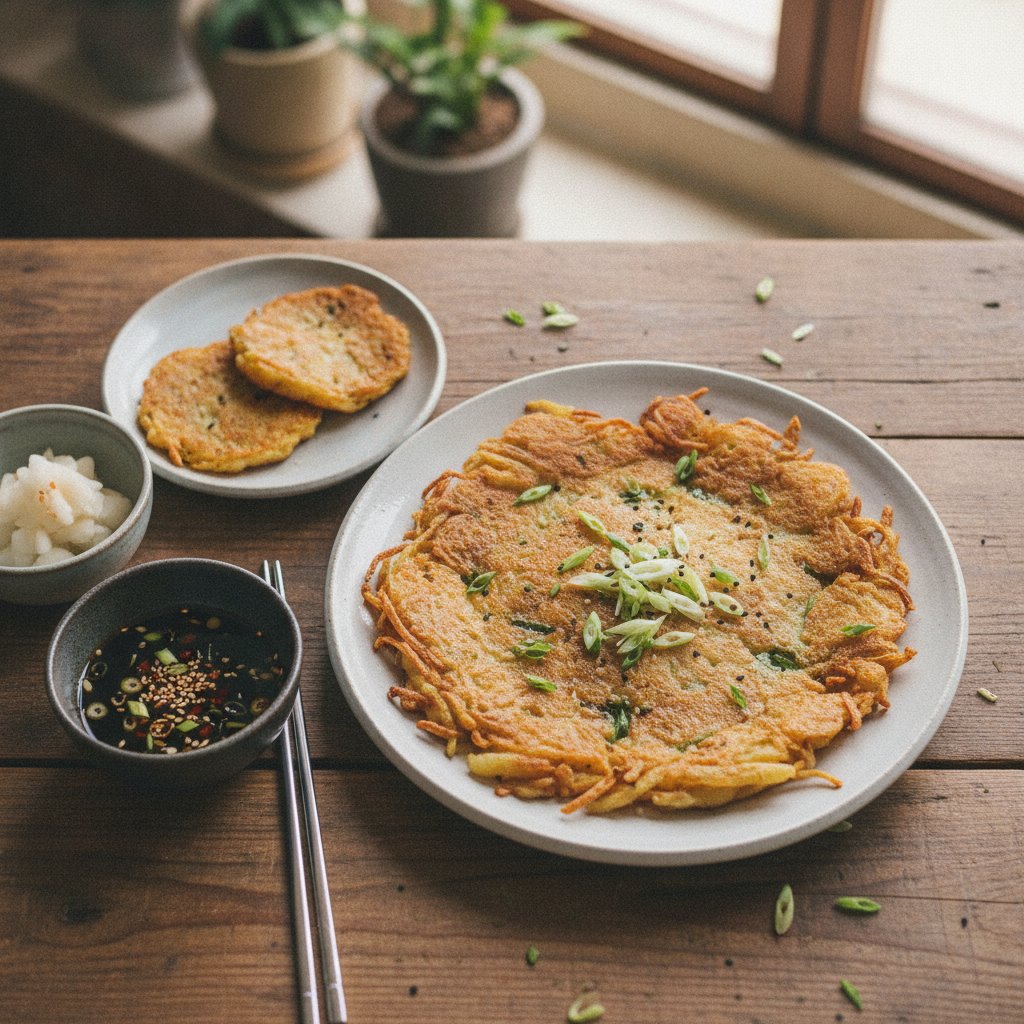
Easy Korean Potato Pancake Recipe (Gamja Jeon)
At a glance
- In shortA guide to making authentic Korean potato pancakes using natural potato starch as the binder.
- Best forHome cooks wanting authentic Korean potato pancakes
- DifficultyEasy
- HeatNot spicy
- Key pointsSettled potato starch serves as the sole binder without needing flour or eggs. · Hand-grating with a box grater creates the ideal crisp and chewy contrast. · High-starch Russet or Yukon Gold potatoes yield the crispest results.
- Heads-upWork quickly once mixed, as raw potato oxidizes and turns gray when exposed to air.
Whenever rain clouds gather over Namsan Mountain in Seoul, my mother immediately pulls a bag of potatoes out from the kitchen pantry. In Korea, rainy weather and sizzling pancakes go together like coffee and morning air. The heavy pitter-patter of raindrops against the window sound suspiciously like cold batter hitting hot vegetable oil in a cast-iron skillet. While seafood or green onion pancakes are popular, our family always favored gamja jeon (Korean potato pancakes). They are earthy, remarkably crisp along the ruffled edges, and delightfully chewy in the center.
Prep: 20 min · Cook: 10 min · Total: 30 min · Serves 2
If you have ever ordered these at a Korean restaurant outside of Korea, you might have been served something that resembled a hash brown or a European latke filled with flour and shredded potato strips. Authentic home-style gamja jeon is entirely different. It relies on a classic technique where you extract the potato’s natural liquid, let the starch settle at the bottom of the bowl, and use that settled starch as your sole binder. You do not need eggs, all-purpose flour, or cornstarch. With just raw potatoes and a pinch of salt, you can create a golden, lacy pancake that highlights the pure sweetness of humble tubers.
Why This Works
- Natural starch extraction: Decanting the grated potato juice separates clear water from pure, settled starch, providing an elastic binder without diluting potato flavor with wheat flour.
- Hand-grating structure: Grating on a traditional box grater ruptures potato cells to yield a thick pulp with micro-texture, producing a signature contrast between a crisp outer rim and a bouncy center.
- High-heat shallow fry: Generous oil over medium-high heat gelatinizes the interior starches instantly while turning the delicate edges into thin, crispy glass.
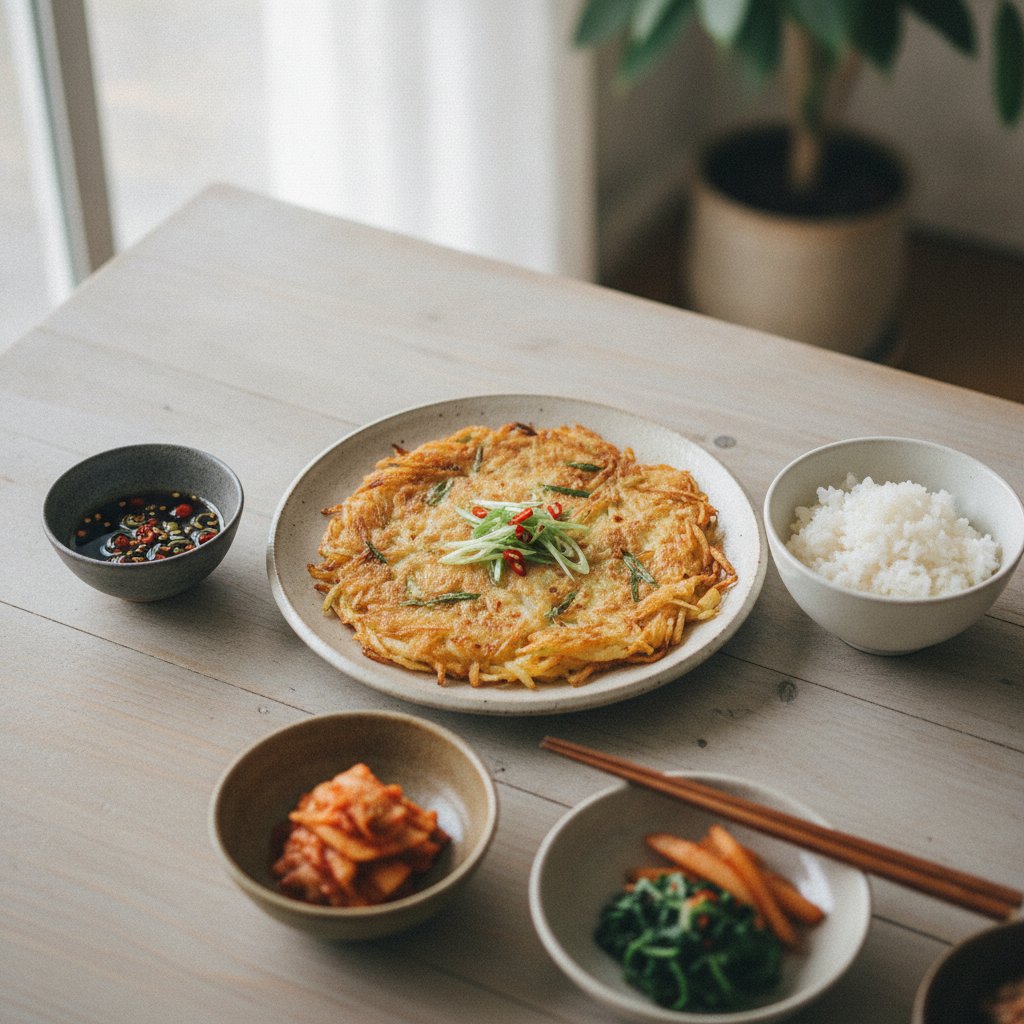
Ingredients
- 800 g (about 1.75 lbs / 3 medium-large) starchy potatoes, preferably Russet or Yukon Gold
- 3 g (about 1/2 tsp) fine sea salt or kosher salt
- 45–60 ml (about 3–4 tbsp) neutral cooking oil with a high smoke point (such as canola, vegetable, or avocado oil)
- Optional garnish: 1 red chili pepper or green chili pepper, sliced thinly into rounds, or fresh garland chrysanthemum leaves
Substitutions
Finding the right potato is the most critical decision for this recipe. In Korea, we use high-starch domestic potatoes like sumi potatoes. In Western grocery stores, high-starch Russet potatoes (Idaho potatoes) are your best option because their high starch content settles quickly and yields maximum crunch. Yukon Gold potatoes are an excellent second choice; they provide a buttery yellow color and slightly sweeter taste, though they yield a bit less starch. Avoid low-starch waxy varieties like red potatoes or fingerling potatoes, as they contain too much moisture and insufficient starch to hold the pancake together without added flour.
🛒 Easy Korean Potato Pancake Recipe
As an Amazon Associate we earn from qualifying purchases.
Shop Ingredients & Tools →How to Make It
-
Grate the potatoes into water: Peel the potatoes completely. Set a fine-mesh sieve or colander over a medium mixing bowl. Using the fine or medium side of a box grater, grate the potatoes directly into the sieve. Why: Grating ruptures the starch cells to release moisture immediately, while letting the juice drip directly into the bowl underneath stops the pulp from sitting in excess liquid.
-
Press out excess liquid: Using the back of a spoon or your clean hands, gently press down on the grated potato pulp sitting in the sieve to extract extra liquid into the bowl below. Do not squeeze the pulp completely dry; you want it moist, not bone-dry. Transfer the squeezed potato pulp to a separate dry bowl. Why: Removing excess water prevents the pancake from becoming soggy during frying, while keeping enough moisture ensures the interior steams into a soft, chewy texture.
-
Settle and decant the potato starch: Let the liquid bowl sit undisturbed on your counter for 10 to 15 minutes. You will notice a murky liquid on top and a dense, chalky white layer at the bottom. Slowly pour off and discard the liquid, keeping the thick layer of white starch firmly stuck to the bottom of the bowl. Why: This white paste is pure, concentrated potato starch. It acts as a natural glue, allowing you to skip flour or eggs entirely while keeping the recipe gluten-free and authentic.
-
Combine and season the batter: Scraping with a spatula, stir the squeezed potato pulp into the bowl containing the settled starch. Add the 3 g (1/2 tsp) of fine sea salt and mix thoroughly until uniform. Why: Salting the batter immediately before cooking adds flavor without drawing out too much additional water prematurely.
-
Pan-fry until golden and crisp: Heat a wide non-stick pan or well-seasoned cast-iron skillet over medium heat. Add 30 ml (2 tbsp) of neutral oil and let it shimmering for 30 seconds. Pour the batter into the pan, using the back of a spatula to spread it evenly into a thin circle about 1/4-inch (6 mm) thick. If using chili slices for garnish, gently press them into the top surface now. Cook undisturbed for 4 to 5 minutes, until the bottom turns a deep golden brown and the top edges turn translucent. Why: Medium heat allows heat to penetrate to the center so the starch cooks into a gelatinized, chewy texture before the bottom burns.
-
Flip and finish cooking: Carefully flip the pancake over. Add the remaining 15 ml (1 tbsp) of oil along the rim of the pan so it runs underneath the freshly flipped side. Press down lightly with your spatula and cook for another 3 to 4 minutes until both sides are golden and crispy. Transfer immediately to a wire rack or cutting board. Why: Adding a bit of fresh oil after flipping prevents the second side from dry-burning and guarantees an evenly blistered crust.
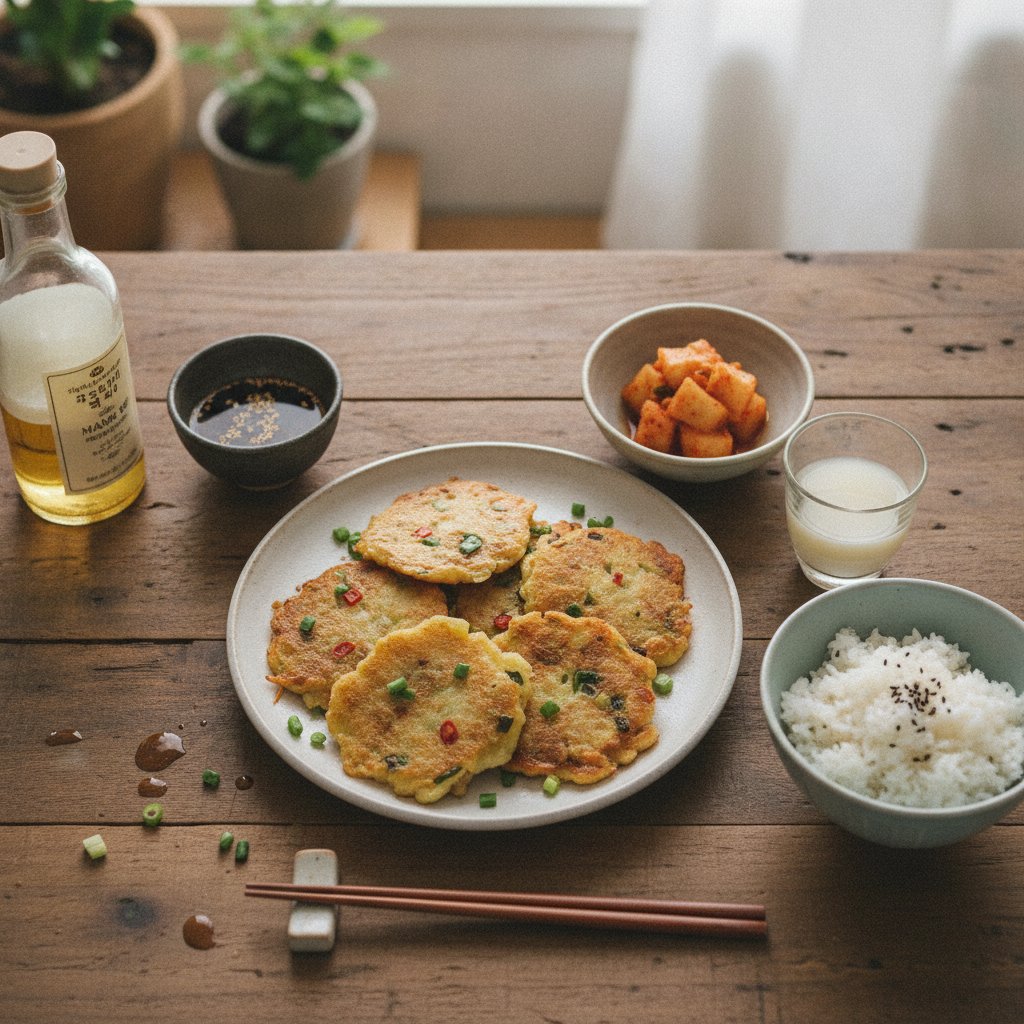
Tips from a Korean Kitchen
While the step list is short, mastering gamja jeon relies on small hand details that turn simple tubers into something extraordinary:
- Resist using a blender or food processor: Machine blades shear potato fibers into a smooth, watery soup rather than shredded pulp. While a food processor saves time, it breaks down the long starch chains, resulting in a dense, rubbery pancake. A simple hand grater creates small ridges that trap heat and turn light and crispy.
- Watch the oil level: Shallow frying requires more oil than standard sauteing. If your pan looks dry, the potato will absorb heat unevenly and bake rather than fry. Keep a shallow pool of glistening oil around the pancake edges throughout cooking.
- Work quickly after mixing: Once you mix the raw potato pulp with salt, oxygen will begin to oxidize the mixture, turning it dark grey over time. Have your hot skillet preheated and oiled before mixing the pulp and starch together so the batter goes straight into the pan.
Storage
Gamja jeon is unequivocally best eaten hot straight from the skillet when the contrast between the crunchy rim and chewy center is at its peak. However, if you have leftovers, store them in an airtight container in the refrigerator for up to 2 days. To reheat, do not use a microwave, which makes the pancake gummy. Instead, warm a skillet over medium heat with a light drop of oil and re-crisp the pancake for 2 minutes per side. Freezing cooked potato pancakes is not recommended, as freezing destroys the cell structure of cooked starch, rendering them soggy upon thawing.
🛒 Easy Korean Potato Pancake Recipe
As an Amazon Associate we earn from qualifying purchases.
Shop Ingredients & Tools →FAQ
Why are my potato pancakes turning dark gray before I cook them?
Potato flesh oxidizes rapidly when exposed to air after peeling and grating. To slow down oxidation, grate your potatoes promptly and do not leave the raw pulp sitting on the counter for longer than necessary. Cooking the batter immediately after mixing preserves a bright, cream-colored interior.
Can I add flour if my batter seems too wet?
If you used waxy potatoes or did not squeeze enough juice out, your batter might feel loose. While adding 1 to 2 tablespoons of potato starch or cornstarch is acceptable, try to avoid wheat flour. Wheat flour turns the pancake heavy and bread-like, masking the delicate natural taste of the potato.
What sauce goes best with Korean potato pancakes?
Serve gamja jeon with a classic Korean dip called choganjang (vinegar soy sauce). Simply combine 15 ml (1 tbsp) soy sauce, 7.5 ml (1/2 tbsp) rice vinegar, 15 ml (1 tbsp) water, a pinch of toasted sesame seeds, and optionally a few fine slices of fresh green onion or jalapeno. The bright acidity cuts through the richness of the fried pancake perfectly.
More on Korean Pancakes & Eggs
- Korean Pan Fried Tofu with Egg (Dubu Jeon)A guide to making Dubu Jeon, a classic Korean pan-fried tofu wrapped in a light green onion and carrot egg batter.
- Stuffed Perilla Leaf PancakesA guide to making Korean stuffed perilla leaf pancakes filled with seasoned meat and tofu.
- Korean Pan-Fried Fish (Saengseon Jeon)Learn how to make saengseon jeon, delicate Korean pan-fried white fish fillets in a soft egg batter.
See every Korean Pancakes & Eggs post in our Banchan guide.
Handy toolsRecipe scaler · Measurement converter · Korean pantry guide · Recipe Finder
🛒 Easy Korean Potato Pancake Recipe
As an Amazon Associate we earn from qualifying purchases.
Shop Ingredients & Tools →More Korean Recipes
- Crunchy Korean Soy Pickled Radish (Mu Jangajji)
- Korean Braised Dried Pollack Strips (Hwangtae Jorim)
- Korean Pan Fried Fish Recipe (Saengseon Jeon)
- Easy Nabak Kimchi Recipe (Korean Water Kimchi)
🛒 Easy Korean Potato Pancake Recipe
As an Amazon Associate we earn from qualifying purchases.
Shop Ingredients & Tools →