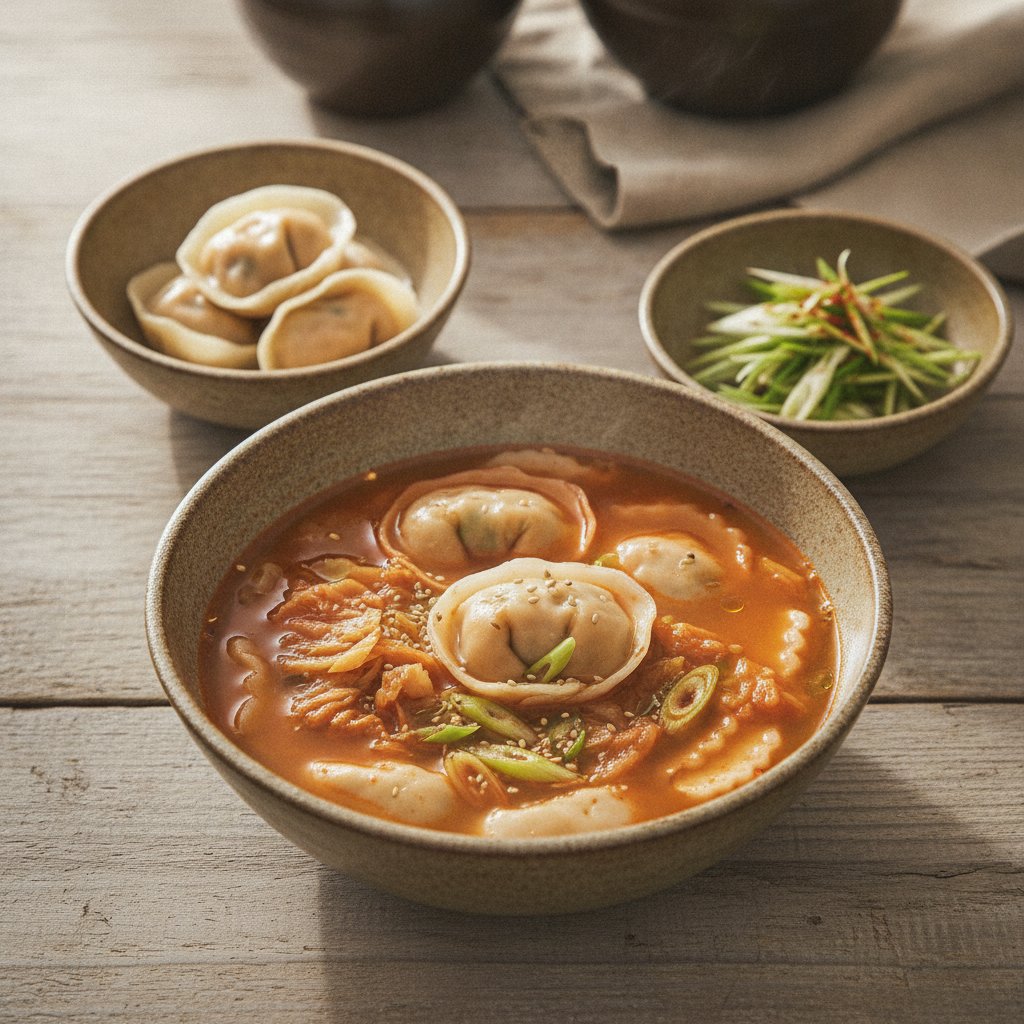
Kimchi Mandu Guk: Easy Kimchi Dumpling Soup
This post contains affiliate links. As an Amazon Associate, we earn from qualifying purchases at no extra cost to you.
At a glance
- In shortA step-by-step recipe for making Korean kimchi dumpling soup with anchovy broth.
- Best forHome cooks looking to make Korean kimchi dumpling soup
- DifficultyMedium
- HeatMild
- Key pointsSqueeze moisture from kimchi and tofu to keep wrappers intact. · Quick anchovy and kelp stock provides a deep, savory broth base. · Gently simmer dumplings for 6 to 8 minutes so they do not split.
- Heads-upSeparate leftover dumplings from broth before refrigerating so they do not get mushy.
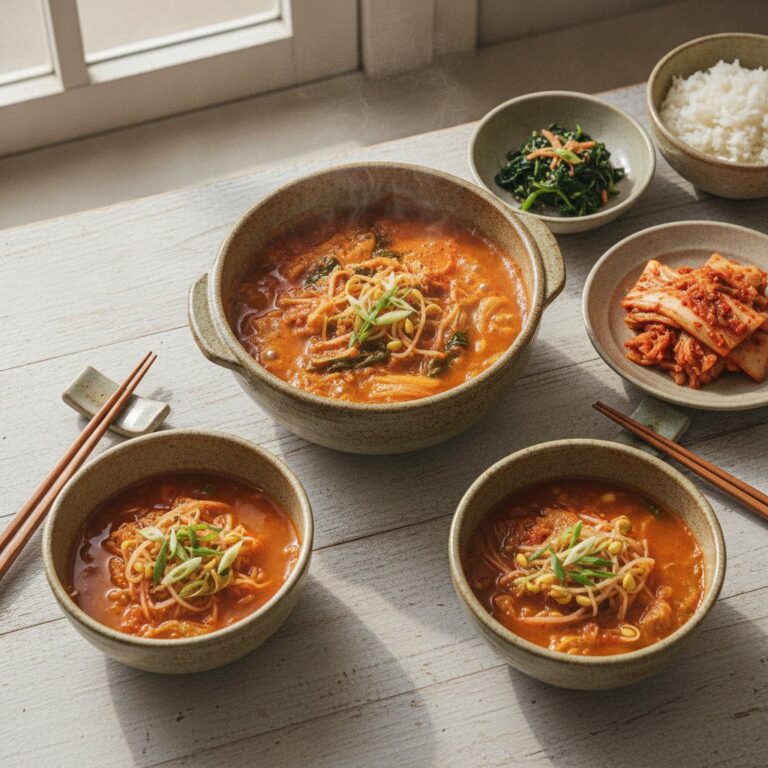
On freezing January mornings in Seoul, when the icy wind sweeps off the Han River, my mother always pulls out our largest stone pot. The kitchen instantly fills with the sharp, warm aroma of simmering anchovy broth mixed with the punchy tang of well-aged kimchi. For Koreans, a steaming bowl of kimchi mandu guk (kimchi dumpling soup) is not just a meal; it is the ultimate restorative comfort food that gets us through long, dark winter months.
While many visitors to Korea know standard rice cake soup or plain pork dumplings, kimchi mandu guk holds a special place in home cooking. It combines plump homemade dumplings packed with spicy, sour kimchi, crumbled tofu, ground pork, and delicate glass noodles with a clean, umami-rich broth. In traditional households, making these dumplings is a family affair during the Lunar New Year or mid-winter weekends. Everyone gathers around the kitchen table, filling and folding wrappers until trays overflow. This recipe brings that exact warmth to your home kitchen, adapted so you can easily pull it off using ingredients from your everyday supermarket paired with a few Asian grocery staples.
Why This Works
- Thorough moisture extraction: Squeezing every bit of excess liquid out of the fermented kimchi and tofu creates a tight, flavorful filling that will never make your dumpling wrappers soggy or split open during boiling.
- Balanced double-kimchi flavor profile: Using fermented kimchi in the filling and adding a single splash of strained kimchi brine directly into the broth layers gentle acidity throughout the entire dish without clouding the broth’s natural clarity.
- Dual-purpose base broth: A quick dried anchovy and kelp stock provides a deep, savory foundation in just fifteen minutes, giving the soup restaurant-quality umami without requiring hours of boiling bones.
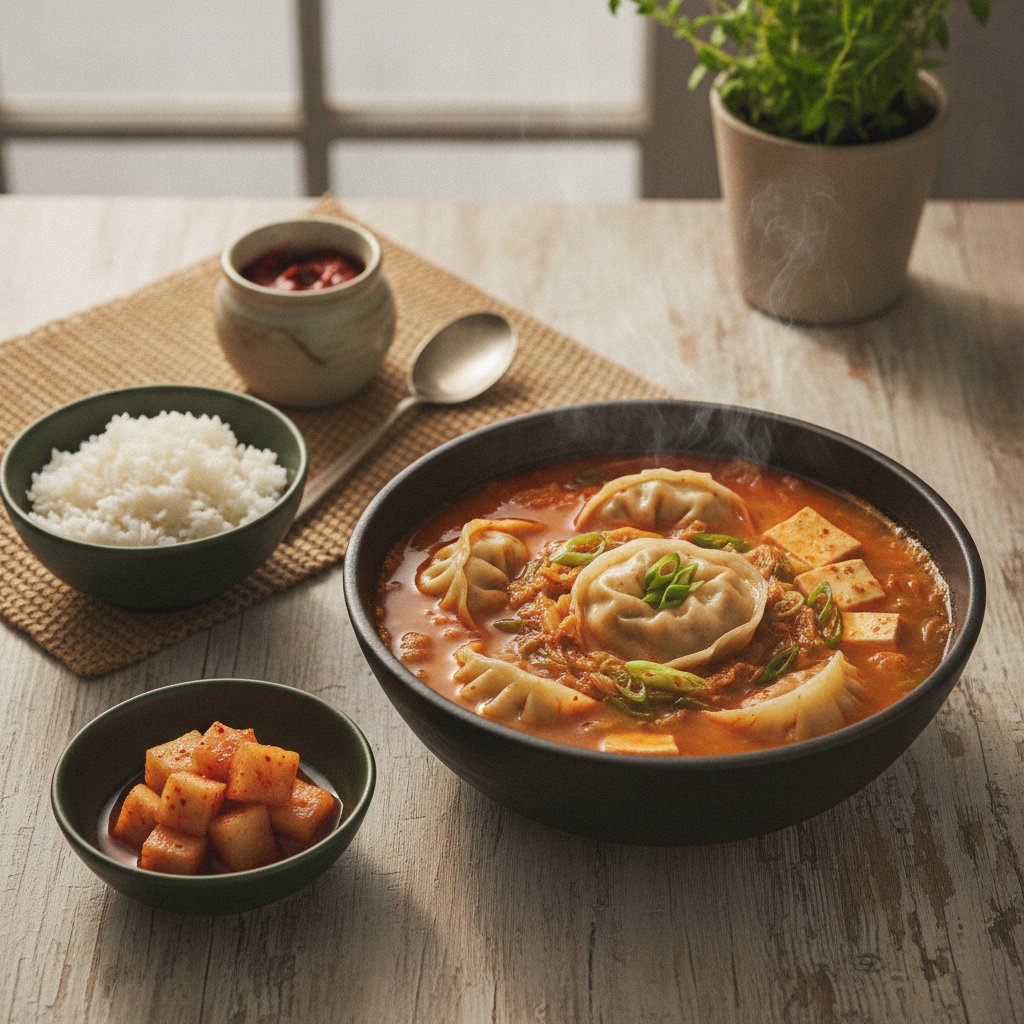
Ingredients
- For the Soup Base:
- 1.5 liters (approx. 6.5 cups) cold water
- 15 g (about 0.5 oz or 8-10 large) dried soup anchovies (myeolchi), heads and inner black guts removed
- 1 piece (approx. 10×10 cm / 4×4 inches) dried kelp (dashima)
- 15 ml (1 tbsp) Korean soup soy sauce (guk-ganjang) or regular light soy sauce
- 15 ml (1 tbsp) strained aged kimchi juice
- 2 garlic cloves, finely minced
- 1 g (1/4 tsp) ground black pepper
- For the Kimchi Mandu Filling:
- 200 g (about 1 cup) well-aged, sour cabbage kimchi, finely chopped
- 200 g (about 0.44 lb) ground pork
- 150 g (about 5.3 oz) firm tofu
- 100 g (about 1 cup) fresh mung bean sprouts
- 40 g (about 1.4 oz) dried sweet potato starch noodles (dangmyeon)
- 2 green onions, finely chopped
- 15 ml (1 tbsp) toasted sesame oil
- 5 ml (1 tsp) minced garlic
- 2.5 g (1/2 tsp) fine sea salt
- 1 g (1/4 tsp) ground black pepper
- For Assembly and Garnish:
- 30-35 round dumpling wrappers (mandupi)
- 1 large egg, beaten
- 1 green onion, thinly sliced on a diagonal
- 1 sheet roasted sea salt seaweed (gim), shredded or crushed
Substitutions
If you cannot find dried soup anchovies and dashima (kelp), you can substitute the homemade broth base with 1.5 liters of low-sodium chicken broth mixed with a cup of water, or a light vegetable broth. If Korean soup soy sauce (guk-ganjang) is unavailable, standard light soy sauce works well; just add a small pinch of salt, as soup soy sauce is saltier and lighter in color than regular soy sauce. If you cannot find sweet potato starch noodles (dangmyeon), you can substitute them with boiled, finely chopped mung bean vermicelli or simply omit them and add a bit more tofu and pork for structure.
🛒 Kimchi Mandu Guk
As an Amazon Associate we earn from qualifying purchases.
Shop Ingredients & Tools →How to Make It
- Extract liquid from kimchi and tofu: Place your finely chopped kimchi into a clean kitchen towel or cheesecloth and squeeze out as much juice as possible into a bowl. Reserve 15 ml (1 tbsp) of this juice for the broth. Next, wrap the firm tofu in the cloth and squeeze firmly over the sink until it crumbles and yields almost no liquid. Why: Removing moisture is crucial; excess liquid dilutes seasoning and causes the wrappers to tear open while cooking.
- Blanch sprouts and noodles: Bring a small pot of water to a boil. Blanch the mung bean sprouts for 1 minute until slightly softened, drain, rinse in cold water, squeeze out excess moisture, and chop coarsely. In the same pot, boil the sweet potato noodles for 6 minutes until soft, drain, rinse with cold water, and chop into small bits (about 1/2 cm lengths). Why: Pre-cooking these ingredients ensures they retain a clean texture inside the dumpling without absorbing moisture from the raw pork.
- Mix the dumpling filling: In a large mixing bowl, combine the squeezed kimchi, drained tofu, chopped sprouts, chopped noodles, ground pork, minced green onions, minced garlic, sesame oil, salt, and black pepper. Knead the mixture thoroughly with your hands for about 2-3 minutes until the pork proteins break down and the filling becomes sticky and cohesive. Why: Thorough mixing binds the ingredients so the filling holds together as a single juicy morsel inside the wrapper.
- Fold the mandu: Place a dumpling wrapper flat on your hand. Put about 1 tablespoon of filling in the center. Lightly wet the outer edge of the wrapper with water or beaten egg using your fingertip. Fold the wrapper in half over the filling to form a half-moon shape, pressing the edges firmly together to push out trapped air. Bring the two outer corners of the half-moon toward each other, overlapping them, and dab a bit of water to seal them together into a round, hat-like shape. Repeat with remaining filling. Why: The classic round shape helps the dumplings cook evenly in boiling broth while keeping them compact on the spoon.
- Simmer the broth base: In a medium soup pot, combine 1.5 liters cold water, gutted dried anchovies, and dried kelp. Bring to a boil over medium-high heat. Once boiling, immediately remove the kelp with tongs. Turn heat down to medium and let the anchovies simmer gently for 12 minutes. Strain out the anchovies and discard them. Why: Boiling kelp too long releases bitter compounds and slimy mucilage, while simmering anchovies gently extracts deep umami without fishiness.
- Cook the dumplings: Stir the soup soy sauce, reserved kimchi juice, minced garlic, and black pepper into the simmering broth. Gently drop 12 to 15 assembled dumplings into the pot (cook in batches if your pot is small to avoid overcrowding). Maintain a gentle simmer over medium heat for 6 to 8 minutes. The dumplings will float to the top once cooked through. Why: Rapid boiling can knock dumplings against each other and split their seams, so a steady simmer is best.
- Finish with egg and serve: Slowly pour the beaten egg in a thin stream around the perimeter of the bubbling soup. Let it sit undisturbed for 10 seconds to form soft ribbons before gently stirring once. Ladle the hot soup and dumplings into wide bowls. Garnish generously with sliced green onions and crushed roasted seaweed. Serve immediately with extra aged kimchi on the side.
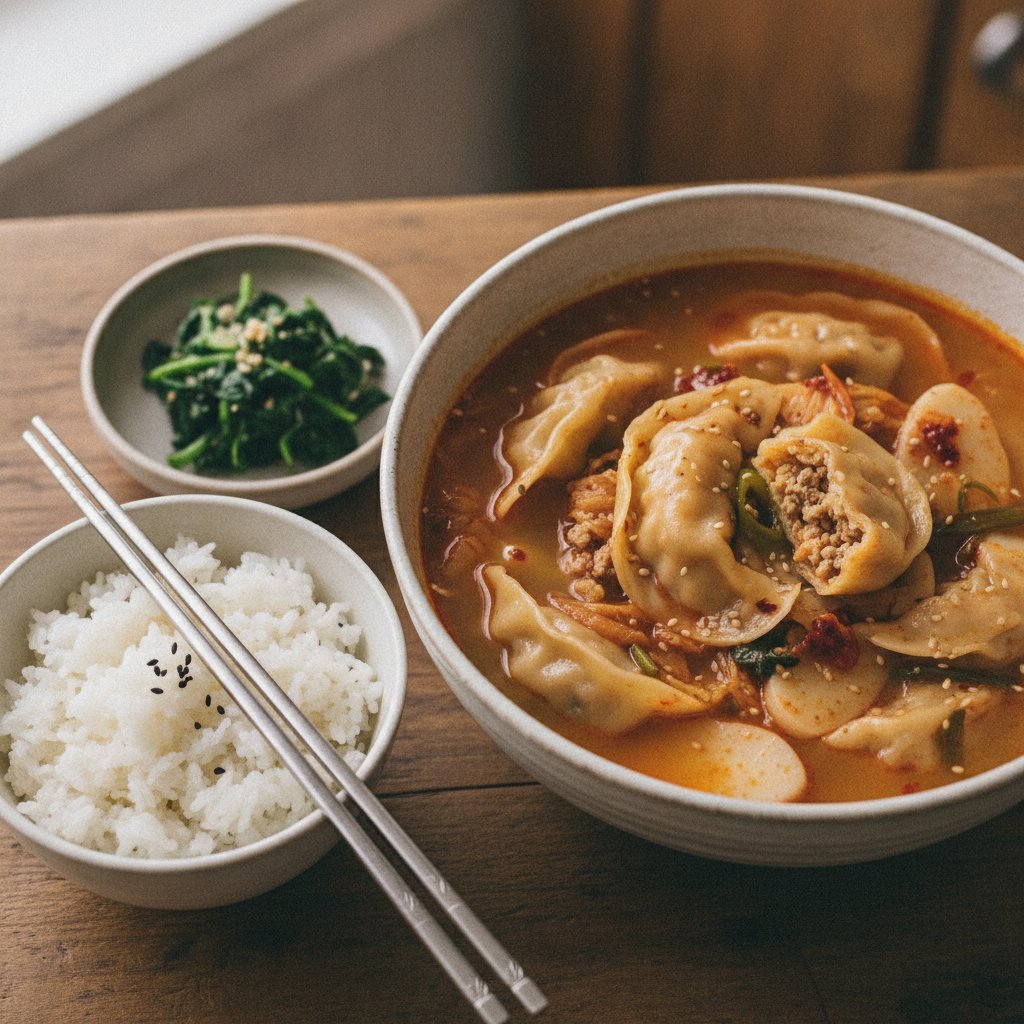
Tips from a Korean Kitchen
In Korean homes, the quality of your kimchi mandu depends almost entirely on the state of your kimchi. Always choose kimchi that has been sitting in your fridge for several weeks—the kind that smells sharp and tastes sour on its own. Fresh, unfermented kimchi lacks the lactic acidity needed to cut through the rich ground pork and tofu.
When assembling your dumplings, avoid overstuffing. While a bulging dumpling looks inviting, filling that spills near the edge prevents a clean seal. A leaking dumpling releases its delicious juices directly into the broth, leaving you with dry filling and cloudy soup.
Always skim the grey foam that rises to the top during the initial broth boil and right after dropping in the dumplings. This extra step takes less than thirty seconds but produces a sparkling clean, appealing broth.
Storage
If you have leftover cooked soup, separate the dumplings from the broth using a slotted spoon before refrigerating. Storing dumplings submerged in broth causes them to absorb liquid, turn mushy, and eventually dissolve. Kept separately in airtight containers, both broth and cooked dumplings stay fresh in the refrigerator for up to 3 days. Reheat by bringing the broth to a boil and floating the dumplings in for 2 minutes.
To freeze extra uncooked dumplings, arrange them in a single layer on a parchment-lined baking sheet, ensuring they do not touch. Freeze for 2 hours until rock hard, then transfer them into a freezer bag for up to 2 months. Cook them directly from frozen by dropping them into boiling broth and adding 2 extra minutes to the cooking time.
🛒 Kimchi Mandu Guk
As an Amazon Associate we earn from qualifying purchases.
Shop Ingredients & Tools →FAQ
Can I use store-bought frozen dumplings for kimchi dumpling soup?
Yes, you can easily use store-bought frozen kimchi or pork mandu for a quick weeknight version. Simply prepare the anchovy broth as directed and drop the frozen dumplings directly into the boiling soup without thawing, simmering for about 7-8 minutes until they float and are hot in the center.
How do I keep my kimchi mandu wrappers from breaking open in the soup?
Wrappers break mainly for two reasons: trapped air bubbles inside the dumpling during sealing or excess liquid in the filling. Make sure to press air out as you fold, squeeze your kimchi and tofu completely dry, and keep the broth at a gentle simmer rather than a rolling boil.
Is kimchi mandu guk very spicy?
It has a mild to moderate heat. Squeezing out the kimchi liquid removes most of the harsh chili powder, leaving behind a warm, pleasantly tangy flavor profile. If you want a milder version, you can rinse the chopped kimchi briefly under cold water before squeezing it dry.
More on Kimchi Soups & Stews
- Kimchi Juk: Korean Kimchi PorridgeA quick Korean recipe for making cozy kimchi rice porridge using leftover cooked rice.
- Kimchi Sujeobi: Hand-Pulled Dough SoupA guide to making chewy Korean hand-pulled dough soup in a savory, spicy kimchi broth.
- Kimchi Jjigae (Kimchi Stew)A guide to making authentic Korean Kimchi Jjigae using sour kimchi, pork, and anchovy broth.
See every Kimchi Soups & Stews post in our Kimchi guide.
Handy toolsRecipe scaler · Measurement converter · Korean pantry guide · Recipe Finder
🛒 Kimchi Mandu Guk
As an Amazon Associate we earn from qualifying purchases.
Shop Ingredients & Tools →More Korean Recipes
- 10-Minute Kimchi Ramen Hack (Upgraded Kimchi Ramyeon)
- Creamy Kimchi Pasta (Kimchi Keurim Pasta)
- Crispy Potato Kimchi Pancake (Gamja Kimchi Jeon)
- Gaji Kimchi (Korean Stuffed Eggplant Kimchi Recipe)
🛒 Kimchi Mandu Guk
As an Amazon Associate we earn from qualifying purchases.
Shop Ingredients & Tools →