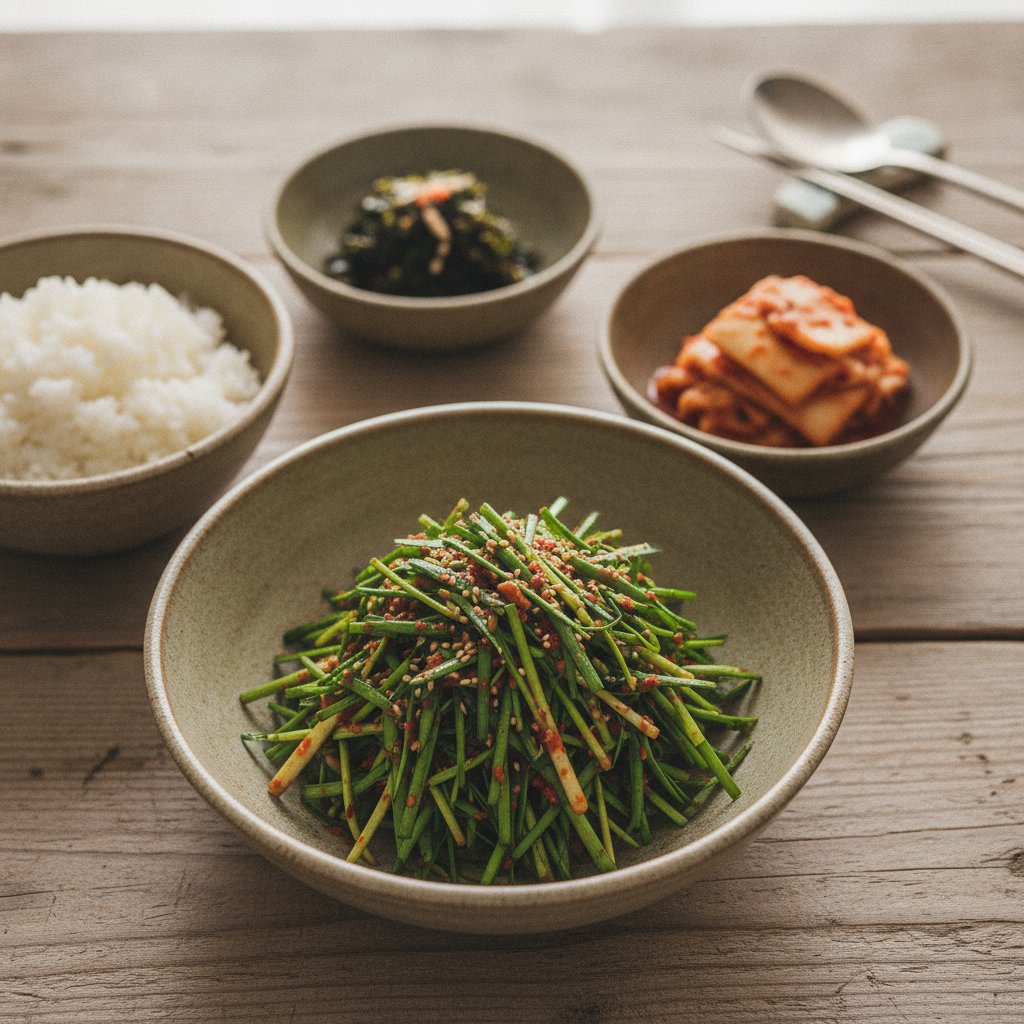
Easy Spicy Korean Garlic Chive Salad (Buchu Muchim)
This post contains affiliate links. As an Amazon Associate, we earn from qualifying purchases at no extra cost to you.
At a glance
- In shortHow to make a fresh, crisp Korean garlic chive salad in under ten minutes.
- Best forHome cooks looking for a fast Korean barbecue side dish
- Time10 min
- DifficultyEasy
- HeatMild
- Key pointsPre-mix dressing separately to avoid over-handling delicate chives. · Toss greens gently right before serving to prevent wilting and slime. · Combine soy sauce and fish sauce for a balanced, layered umami taste.
- Heads-upNever toss with dressing in advance; salt draws out moisture and causes greens to go limp.
Savoring Fresh Greens in Seoul
Whenever my family grills pork belly on a Friday evening in Seoul, a overflowing bowl of buchu muchim (spicy garlic chive salad) sits right next to the hot tabletop stove. The sizzling fat from the meat hits the grill, and before anyone touches a lettuce wrap, someone always reaches for a generous pinch of these bright red-dusted greens. It takes less than ten minutes to pull together, yet it instantly changes a meal from simple cooked meat into a full Korean dining experience.
In Korea, buchu (garlic chives) are prized for their vivid green color and distinct, sharp aroma that sits somewhere between garlic and sweet spring onion. We treat them both as a everyday vegetable and a culinary complement to rich, savory dishes. While you will often find this salad served alongside samgyeopsal (grilled pork belly) or ori gumi (grilled duck), it is equally wonderful sitting on a spread of humble weekday banchan (side dishes) with hot white rice and a spoonful of soybean paste stew.
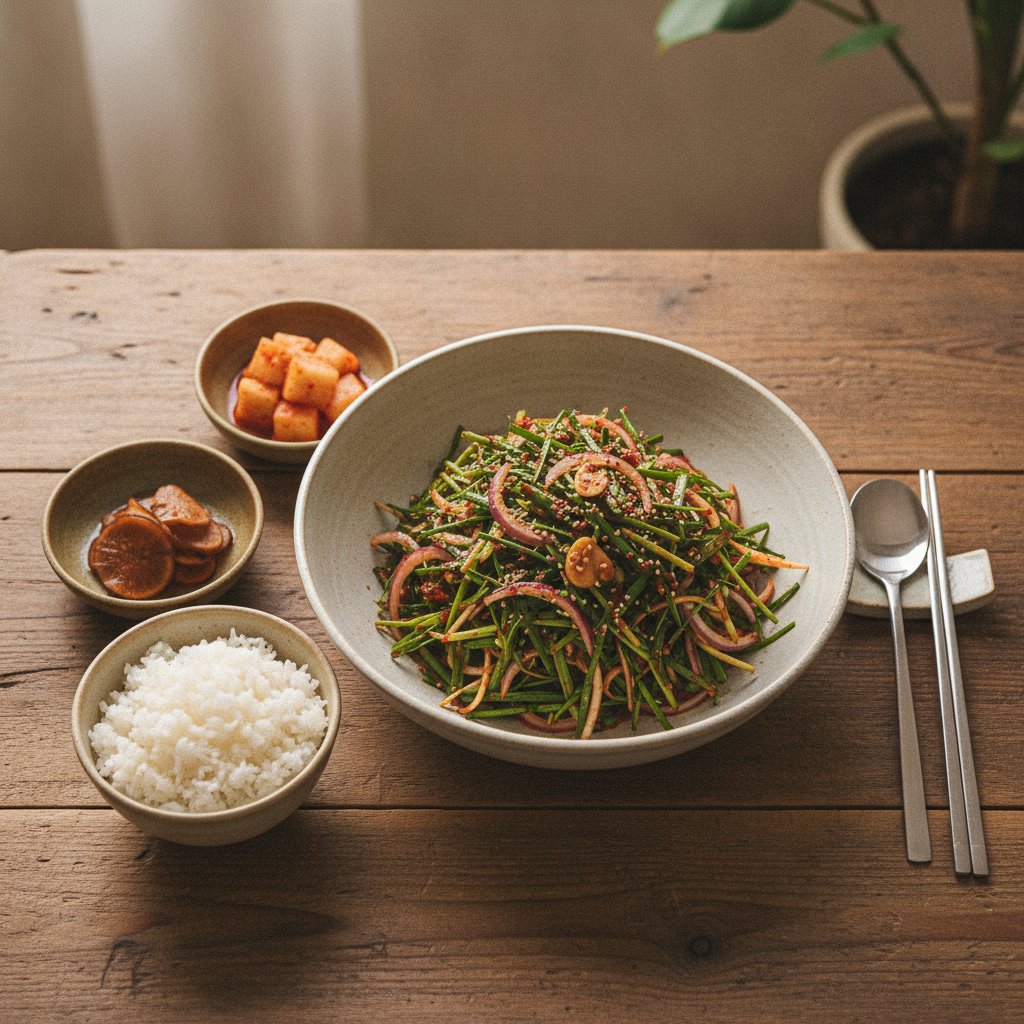
If you have ever eaten at a Korean barbecue restaurant, you have likely tasted a variation of this dish. The magic lies in its raw, vibrant crunch paired with a balanced seasoning blend of earthy chili, salty fish sauce, nutty toasted sesame oil, and a touch of sweetness. The secret to making it feel like authentic Korean home cooking is keeping the leaves fresh and snappy—never let them bruise or sit in dressing so long that they turn limp.
Why This Works
- Pre-mixing the dressing separately: Dissolving the sugar and hydrating the gochugaru (Korean chili flakes) in liquid seasonings before tossing ensures every leaf gets coated evenly without over-handling the delicate chives.
- Minimal handling technique: Using a feather-light toss prevents the cell walls of the garlic chives from rupturing, stopping them from releasing excess water and turning slimy.
- Layered umami base: Combining soy sauce with Korean fish sauce creates a deeper, rounded savory profile that balances the natural spicy bite of raw chives far better than salt alone.
🛒 Easy Spicy Korean Garlic Chive Salad
As an Amazon Associate we earn from qualifying purchases.
Shop Ingredients & Tools →Ingredients
- 200 g (about 7 oz / 1 large bunch) fresh garlic chives (buchu)
- 1/2 small yellow or red onion, about 60 g (2 oz), thinly sliced
- 1.5 tbsp Korean chili flakes (gochugaru)
- 1 tbsp Korean fish sauce (myeolchi aekjeot) or soup soy sauce (guk-ganjang)
- 1 tbsp soy sauce (yangjo ganjang or standard regular soy sauce)
- 1 tbsp toasted sesame oil (cham-gireum)
- 1 tbsp toasted sesame seeds (kkae)
- 1 tsp granulated sugar or Korean plum syrup (maesil-cheong)
- 1 tsp rice vinegar or apple cider vinegar (optional, for a light tangy finish)
- 1/2 tsp finely minced garlic (optional, as chives already carry a garlic bite)
Substitutions
Finding genuine Asian garlic chives (which have broad, flat blades rather than hollow round stems) is ideal, but home cooks adapt all the time. If your local grocery store does not carry them, standard green onions (scallions) sliced into long, thin strips serve as an excellent substitute. You can also use regular Western chives combined with a tiny extra pinch of minced garlic to mimic that signature sharp punch.
If you prefer a plant-based version or do not have Korean anchovy fish sauce on hand, swap it with standard soy sauce paired with a splash of vegan stir-fry sauce or liquid aminos. Korean plum syrup (maesil-cheong) adds a subtle fruity tartness, but ordinary sugar or mild honey works seamlessly in its place.
How to Make It
- Wash and dry the greens thoroughly: Fill a deep bowl with cold water and submerge the garlic chives, gently swishing them to remove dirt near the root ends. Lift them out, rinse well, and dry them completely using a salad spinner or clean kitchen towels. Why: Water left on the leaves dilutes the savory dressing and causes the greens to wilt within minutes of tossing.
- Trim and slice the vegetables: Cut off and discard the bottom 1/2 inch of the stem ends. Cut the chives into 5 cm (about 2-inch) long pieces. Slice the onion as thinly as possible. Why: Uniform length makes the salad easy to pick up with chopsticks, while paper-thin onions release just enough mild sweetness without overpowering the dish.
- Mix the spicy seasoning paste: In a wide, shallow mixing bowl, combine the chili flakes, fish sauce, regular soy sauce, sesame oil, sesame seeds, sugar, and vinegar (if using). Stir well with a spoon until the chili flakes absorb the liquids and form a thick mixture. Why: Combining the wet and dry seasoning ingredients beforehand spreads the spice evenly so you do not have to over-mix the leaves later.
- Combine vegetables with the paste: Add the sliced onions and chopped chives into the bowl over the seasoning paste. Why: Putting the sturdy onions in first allows them to soften slightly into the dressing.
- Toss gently by hand: Using clean hands or light wooden tongs, reach under the greens and lift them up, gently folding them into the paste. Use a light, claw-like motion without squeezing or crushing the stems. Stop as soon as the dressing is distributed. Why: Rough squeezing ruptures the delicate cellular structure of garlic chives, causing them to bleed juice, lose crispness, and become slippery.
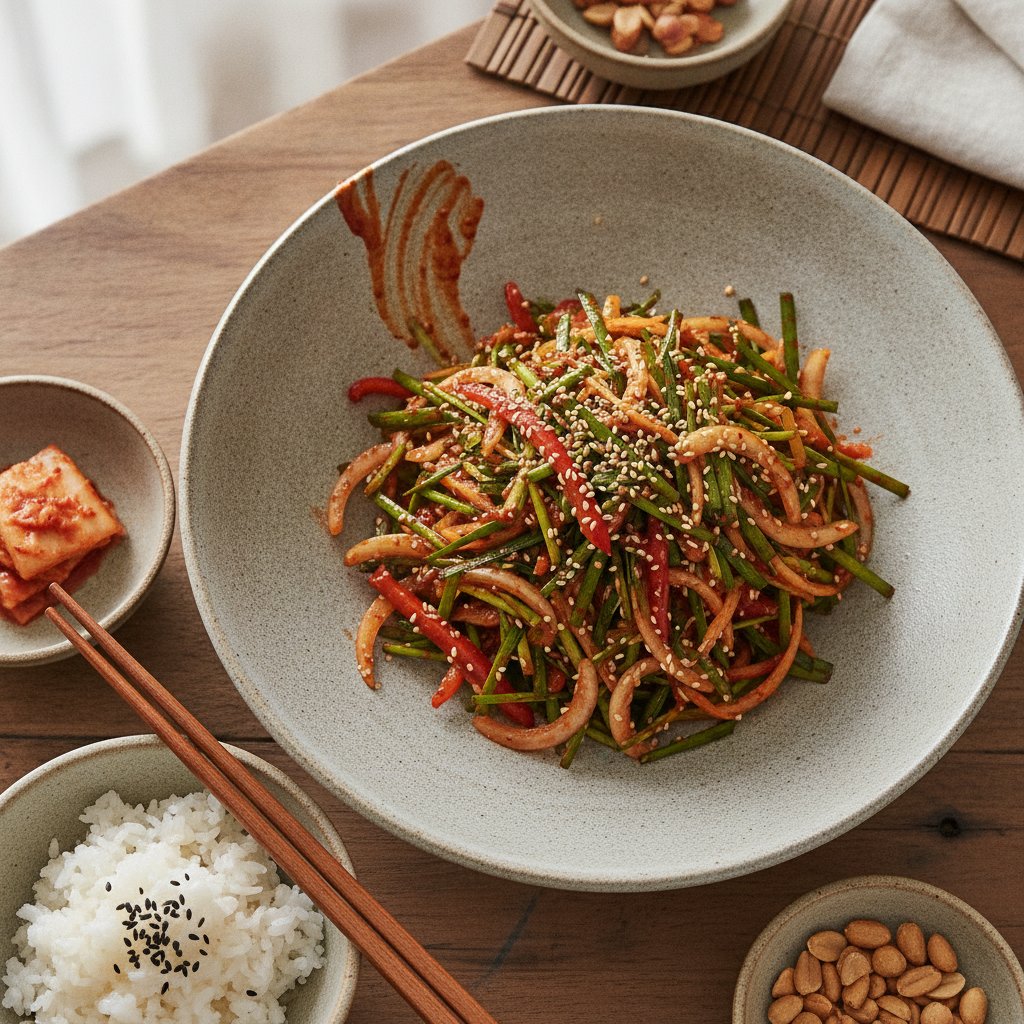
- Plate and serve immediately: Transfer the tossed salad to a wide serving dish, sprinkling a few extra toasted sesame seeds on top for presentation. Why: Freshly tossed salad offers the contrast between snappy crunch and bold spice.
🛒 Easy Spicy Korean Garlic Chive Salad
As an Amazon Associate we earn from qualifying purchases.
Shop Ingredients & Tools →Tips from a Korean Kitchen
In Korean home cooking, timing is everything when dealing with fresh herbs and leafy side dishes. Here are a few reliable rules we follow at home to keep our korean garlic chive salad looking and tasting like it came straight from a neighborhood restaurant in Seoul:
- Dress right before eating: Never toss this salad hours before a meal. The salt in the soy sauce and fish sauce draws moisture out of raw greens through osmosis. Have your vegetables trimmed and your paste mixed in separate containers beforehand, then toss them together seconds before serving your main meal.
- Adjust acidity to your main dish: If you are serving this alongside fatty grilled pork belly or fried dishes, add a teaspoon of rice vinegar to the dressing. The acid cuts through heavy oils effortlessly. If you are serving it with lighter boiled meats like suyuk (boiled pork slices) or chicken, skip the vinegar to keep the earthy sesame notes front and center.
- Choose the right gochugaru: Use coarse, sun-dried Korean chili flakes rather than fine chili powder. Fine powder can turn muddy when mixed with oil and sauce, whereas coarsely ground flakes provide a clean look and textured bite without overwhelming heat.
- Don’t skip the sesame oil quality: Korean toasted sesame oil made from 100% dark roasted sesame seeds (look for well-known brands like Ottogi or CJ at the Asian market) brings a rich, nuttiness that balances raw garlic notes.
Storage
This salad is designed to be eaten immediately upon preparation. As the leaves interact with salt, they slowly lose water and soften. However, if you have leftovers, store them in a tightly sealed glass container in the refrigerator for up to 2 days.
By day two, the chives will lose their initial crisp snap, but they remain delicious! In Korean homes, leftover wilted chive salad is rarely wasted. We stir it directly into warm bowl of cooked rice with a fried egg and extra paste to make quick bibimbap (mixed rice dish), or fold it into a light flour-and-water batter to fry up quick savory buchujeon (garlic chive pancakes).
Do not freeze this salad, as the raw leaves will break down completely upon thawing and become unusable.
FAQ
Can I make this salad ahead of time for a dinner party?
You can wash, dry, and chop the chives and onions up to a day in advance, storing them in an airtight container lined with a dry paper towel. You can also mix the seasoning paste days ahead and keep it in a small jar. Keep them separate in the fridge, and only toss them together minutes before serving.
Is Korean garlic chive salad very spicy?
The heat level is moderate and pleasant. Korean chili flakes (gochugaru) are generally milder and sweeter than Western red pepper flakes or cayenne pepper. The raw garlic chives themselves contribute a natural pepperiness, but you can easily adjust the amount of chili flakes up or down according to your personal taste.
Where can I find fresh garlic chives near me?
Garlic chives are available year-round at East Asian, Southeast Asian, and international grocery stores, often labeled as flat chives, Chinese chives, or gow choy. Look for bunches with deep green, firm, upright leaves that show no signs of yellowing or wilting at the tips.
🛒 Easy Spicy Korean Garlic Chive Salad
As an Amazon Associate we earn from qualifying purchases.
Shop Ingredients & Tools →More on Seasoned Namul & Salads
- Seasoned Bellflower Root (Doraji Muchim)How to prepare and season Korean spicy bellflower root while properly removing its bitterness.
- Fresh Water Dropwort Salad (Minari Muchim)Learn how to make classic blanched Korean water dropwort salad with a savory sesame dressing.
- Seasoned Wild Aster (Chwi Namul Muchim)Learn how to rehydrate, season, and serve Korean wild aster leaves for a fragrant, earthy side dish.
See every Seasoned Namul & Salads post in our Banchan guide.
Handy toolsRecipe scaler · Measurement converter · Korean pantry guide · Recipe Finder
More Korean Recipes
- Crunchy Korean Soy Pickled Radish (Mu Jangajji)
- Korean Braised Dried Pollack Strips (Hwangtae Jorim)
- Korean Pan Fried Fish Recipe (Saengseon Jeon)
- Easy Nabak Kimchi Recipe (Korean Water Kimchi)
🛒 Easy Spicy Korean Garlic Chive Salad
As an Amazon Associate we earn from qualifying purchases.
Shop Ingredients & Tools →